
Stall Design for Machinery Exhibitors: Heavy Exhibits and Safe Demos
How to plan a machinery or machine tool stall: move-in sequence, floor loading, platform cut-outs, safe live demos and a quiet place for buyers to talk.
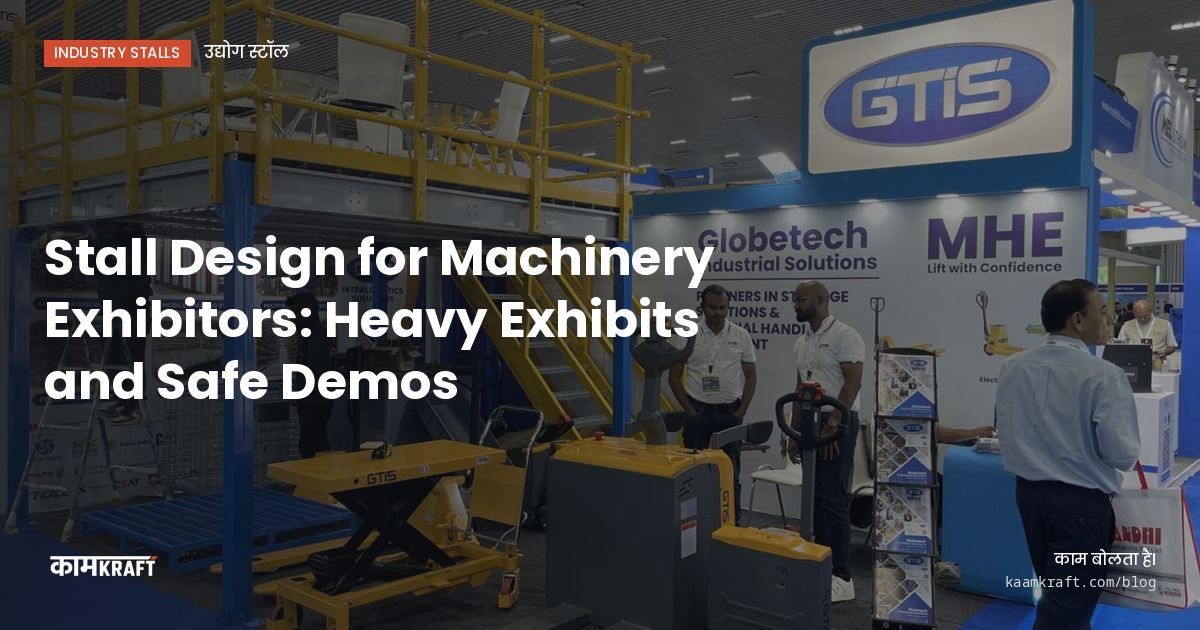
A machinery stall has a different job from most stalls. The machine is the hero, and it is usually heavier, taller and more dangerous than anything else in the hall. So the stall is planned around three things in this order: getting the machine in and standing safely, letting visitors watch it work without getting hurt, and giving your sales team a quiet place to talk once the demo has done its job.
Get that order wrong and you end up with a good-looking design that cannot be built, because the machine has to come in through a wall that is already standing. Here is how we plan machinery and machine tool stalls at our Bengaluru factory, and the questions to settle before the first 3D render.
Start with the machine, not the walls
Before anyone draws a fascia, collect the hard numbers for every exhibit: footprint, height with doors and guards open, weight, and where the lifting points are. Ask your plant team how the machine will be moved: forklift, crane, hydraulic trolley or skates. The answer decides which side of the stall must stay open and how wide that gap needs to be during build-up.
Also ask whether the machine needs power, compressed air or water during the show, and whether it must be anchored or levelled. A machining centre that will run cutting demos is a very different planning job from a static unit with its panels polished for display.
- Footprint and height of each exhibit, including open doors, raised guards and control pendants
- Weight, and whether it sits evenly or on a few concentrated feet
- How it will be lifted and which side it can enter from
- Power, air, water and extraction needs if it runs live
- Whether it arrives on a skid or pallet, and whether that stays under it
- Expected arrival time at the venue, so the build can be sequenced around it
Floor loading and the platform question
Most stalls sit on a raised platform so cables can run underneath and the stall gets a clean edge. With heavy machines, a platform is not automatic. A timber platform built for people and furniture is not meant to carry a machine, and putting a heavy exhibit on one is a risk nobody should take.
The usual answer is a cut-out in the platform so the machine stands directly on the hall floor, with the edges finished so the gap looks deliberate. Another option is to drop the raised platform in the machine zone and use a flat floor finish there. Which one works depends on the machine, the hall floor and the organiser's rules.
Hall floors have load limits too, and they differ by venue and sometimes by hall. Do not assume. Check the organiser's exhibitor manual for the permitted floor load, any rule on spreading point loads with base plates, and whether heavy exhibits need prior approval. Venues that host big machinery shows, such as India Expo Mart in Greater Noida and Bombay Exhibition Centre, cover this in their manuals. Send those numbers to your builder early.
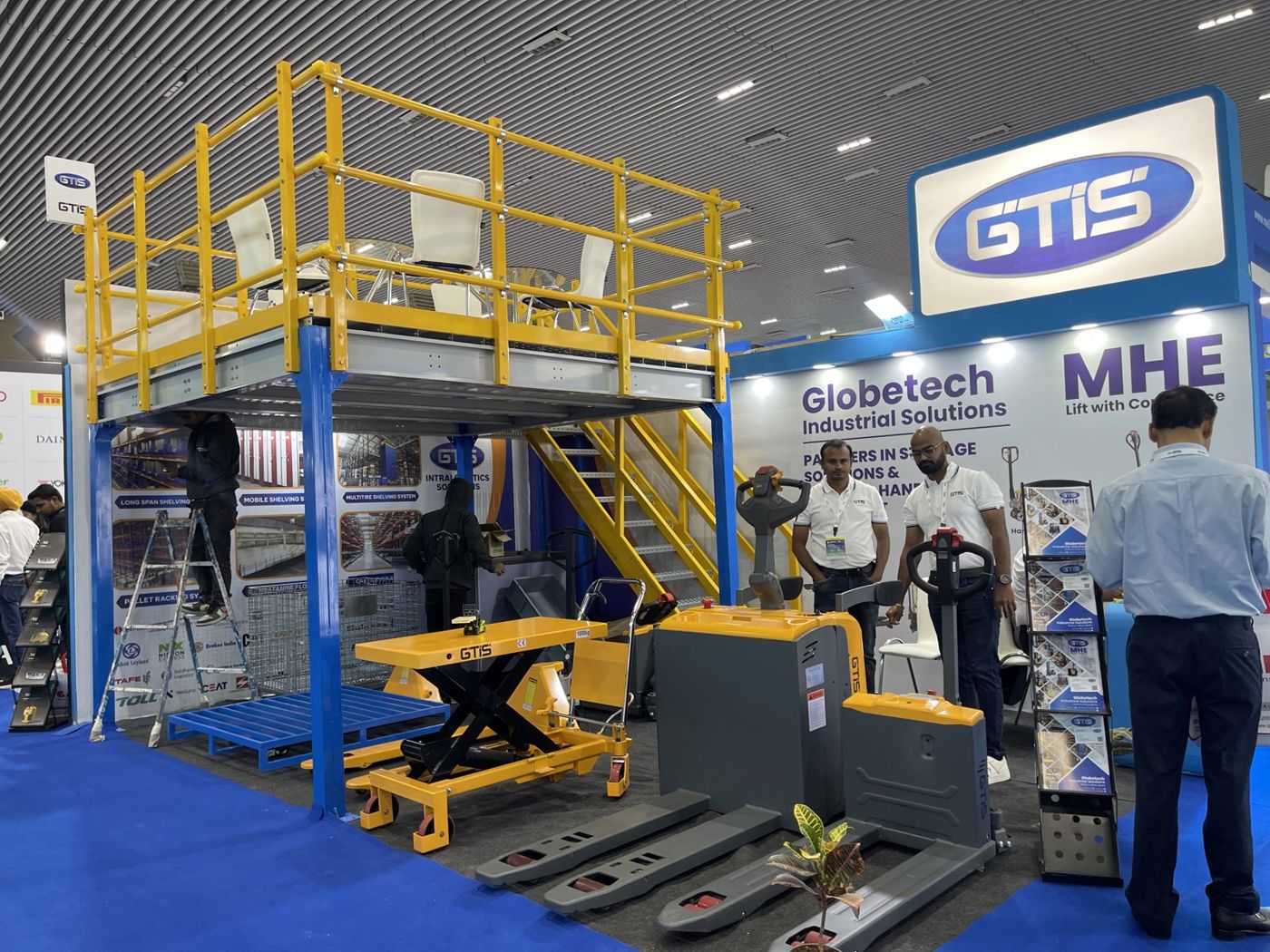
Build the stall around the move-in
Heavy exhibits normally come in during a set window in build-up, and the organiser may control when cranes and forklifts can operate in the hall. The stall has to be planned so the machine goes in first, or so one side stays open until it is placed.
- Mark the stall outline and machine positions on the hall floor from the approved layout.
- Lay the platform around the machine zone, keeping the cut-out or flat area clear.
- Bring in the machine, place it, level it and fix it if required.
- Raise walls, fascia and overhead elements once the lifting equipment has left.
- Finish the floor edges, guarding and graphics around the machine.
- Connect power, air and lighting, then test-run the demo before the show opens.
Because we dry-assemble every stall at our factory in Bengaluru before it ships, we check that machine openings, clear widths and wall positions work in timber, not just on a drawing. A clash found in the factory costs far less than one found on the hall floor with a crane waiting.
Demo safety that does not hide the machine
Visitors want to see the machine cut, press, bend or weld. Your safety team wants clear distance between moving parts and the aisle. The design has to give both.
Keep a clear zone
Mark a demo zone around any running machine and keep it free of furniture and visitor traffic. A low barrier, a step edge or a change in floor finish makes the boundary obvious without looking like a construction site. Organisers often have rules on live demos, guarding and noise, so read the exhibitor manual and start any demo approval well before the show.
Use clear guards and good sightlines
Transparent polycarbonate guards let people watch without stepping into the danger zone. Turn the machine so its working area faces the aisle or the main viewing spot, not the back wall. If the action is small, such as a tool tip on a part, put a camera on it and show the feed on a screen at eye level.
Plan for chips, coolant and noise
Machining demos throw chips and coolant. Plan drip trays, a floor finish that wipes clean and a bin for swarf. Keep fabric walls and printed graphics out of the spray. If the demo is loud, put the meeting area at the far end of the stall with a solid wall in between, not fabric.
Parts, screens and a place to talk
Not every product can travel. Many exhibitors bring one hero machine and show the rest through sample parts, cut sections and video. Put finished components on plinths at hand height, with short labels saying what was made, from what material and on which machine. Buyers in this sector like to pick parts up and check the finish.
Give engineers and sales a meeting area away from the noise, with a table, chairs, a screen for drawings and storage for brochures and bags. On bigger stalls, a closed meeting room helps when buyers want to discuss commercial terms. Overhead branding should clear the height of the machines so people can find you across the hall, but confirm height limits in the manual first.
- Designing the walls first and finding the machine cannot get in
- Putting a heavy exhibit on a standard stall platform
- Turning the working side of the machine away from the aisle
- Leaving no room for the operator to move safely during demos
- Filling graphics with specifications nobody can read from the aisle
- Forgetting storage for tools, coolant, cleaning cloths and spares
Shows where this planning matters
Machine tool and engineering shows reward this kind of planning. If you are preparing for IMTEX 2027 or a metallurgy show like METEC India 2026, start talking to your builder as soon as you know which machines will travel. Regional engineering shows at CODISSIA in Coimbatore need the same thinking at a smaller scale.
Our lead times are 3–4 weeks for shows in Karnataka, 4–6 weeks for the rest of South India and 6–8 weeks elsewhere. With heavy exhibits, aim for the longer end, because floor load questions and demo approvals take time to answer.
Planning a machinery stall?
Send us the show, your stall size and the list of machines you plan to bring, with weights and dimensions if you have them. Plan your project with us, or WhatsApp or call +91 70190 58391. You can also see how we handle custom exhibition stalls from design to dismantling.