
Demo Areas on a Stall: Keeping Live Demos Visible and Safe
How to plan a live demo area on an exhibition stall: placement, sightlines, safety barriers, power, noise, staffing and what to confirm with the organiser.
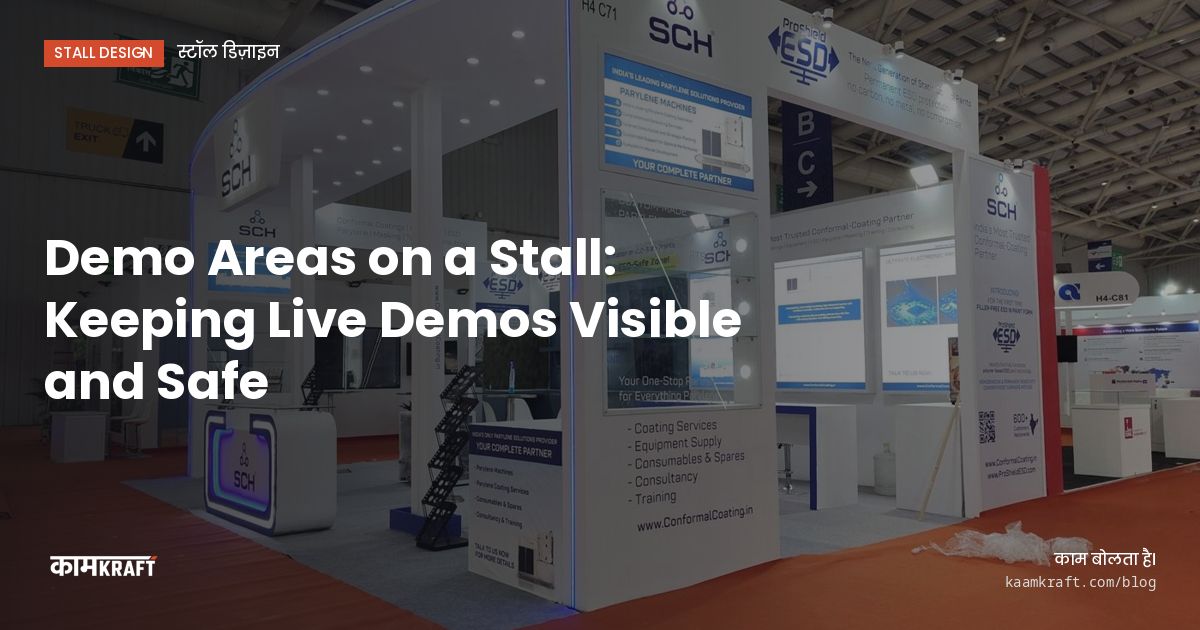
A good demo area sits where the aisle can see it, keeps a clear safety distance between the working product and visitors, and has its own power, storage and staff. Plan it first, before walls and graphics, because a demo affects the stall's layout, electrical load, floor build and how crowds gather.
Live demos pull people in better than almost anything else on a show floor. They also cause the most trouble when they are bolted onto a stall design at the last minute: crowds spilling into the aisle, cables across walkways, a machine nobody can see past the staff standing in front of it.
Decide what kind of demo you are running
Not every demo needs the same space. Sorting yours into one of these types early helps your designer and fabricator plan the right zone.
- Hands-on demos: visitors try the product themselves, such as software, tools, devices or consumer products. Need reachable counters, good lighting and space to queue.
- Staff-run demos: a trained person operates the product while visitors watch. Need a clear viewing area and a raised or open sightline.
- Working machinery: the product runs under power, with moving parts, heat, noise or waste. Needs barriers, safety distances and organiser approval.
- Scheduled shows: a demo at fixed times with a presenter. Needs a small gathering area and a way to announce timings.
Placement and sightlines
Put the demo where the most people can see it without stepping onto the stall. On a corner or island stall, that usually means near an open edge, with the operator facing the aisle. On an inline stall, the demo can sit at the front, but leave a clear entrance beside it so people can still walk in to talk.
Raise the demo if the crowd will be more than one row deep. A low platform or a counter at a comfortable working height lets people at the back see what is happening. Avoid placing tall graphics, screens or plants between the demo and the aisle.
Think about where the watching crowd will stand. If they will stand in the aisle, check the organiser's rules on aisle obstruction in the exhibitor manual. Many organisers expect crowds to be managed within the stall footprint, so you may need to set the demo back and leave a viewing pocket in front.
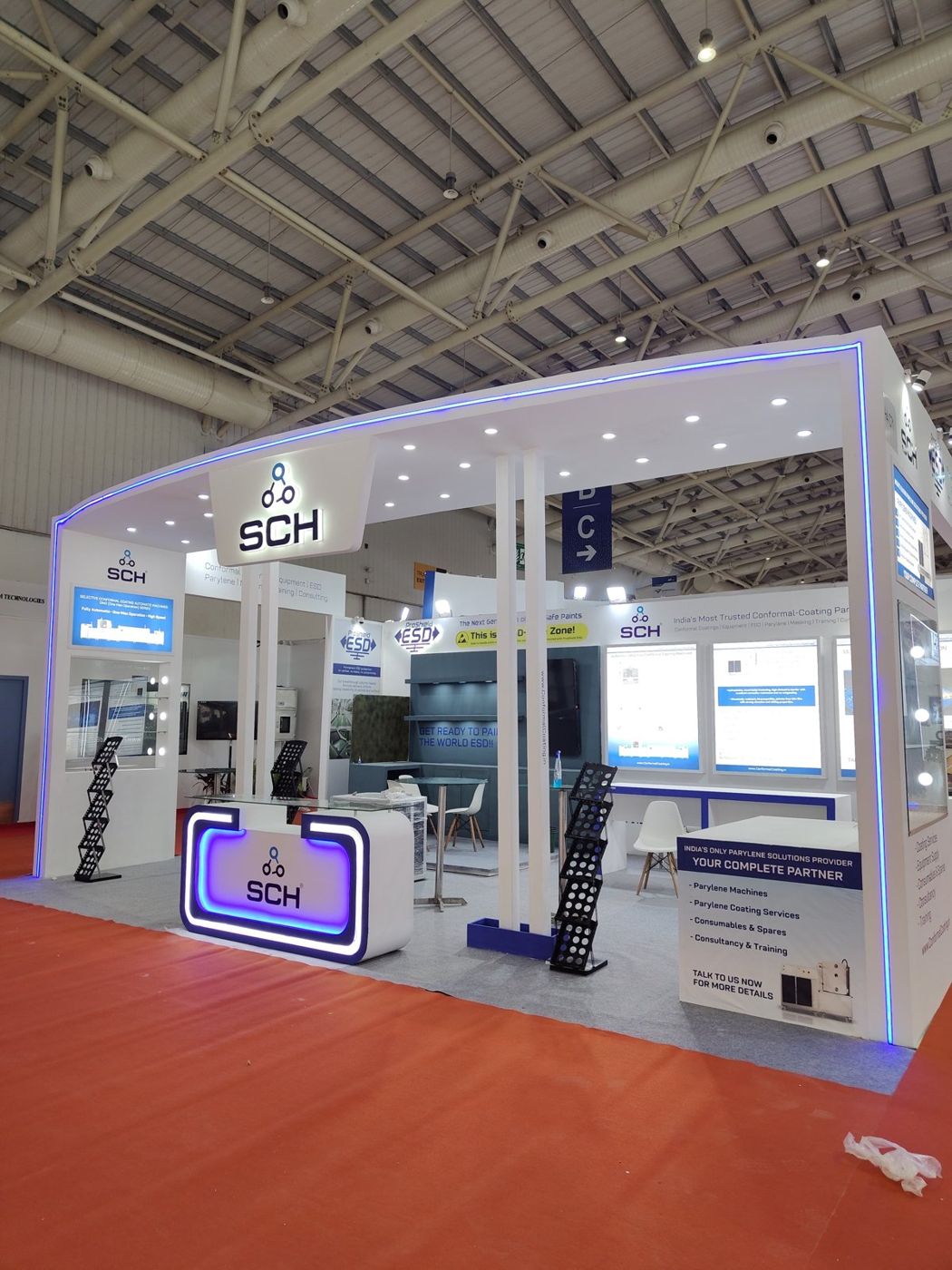
Safety for working demos
If anything on the stall moves, heats up, sparks, sprays or makes loud noise, safety comes before looks. The exhibitor manual usually has a section on machinery and demonstrations, and organisers may ask for details or a declaration before they approve the stall design. Read it early and confirm what applies to your show.
- List the hazards: moving parts, heat, sparks, fumes, noise, waste, pressure, lasers or chemicals.
- Set a clear distance between the working area and the nearest visitor, and mark it physically.
- Use barriers, screens or enclosures that suit the hazard: a rope line is not enough for sparks or flying debris.
- Plan an emergency stop the operator can reach, and make sure staff know where it is.
- Keep cables and hoses under the platform or in covered channels, never across the floor.
- Plan how waste, offcuts or fluids are collected and removed during the show.
- Confirm any permits, fire precautions or extra checks the organiser needs for your type of demo.
For machinery stalls, we often build the demo zone as a raised platform with a fenced or screened edge, and run services through the platform. That keeps the floor clear and makes the safety line obvious. Shows such as India Essen Welding & Cutting 2026 and IMTEX 2027 are typical of events where this planning matters.
Power, data and services
Demos often need more power than the rest of the stall put together. Get the exact power requirement for every machine, screen and device in the demo, including start-up load for motors. Then check the organiser's power ordering process and deadlines in the exhibitor manual, because late orders are often harder to arrange.
Also check whether you need water, compressed air, extraction or a wired internet line. These are usually ordered separately, may have their own deadlines, and the connection points decide where the demo can sit on the stall. Tell your fabricator where services arrive so the platform and walls can be built around them.
Noise, light and the neighbours
A loud demo can annoy neighbouring exhibitors and drown out your own sales conversations. If your demo is noisy, schedule it at set times rather than running it all day, and place meeting areas at the opposite end of the stall. Organisers may also have rules on sound levels, so confirm them before the show.
Bright or flashing light, such as welding arcs or lasers, needs screening that protects visitors' eyes and does not disturb nearby stalls. Plan the screens as part of the stall build rather than adding them on site.
Staffing and storage around the demo
- One trained operator per working demo, plus someone else to talk to visitors who gather.
- A storage cupboard next to the demo for consumables, spare parts, tools and cleaning gear.
- A short, rehearsed demo script so every run shows the key point in a few minutes.
- A lead capture point near the demo so interested visitors are not lost when the run ends.
- Clear signs showing demo times if you run scheduled sessions.
We build demo platforms, enclosures and service channels in our Bengaluru factory and dry-assemble them with the stall, so clearances and cable routes are checked before the stall leaves. For more on layouts that suit heavy exhibits, see our stall design services.
Next step
Tell us what you are demonstrating, how much space and power it needs, and which show you are taking it to. We will plan a demo zone that draws a crowd and keeps it safe. Start with Plan your project, or WhatsApp or call +91 70190 58391.