
Running a Conference at a 5-Star Hotel: Production Checklist
A production checklist for a conference at a 5-star hotel: hotel questions, stage and screens, sound, slide handling, breakouts, rehearsal and load-out.
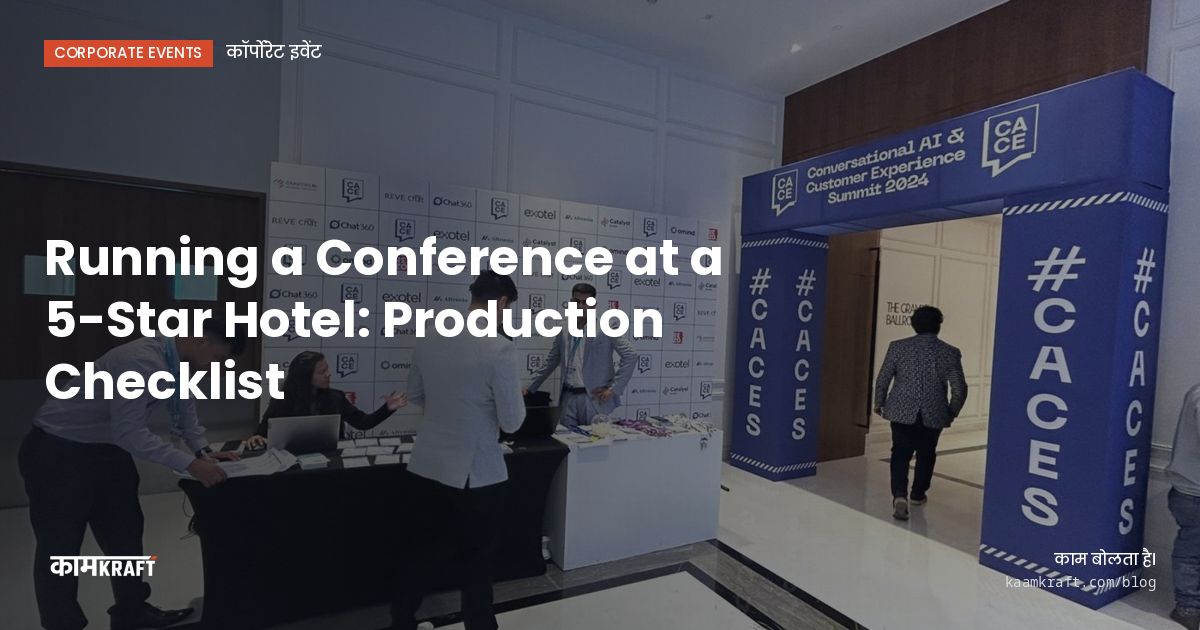
A conference at a 5-star hotel looks effortless when the production plan is settled before anyone arrives: who has the room and when, what the stage and screens need, how sessions hand over, and who calls the show. The hotel provides the room, the food and the service. Everything that happens on stage is your production partner's job.
Use this checklist as the backbone of your plan. It follows the order we work through a hotel conference, from the first site visit to the last truck out.
Before you sign: questions for the hotel
Five-star hotels vary a lot in what they allow and what they supply. Settle these points with the banquet or events team, in writing, early.
- Room access: when set-up can begin, and whether the room is free the night before.
- Load-in: service entrance, lift size, door widths and any time limits on deliveries.
- In-house AV: what the hotel supplies, whether you must use it, and any charges for bringing an outside supplier.
- Power: what is available near the stage, and who arranges extra power if needed.
- Rigging: whether truss or lights can hang from the ceiling, and from which approved points.
- Surfaces: rules on tape, fixings, carpet protection and branding on walls and pillars.
- Sound limits and end times for the main hall and any lawn or terrace.
These answers stop a design from being approved by your team and then refused by the hotel a week before the event.
The main hall: stage, screens and seating
Decide the seating first, because it decides the stage. Theatre seating fits the most people and suits keynote-heavy days. Classroom seating gives delegates a surface for laptops and notes. Round or cluster tables suit workshops but cut capacity.
- Stage height so the back row sees the speaker's face over the heads in front.
- Stage width for the largest panel you will host, plus a lectern.
- Main screen or LED wall sized for the depth of the room.
- Side screens if the room is long or has pillars.
- Confidence monitors at the stage edge, so speakers see their slides without turning round.
- A countdown timer that only speakers can see.
- A technical area at the back of the room for sound, video and the show-caller.
Sound, video and slide handling
Conference sound has to be clear, not loud. Ask for even speaker coverage across the hall, wireless lapel mics for presenters, handhelds for questions, and spares charged and labelled. If sessions are recorded or streamed, the video team needs a clean audio feed from the sound desk.
Slide handling is where many conferences slip. Speakers arrive with decks in different formats, embedded videos that do not play and last-minute edits. Set up a speaker ready room with a technician, collect files a day ahead, test them on the show machine and lock the order.
- Share a slide template and the screen ratio with every speaker in advance.
- Set a deadline for final files, ideally the day before.
- Load every deck on the show machine and a backup machine.
- Play every embedded video once, with sound, on the actual screen.
- Keep a printed list of session order, speaker names and file names at the tech desk.
Breakouts and pre-function areas
Breakout rooms need their own small setup: a screen, a laptop connection, a mic if the room is large, and someone who can fix a problem in two minutes. Assign a technician to float between breakouts instead of leaving each room to manage on its own.
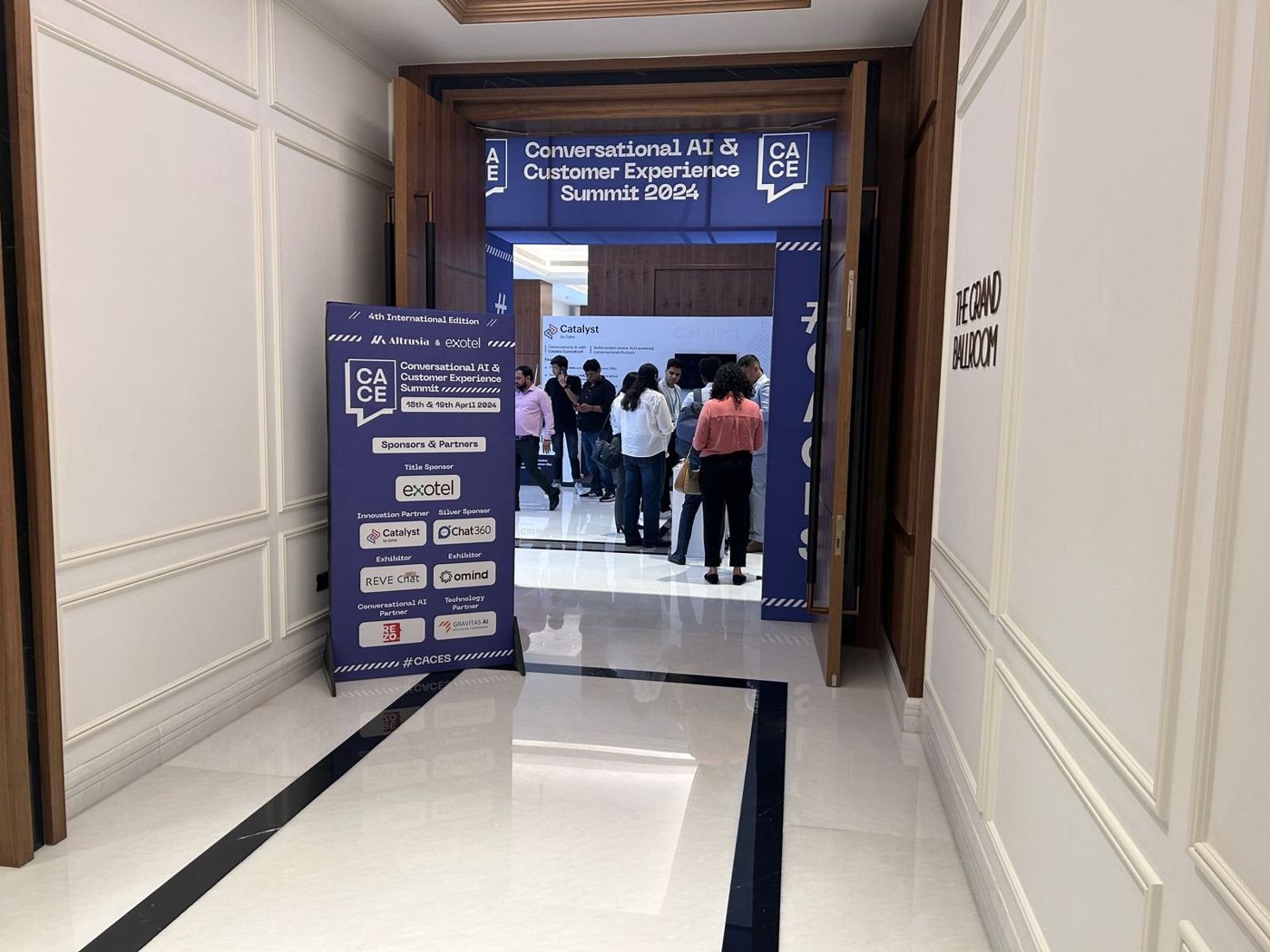
The pre-function area is where delegates register, network and drink coffee. Plan registration desks, directional signs and a photo or sponsor wall here. Our corporate events work covers these spaces as well as the main hall, and we build the branded pieces in our factory so they arrive ready to stand.
- Registration counters sized for the arrival rush, with power for badge printers.
- Signs from the lobby to the hall, readable from a distance.
- A sponsor or photo wall away from the main traffic path.
- A quiet corner for speakers to wait before their session.
Rehearsal and show-calling
Book a technical rehearsal in the main hall after set-up and before delegates arrive. Run the opening, at least one panel changeover and any video-heavy session. Bring the host and as many speakers as you can.
On the day, one show-caller runs the event from the tech desk, cueing walk-in music, lights, slides, video and mics in order. The show-caller also stays in touch with the hotel's banquet captain, so coffee breaks and lunch follow the real timings and not the printed agenda.
Name the people who make decisions on the day. Agree who on your team can approve a change to the running order, who looks after senior speakers, and who speaks to the hotel if something goes wrong. When a session overruns by twenty minutes, the show-caller needs one person to ask, not five.
Load-out and handover
Ask the hotel what time the room must be clear, and plan the dismantle to finish before then. Your partner should remove all equipment, tape and fixings, and hand the room back as it was received. Keep reusable branding for the next event rather than throwing it away. Do a walk-round with the hotel's duty manager before the crew leaves, and note anything that needs attention, so there are no surprises later.
Running a conference in Bengaluru? See our notes on hotel venues in Bengaluru. For other cities, start with our locations page.
Planning a conference?
Send your dates, hotel and agenda through Plan your project, or WhatsApp or call +91 70190 58391. We will come back with a stage plan, an AV list and a production schedule.