
What Drives the Cost of an Exhibition Stall
What makes an exhibition stall cost more or less: size, height, materials, finishes, lighting, AV, distance, timeline, organiser services and reuse.
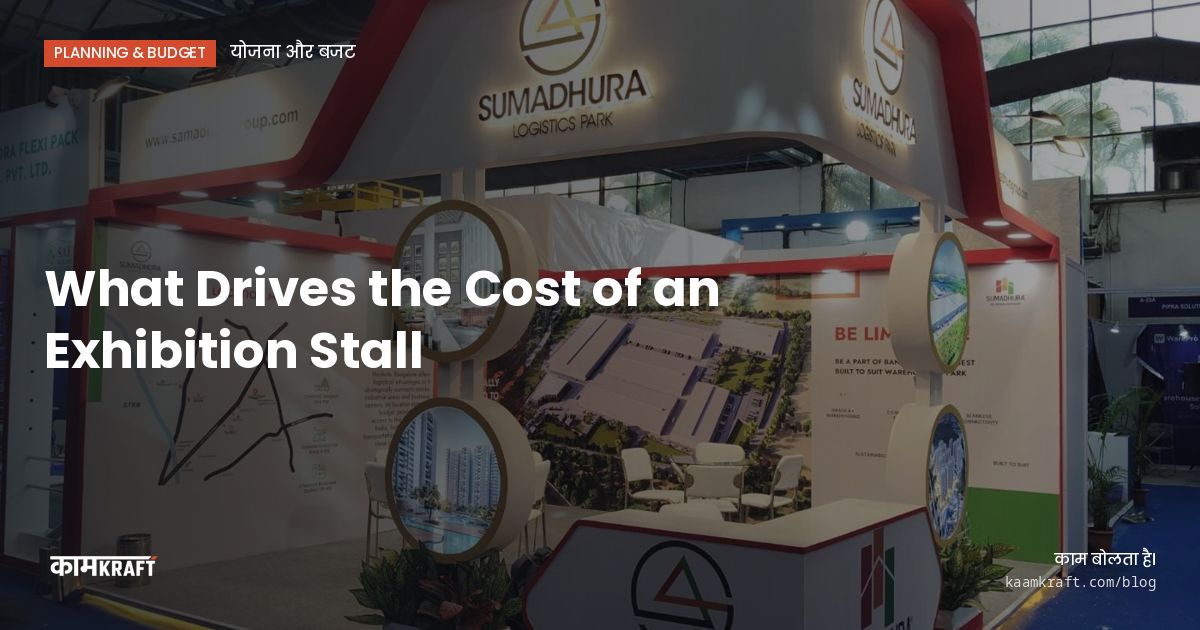
The cost of an exhibition stall is driven mainly by how much is built, how it is finished, and how far and how fast it has to travel. Floor area matters, but height, number of walls, materials, lighting, screens, special features, distance from the factory, the timeline and organiser services often move the cost more than size alone. Two stalls of the same size can differ a great deal depending on these choices.
Knowing what drives cost helps you spend where visitors notice and save where they do not. Here is how each factor works, from the factory floor's point of view.
Size, height and structure
A larger stall needs more flooring, more walls and more of everything else, so cost grows with area. But structure often matters more than footprint.
- Height: tall walls and fascias need stronger frames, more material and more crew to raise safely.
- Number of walls: an open island with few walls can use less material than a smaller stall enclosed on three sides.
- Raised platforms: a built platform adds material and labour but hides cables and lifts the stall visually.
- Upper decks: a double-decker stall adds structure, stairs, safety rails and approvals, and is one of the biggest cost steps.
- Meeting rooms and stores: enclosed rooms add walls, doors, ceilings and lighting.
Materials and finishes
Materials and finishes are where the same design can be built at very different levels. Painted board is generally simpler than specialised laminates, veneers or metal cladding. Curved walls need more skilled work than straight ones. Acrylic, glass and polished surfaces cost more to buy, to handle and to transport without damage.
The finish quality also changes the labour. A stall that will be seen up close at a premium show needs more careful sanding, painting and edging than one seen mostly from the aisle. Ask your fabricator which finishes give the best result for the effort, and use expensive materials only where visitors will touch or look closely.
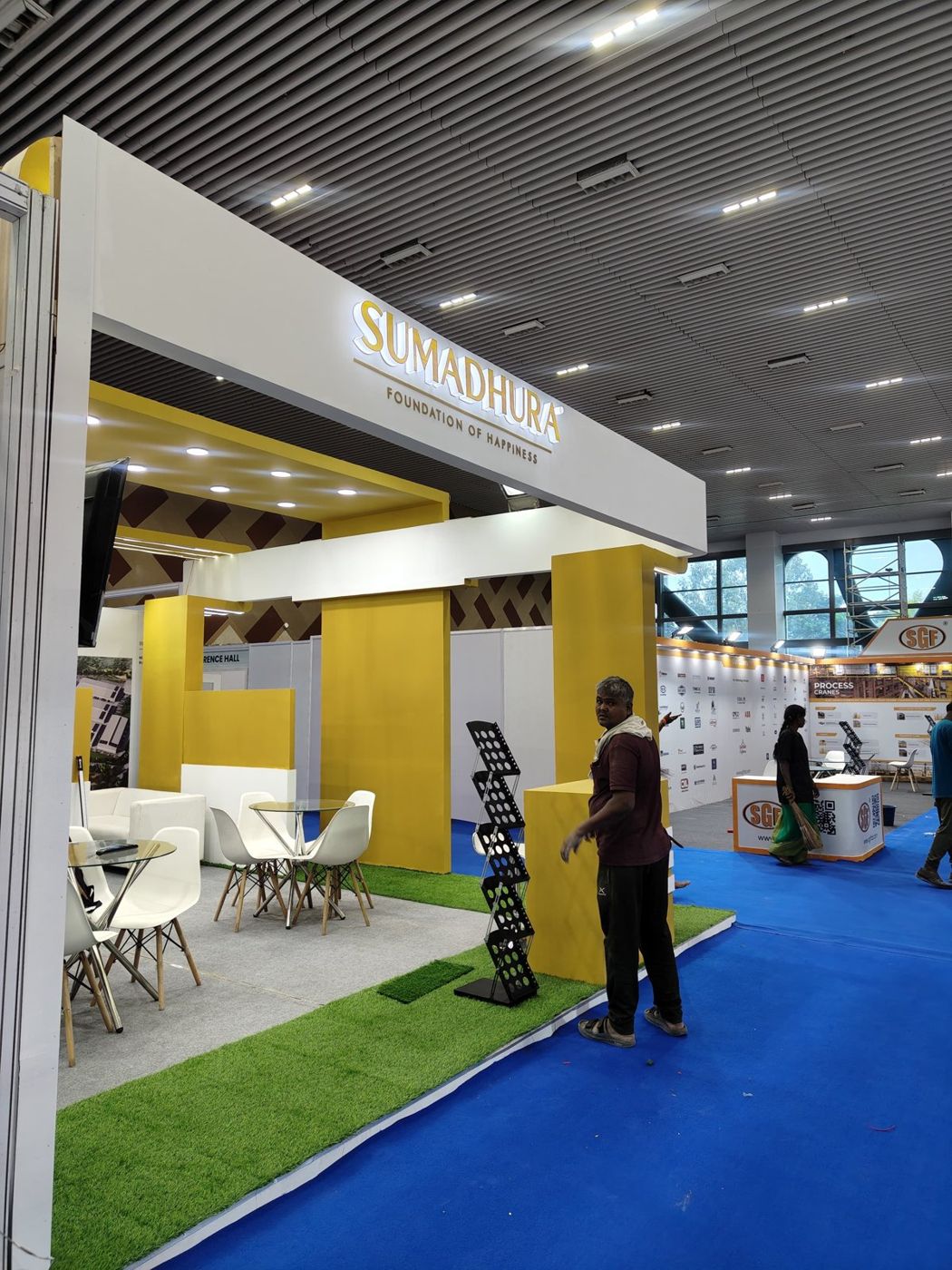
Lighting, screens and special features
Lighting is one of the most effective things to spend on, because it changes how everything else looks. More fittings, backlit panels, lit logos and LED strips all add cost, both in hardware and in the electrical work to install them.
Screens and LED walls add cost in hire or purchase, in mounting structure, in power and in the content you need to make for them. Special features such as turntables, interactive displays, live demo zones, water features or product reveals each add their own design, build and testing time. Each is worth it only if it serves the show's goal.
Power is the hidden partner of all of these. Every extra light and screen adds to the electrical load you order from the organiser, and a larger load can cost more at the venue as well as in the stall's own wiring. Plan lighting and AV together so the load is counted once and ordered correctly.
Graphics
- Total print area: more walls covered in graphics means more printing and installation.
- Material: fabric, vinyl, backlit film and printed boards each cost differently.
- Lit graphics: backlit panels need light boxes as well as prints.
- Late changes: reprinting graphics after files are sent adds cost and risk.
- Reusable frames: fabric in frames can be reprinted for the next show without rebuilding the wall.
Distance, logistics and timeline
Where the show is matters. A stall built in our Bengaluru factory for a Bengaluru venue travels a short distance with less packing and fewer days on the road. A stall for Delhi NCR or Mumbai needs careful packing, longer transport, crew travel and accommodation. That is why lead times grow with distance: 3 to 4 weeks for Karnataka, 4 to 6 weeks for the rest of South India, and 6 to 8 weeks elsewhere.
A short timeline also raises cost. Rushing a stall means overtime, express transport and fewer chances to source materials at their usual pace. Briefing early is one of the simplest ways to keep cost under control. For a show like India ITME 2026 at India Expo Mart, 4 to 9 December 2026, or IITF 2026 at Bharat Mandapam, 14 to 27 November 2026, a long show also means longer crew support on site.
Organiser and venue costs
Some costs sit outside the fabricator's quotation and are paid to the organiser or venue. These vary by show, so check the exhibitor manual for each one.
- Space rental for the stall itself.
- Power connection and load, charged by the organiser.
- Contractor registration or deposits for your fabricator.
- Rigging points for hanging banners.
- Water, compressed air, internet and other services.
- Penalties or extra charges for late orders or overtime at build-up.
How to bring cost down without a plain stall
- Keep walls to what you need, and leave more of the stall open.
- Spend on lighting and one strong feature rather than many small ones.
- Use premium finishes only on surfaces people touch or see close up.
- Approve the design in fewer rounds, and send graphic files on time.
- Brief early to avoid rush charges.
- Design for reuse across shows, so later shows need mainly new graphics and refreshed finishes.
If you share your budget range in the brief, a good designer can make these trade-offs for you from the start, rather than cutting things out after the first quotation.
Planning a stall?
Tell us your show, stall size and a budget range, and we will design to it and explain where the money goes. Start with Plan your project, or WhatsApp or call +91 70190 58391.