
Textile and Apparel Stalls: Fabric Displays and True-Colour Lighting
How to design a textile or apparel stall: swatch walls, hanging rails, touch tables, and lighting that shows fabric colour the way buyers will see it later.
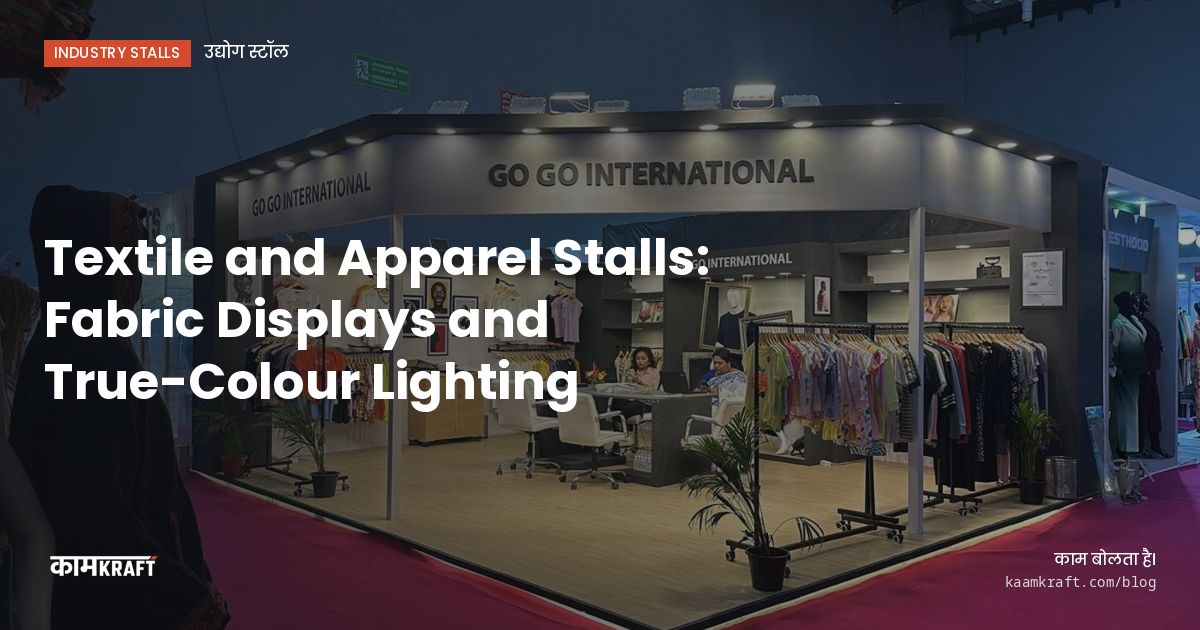
A textile or apparel stall sells through touch and colour. Buyers want to feel the hand of the fabric, see how it falls, and trust that the shade they see on the stall is the shade they will get in the bulk order. So the design needs two things done well: displays that let people handle the product, and lighting that shows colour honestly.
The lighting part is where most textile stalls fall short. Coloured LED strips, mixed warm and cool lamps, and dim corners all distort colour. Get the light right and a simple stall can do more for your fabrics than an elaborate one with poor lighting.
Lighting for true colour
Hall lighting varies a lot between venues and even between halls, so do not rely on it. Your stall should light its own product. The two things to ask your builder about are colour rendering and colour temperature.
Colour rendering
Colour rendering describes how faithfully a light source shows colours compared with natural light. For fabric, ask for LED fittings with high colour rendering, and ask the supplier for the rating rather than assuming. Cheaper fittings can make reds look brown and navy look black, which is exactly what a buyer is checking for.
Colour temperature
Pick one colour temperature for all product lighting and stick to it. A neutral white is a common choice for fabrics because it sits between warm and cool. Mixing warm spotlights on one wall and cool panels on another makes the same fabric look different across the stall. If buyers usually check shades in daylight or in a light booth at their office, light close to that.
- Use the same make and model of fitting across all product walls
- Avoid coloured LED washes anywhere near the product
- Light vertical displays evenly from above and in front, not only from the top edge
- Remove shadows inside shelves with strip lights under each shelf
- Keep a small daylight-style lamp at the counter for close shade checks
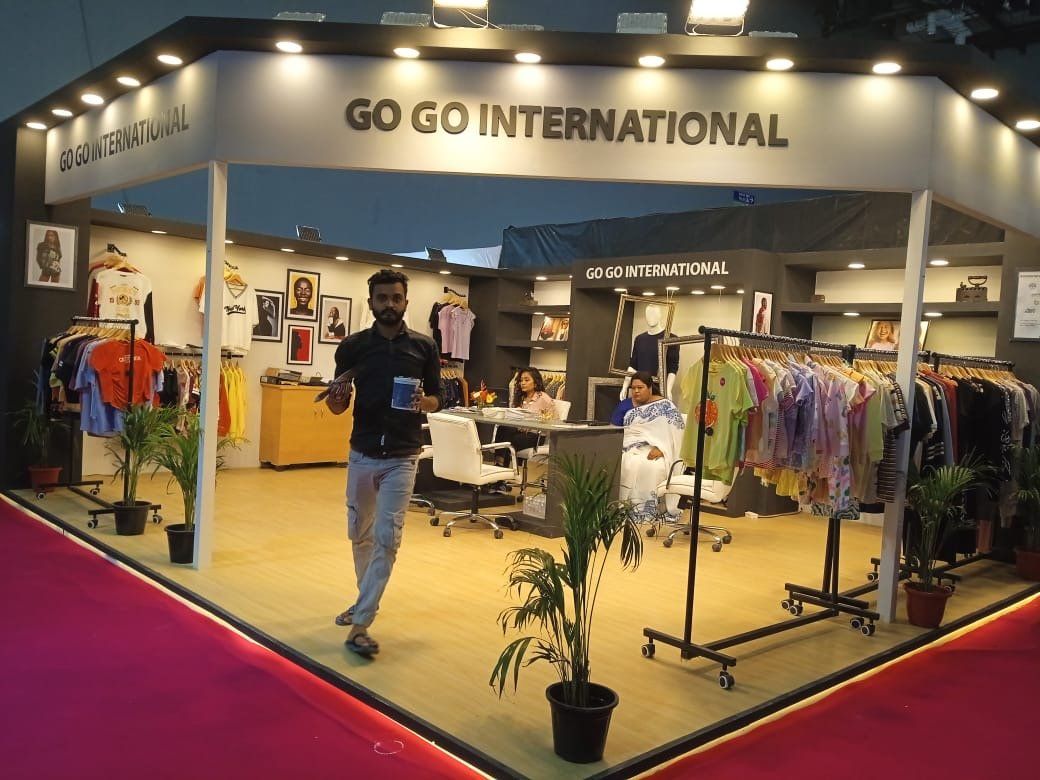
Display formats that let buyers touch
Different products need different displays. A stall that mixes them well lets buyers browse quickly and then sit down with the pieces they like.
- Swatch walls with hooks or rails, so buyers can lift and feel each swatch
- Hanging rails for garments, with enough gap between hangers to pull pieces out
- Draping stands that show how a fabric falls over a length of a metre or two
- Fabric rolls on racks for home textiles, upholstery and technical textiles
- Touch tables with folded stacks, organised by quality or colour family
- Mannequins or half forms for finished apparel, placed near the aisle
Keep the most touched items at hand height and the most visual pieces higher up, where they can be seen from the aisle. A long drape or a full-length garment on a tall wall works as a signal from across the hall. Swatch cards or small sample bundles to take away help buyers remember you after a long day of stalls.
Walls and finishes that do not fight the fabric
Background colour changes how fabric looks. Strong coloured walls bounce colour onto the product and confuse the eye. Neutral walls in white, off-white or light grey let fabric colours read correctly. Use your brand colour on the fascia, the counter and a feature panel, not behind the product.
Textures also matter. Glossy laminates reflect spotlights into buyers' eyes. A matt paint or matt laminate finish behind fabric displays keeps the focus on the product. If you want a patterned feature wall, keep it away from the main swatch area.
Space for orders, samples and storage
Textile exhibitors often take orders or sampling requests on the stall. Give the team a sitting area with a large table where swatches can be spread out, with good light directly above it. Buyers will compare shades side by side here, so the light at the table matters as much as the light on the walls.
Storage is easy to underestimate. Spare swatches, catalogues, order books, hangers and steamers all need a home. A store room with shelves is better than boxes under the counter. A steamer and an iron with a safe place to use them keep displays crisp, but check the power load and any rules on heating appliances in the organiser's manual.
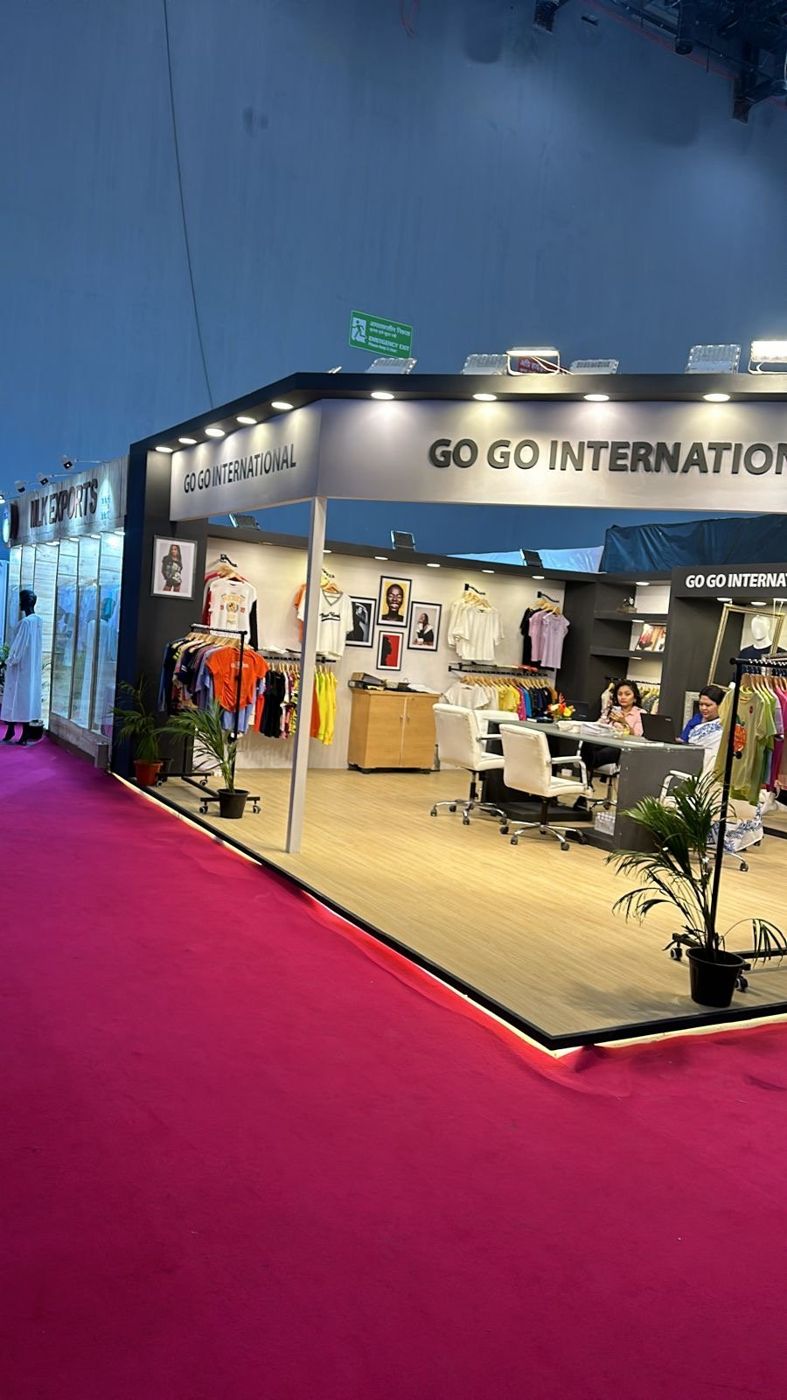
Before the show opens
Do a colour check on the stall once lighting is connected. Hold your master swatches under the stall lights and compare them with the same swatches in daylight or your office light booth. If a shade looks wrong, move it, change the fitting above it, or add a note for the sales team. It takes half an hour and saves awkward conversations with buyers later.
Changing collections from show to show
Textile companies show new ranges each season, so plan the stall to change easily. Rails, hooks and slatted panels let you rearrange displays without new carpentry. Keep the structure, counter and lighting as a reusable kit, and change only graphics and the product mix. Our reusable stall approach is built for this kind of repeat exhibiting.
If you are showing machinery rather than fabrics, our notes on India ITME 2026 cover heavy textile machinery. For textile clusters in western Tamil Nadu, see our stalls in Coimbatore, and for shows closer to our factory, our Bengaluru stall builds. Lead times are 3–4 weeks for Karnataka, 4–6 weeks for the rest of South India and 6–8 weeks elsewhere.
Planning a textile stall?
Tell us what you make, how you want to display it and the show you are booking. Plan your project with us, or WhatsApp or call +91 70190 58391, and we will plan the displays and lighting together.