
Storing a Stall Between Shows and Refreshing It for the Next
How to store an exhibition stall between shows and refresh it for the next one: inspection, storage conditions, new graphics, resizing and when to rebuild.
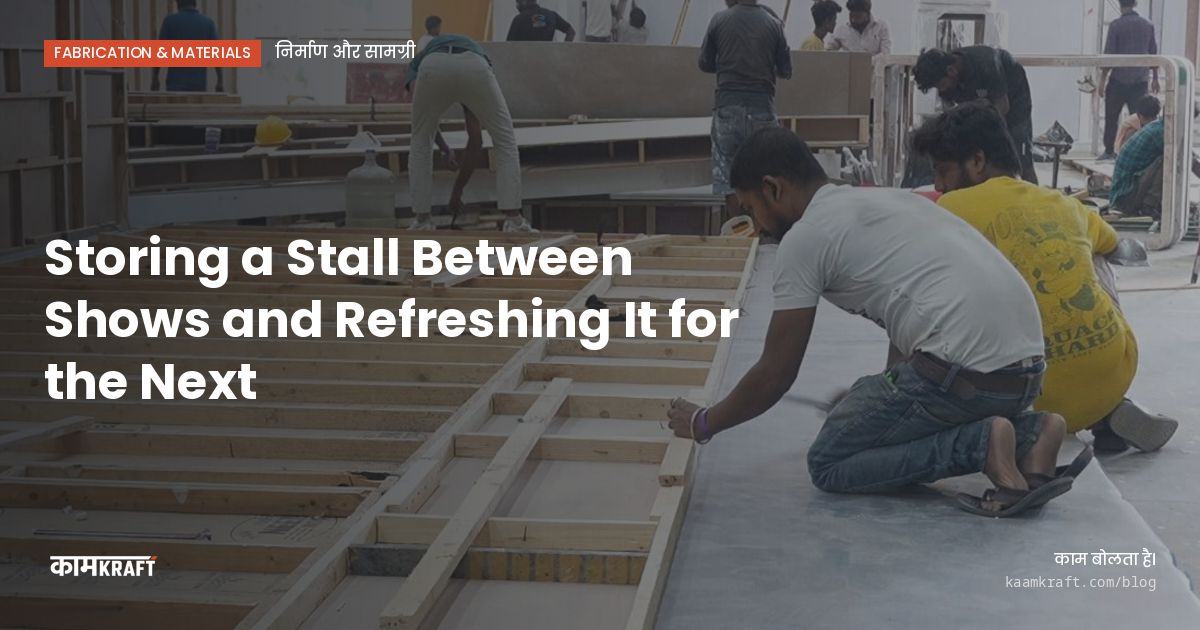
Inspect the stall as soon as it comes back, repair what was damaged, store it dry and properly supported in labelled crates, and keep a record of every part. Before the next show, update the graphics, adapt the layout to the new space and run a trial assembly. Done this way, a well-built stall can serve several shows and still look fresh each time.
Reuse is not automatic. It depends on how the stall was built, how carefully it was dismantled and how it was stored. Here is the process we follow, and the decisions you will need to make between shows.
Inspection when it comes back
The best time to assess a stall is when it returns from a show, while damage is fresh and staff remember what happened. Every crate is opened, parts are checked against the packing list, and anything chipped, scratched or broken is noted with photographs.
- Panel edges and corners, where most transit damage happens
- Painted faces, for scuffs and dents
- Joints and fixings, for wear or loosening
- Lights, connectors and drivers, tested one by one
- Graphics, marked for reuse or replacement
- Missing fixings and small parts
Repairs are easier now than in the rush before the next show. A panel repaired and repainted with weeks to spare looks better than one patched in the final days.
Share the inspection notes with your marketing team too. Knowing that a counter top is worn or a lightbox driver failed during the show helps them plan the next budget honestly, instead of discovering the problem a fortnight before the next build-up.
Storage conditions
Moisture, pressure and dust are the main enemies. Board-based panels can swell or warp if stored somewhere damp, so storage must be dry and covered. Panels are stored flat or upright with proper support, never leaning at an angle where they can bow over the months.
Painted and laminated faces are wrapped and kept apart. Glass and acrylic stay in their crates. Electricals are boxed and kept dry. Everything is labelled so the stall can be found and checked without unpacking all of it. Our factory in Bengaluru can store client stalls between shows, which also means they sit next to the workshop when it is time to refresh them.
Keep a stall record
A simple record for each stall saves time later: the drawings, a photo of each panel, the packing list, the finishes and paint shades used, and notes from each show. When a new space size comes up, the designer can see straight away what exists and what needs to be made.
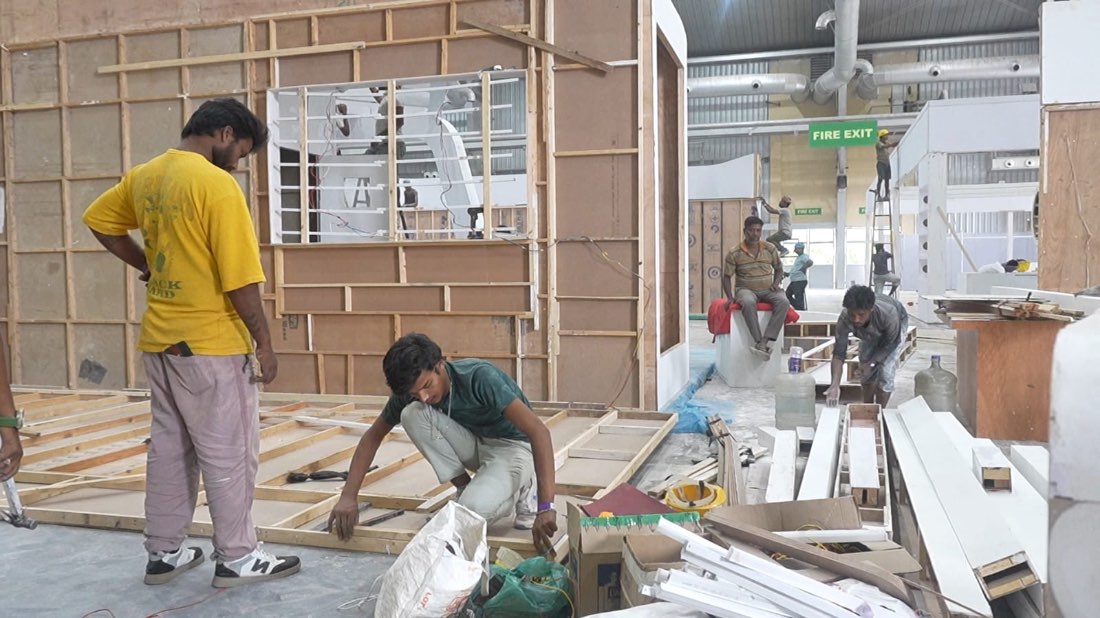
What a refresh usually includes
A refresh is the work that makes a reused stall look current. It ranges from small touch-ups to a significant redesign around the same structure.
- Repairs to damaged panels and edges
- Repainting or re-laminating faces that show wear
- New graphics for new products, campaigns or messaging
- Updated lighting where the old setup underperformed
- Reconfiguring the layout for a different space size or open sides
- Adding or removing modules, such as a meeting room or extra storage
Each refreshed stall goes through a trial assembly again, so you see it before it ships and the crew learns any new build order.
Plan the refresh early
Treat a refresh like a small new project. Share the new show, the new space and any changes in products or messaging as early as you would for a new stall. New graphics need artwork approval, new modules need drawings, and repainted panels need drying time. A refresh is quicker than a full build, but it is not instant.
It also helps to separate what must change from what would be nice to change. A new product launch might need a new hero wall and new graphics, while the counters, storage and floor can stay exactly as they are. Keeping the list tight is how reuse stays good value.
Adapting to a different space
The hardest part of reuse is a different space. If you had a 6x3 inline at one show and a corner space at the next, the stall needs to adapt. Stalls designed for reuse use standard panel widths and modular parts, so walls can be removed, a side opened up or a counter moved. Stalls designed as one-off pieces are much harder to adapt.
Some calendars raise a different question. For exhibitors doing both Convergence India 2027 and Mobile India Expo 2027, which run on the same dates, 23 to 25 March 2027, at Bharat Mandapam, one stored stall cannot be in two places. You may need two stalls at once, or one stall design built twice. That decision is worth making early.
When to rebuild instead
Reuse is not always the right call. If the brand has changed a lot, if the stall has been damaged repeatedly, or if the next space is very different, a new build can make more sense. Storage also costs money over time, so a stall that will sit unused for a long stretch may not be worth keeping.
A good rule is to keep the structure and refresh the surfaces for as long as the structure still fits your needs. We explain this approach on our reusable stalls page.
Planning your next show?
Tell us your stall's current condition and your next show, and we will suggest whether to refresh, adapt or rebuild. Start with Plan your project or WhatsApp or call +91 70190 58391.