
Paint, Laminate, Vinyl or Fabric: Finishing Exhibition Stall Walls
Paint, laminate, printed vinyl or tension fabric for stall walls: how each looks under lights, survives travel, carries graphics and suits reuse.
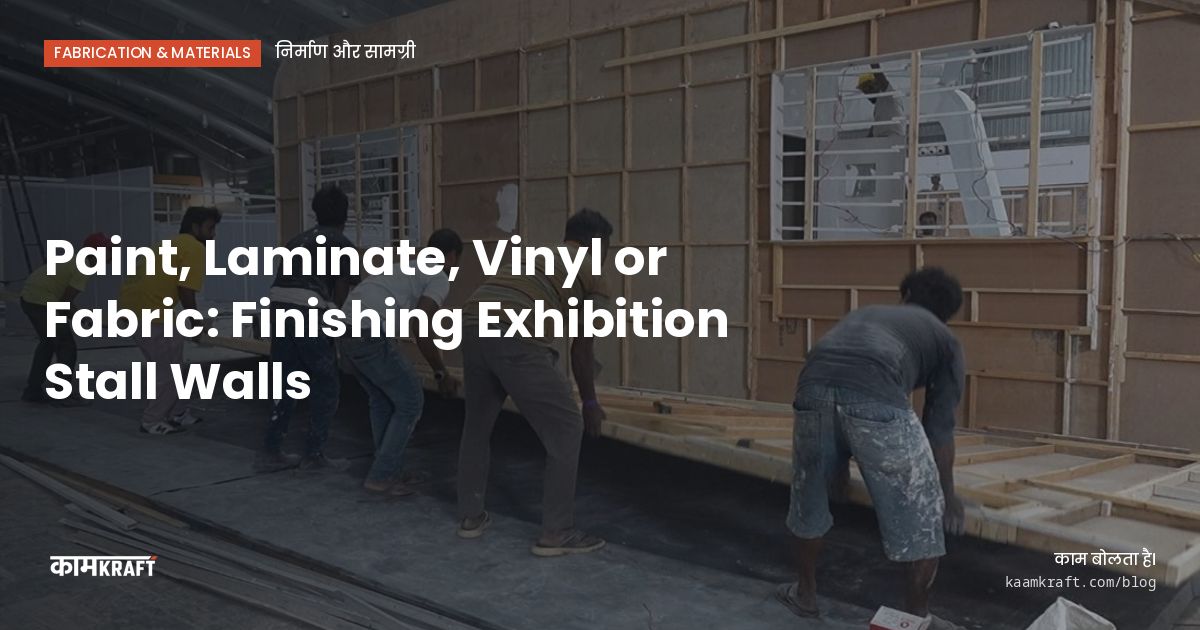
Pick paint for smooth solid colour and exact brand shades, laminate for hard-wearing surfaces that get touched, printed vinyl for detailed graphics on solid walls, and tension fabric for large, light, seam-free images that are easy to change between shows. Most stalls combine two or three of these.
The finish is what visitors actually see and touch, and it is also what takes the damage in transit. So the right choice depends on the look you want, the lighting, how far the stall travels and whether you plan to reuse the walls.
Paint
Paint gives the cleanest solid colour, and it can be matched to your brand shade. Matt finishes hide minor surface imperfections; gloss finishes look premium but show every dent, joint and fingerprint under stall lights.
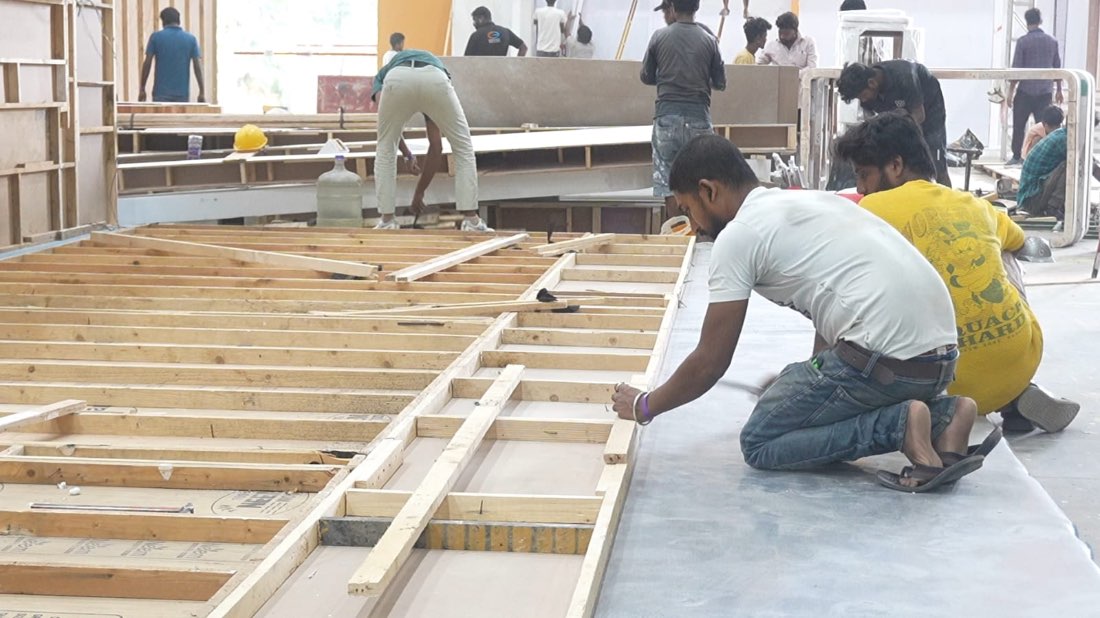
Good paint work depends on the board underneath. MDF takes paint smoothly; plywood needs more filling and sanding. Joints between panels need careful treatment, or a visible line runs across the wall. Painted surfaces scuff in transit, so we carry matched paint for touch-ups. Check the exhibitor manual too, since some organisers restrict painting inside the hall.
Paint works best for
- Feature walls in brand colours
- Curved fascias and routed shapes
- Calm, solid backgrounds that let products stand out
Laminate
Laminate is a factory-pressed decorative sheet bonded to board. It is tough, easy to wipe clean and comes in solid colours, wood grains, stone looks and metallic finishes. That makes it ideal for counters, cabinet fronts, plinths and any surface that people lean on or touch all day.
Its limits are colour and shape. You choose from the shades available rather than mixing your exact brand colour, and tight curves are difficult. Edges need edge banding or trims, and a badly finished edge is the first thing a visitor notices at counter height.
Printed vinyl
Vinyl is printed and applied to a smooth panel. It carries photographs, product images and detailed artwork that paint cannot, and it is the usual choice for graphics on solid stall walls. A matt laminated vinyl cuts glare from overhead lights.
Application quality matters. Vinyl shows any bump or speck of dust beneath it, and the joints between printed widths need to be planned so they do not cut through a face or a logo. On walls that will be reused, vinyl can be stripped and replaced with new artwork, though careless removal can lift the paint below.
Fabric graphics
Tension fabric, usually dye-printed, is stretched into frames, often aluminium profiles with a silicone edge. It gives large, seam-free images that do not reflect light, and it folds small for travel. With lights behind it, the wall becomes a lightbox that glows evenly.
Fabric needs a frame designed for it, and the print size must match the frame exactly. It does not suit surfaces that need to be touched or wiped, and it looks soft if the frame is not tensioned properly. For brands that change messaging every show, fabric is often the simplest way to refresh, since only the print is replaced. It works well with reusable stall frames.
Choosing by situation
- Travelling far: lean on laminate and fabric, which handle transit well, and plan touch-ups for paint
- Strong lighting: use matt paint and matt vinyl to avoid glare
- High-touch areas: laminate on counters, plinths and cabinet fronts
- Changing messages: fabric or replaceable vinyl panels
- Exact brand colour over large areas: paint
- Photo-heavy designs: vinyl or fabric
Mixing finishes works well. A painted wall with a fabric lightbox, a laminate counter and a vinyl logo is a common and sensible combination, with each finish doing the job it is best at.
Mistakes that show up on opening day
Most finish problems are not about choosing the wrong material. They come from small decisions made late or skipped altogether. These are the ones we see most often when stalls built elsewhere come to us for a refresh.
- Gloss paint on a large wall facing bright hall lights, which shows every ripple in the board
- Vinyl joints planned on screen without checking panel joints, so a seam runs through a face
- Laminate counters with raw or poorly banded edges at the height visitors touch
- Fabric prints ordered before the frame is built, then found to be slightly too small
- No touch-up kit on site, so a scuff from unloading stays visible for the whole show
- Brand colour approved on a phone screen instead of on a printed or painted sample
Each of these is easy to prevent in the factory and hard to fix at the venue, where time is short and some work may not be allowed under the organiser's rules.
Ask for samples before you approve
Colours shift between screen, proof and finished panel, and they shift again under stall lighting. Ask for finish samples viewed under similar light before approving. We prepare sample panels at our factory for colour-critical brands, and the full finish is checked again during the trial assembly.
Also ask how each finish will be protected on the truck and repaired at the venue. A fabricator who has an answer for both has usually learned it the hard way. Our exhibition stall service covers finishes from design through installation.
Planning a stall?
Tell us the look you want and how many shows the stall will do, and we will suggest finishes that fit both. Start with Plan your project or WhatsApp or call +91 70190 58391.