
Dismantling Day: Leaving the Venue Cleanly and On Time
How to plan stall dismantling at the end of a show: securing products, teardown order, waste removal, deposits, reuse and handing back the space on time.
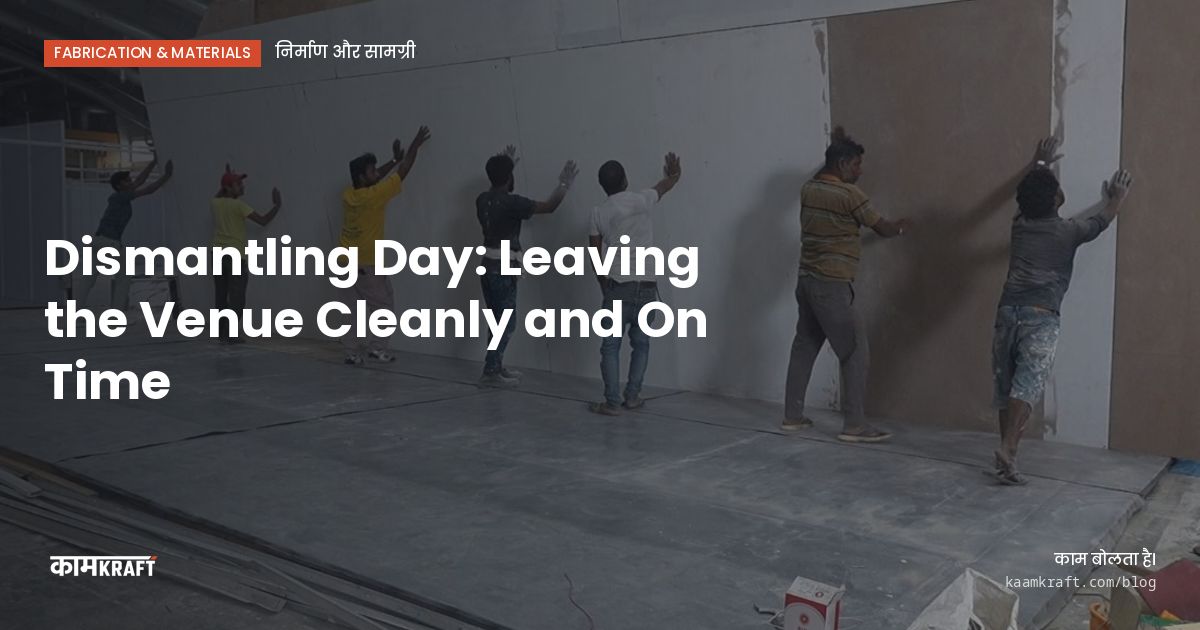
Plan dismantling before the show opens, not when it closes. Know the organiser's dismantling hours, get products and valuables off the stall first, take the stall down in reverse build order, remove all your waste and hand back a clean space. That is how you leave on time, protect the stall for reuse and keep any deposit the organiser holds.
Dismantling is the most rushed and least supervised part of any show. Everyone is tired, aisles are crowded and trucks are queuing outside. A clear plan makes the difference between a stall that survives for the next show and one that ends up as scrap.
What to confirm in the exhibitor manual
Dismantling rules vary by show and venue, so check the manual rather than assuming. These are the points that most affect your plan:
- When dismantling may start, and whether anything can be removed before the show officially closes
- The deadline for vacating the space, and any penalties for overrunning
- When and where vehicles can enter for loading out
- Rules on waste removal and what happens to material left behind
- Any deposit, and the conditions for getting it back
- Gate passes needed to take products and equipment out of the venue
Share these with your fabricator and your own team well before the last day. The crew plan, the truck booking and your staff's travel all depend on them.
The first hour after closing
When the show closes, product goes first. Your team should pack samples, screens, demo units and laptops and get them signed out of the venue before the crew starts taking panels down. Valuables are most at risk in that first hour, when the hall fills with people, lights change and stalls are open on every side.
Keep a simple list of everything that came onto the stall and tick it off as it leaves. Brochures, giveaways and furniture hired from the organiser each need their own process. Hired items usually have to be returned or left in a set place, so check before your team leaves.
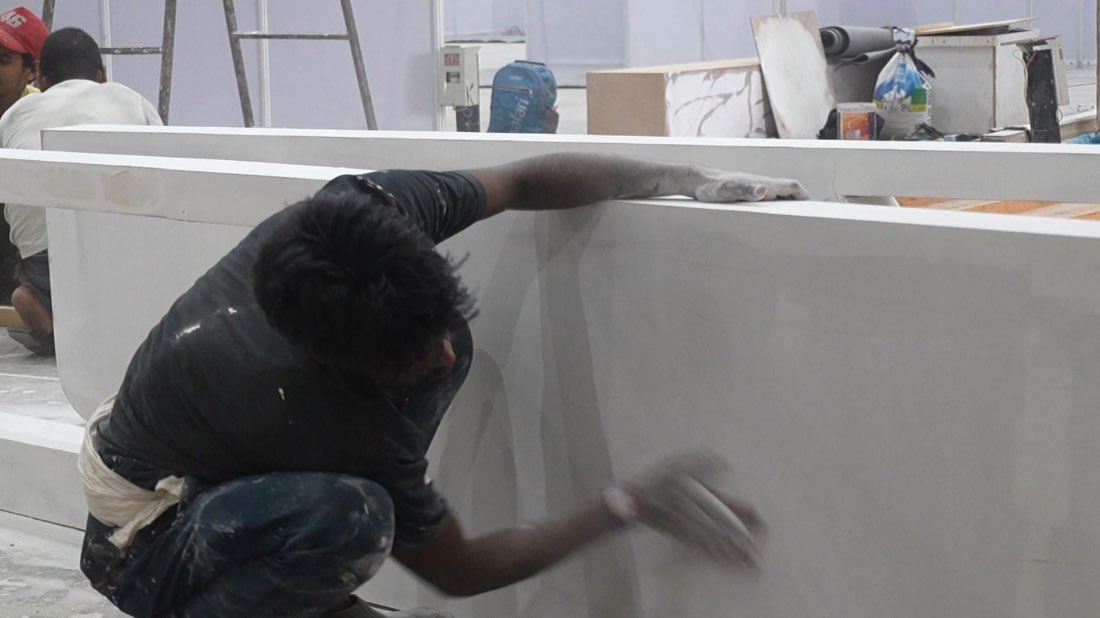
Taking the stall down
The crew takes the stall down in roughly the reverse of the build. Graphics and lights come off first, then counters, showcases and storage units, then fascias and walls, then the floor. Fixings go into labelled boxes, panels are wrapped again and parts go back into the crates they came in.
Speed matters, but care decides whether a stall can be reused. Forcing panels apart, stacking painted faces without padding or stuffing electricals into a bag all cost you at the next show. If the stall is meant for reuse, as with our reusable builds, it needs the same care going out as it had coming in.
What gets thrown away
Some parts of a stall are single-use: carpet, some vinyl graphics and consumables such as tape and protective sheeting. Plan how they will be removed and disposed of within the venue's rules. Leaving waste in the hall can lead to charges or affect your deposit, and it is not a good look in front of the organiser you want to book with again.
Loading out and handing back
Trucks often queue at dismantling, and the order in which vehicles get in depends on the venue's system. Having crates packed and ready the moment the vehicle arrives saves real time. Load so that the parts most likely to be reused are the best protected.
Before the crew leaves, walk the space. It should be clear of debris, tape, cable ties and screws. Take photographs of the empty space as a record. If the organiser's team needs to sign off, get it done before the crew departs, not the next morning.
Who should stay back from your team
It is tempting for the whole stall team to leave once the show closes. Keep at least one person back until products are out and the space is handed over. They sign gate passes, answer the organiser's questions, deal with hired furniture and confirm that nothing of yours is left behind.
That person should have the product checklist, the site lead's number and the authority to make small decisions, such as whether a damaged graphic is worth taking back. Book their travel after the dismantling window, not before it, so they are not watching the clock while the crew is still working.
Planning for the stall's next life
Before the truck leaves, decide where the stall goes: back to the factory for storage and refresh, straight to another show, or disposal. Note any damage while it is fresh. For a show such as India Diagnostic Expo 2026 at HITEX Hyderabad, from 18 to 20 December 2026, this is also the moment to decide whether the stall returns to Bengaluru for the next year's calendar.
- List damaged parts and what needs repair or replacement.
- Note what worked on the stall and what did not, while staff still remember.
- Mark graphics that will need updating before the next show.
- Agree storage, refresh or disposal with your fabricator.
A short debrief with your stall staff on the last evening is worth more than a long one a month later. Ask what visitors asked for that the stall did not show, where people bunched up, and whether storage was enough.
Next step
We plan build-up, show support and dismantling together, so the stall leaves the venue as carefully as it arrived. Read our FAQ for common questions, then start with Plan your project or WhatsApp or call +91 70190 58391.