
Solar and Renewable Energy Stalls: Panels, Inverters, Outdoor Builds
Planning a solar or renewable energy stall: mounting panels safely, showing inverters and batteries, live monitoring screens and building outdoor displays.
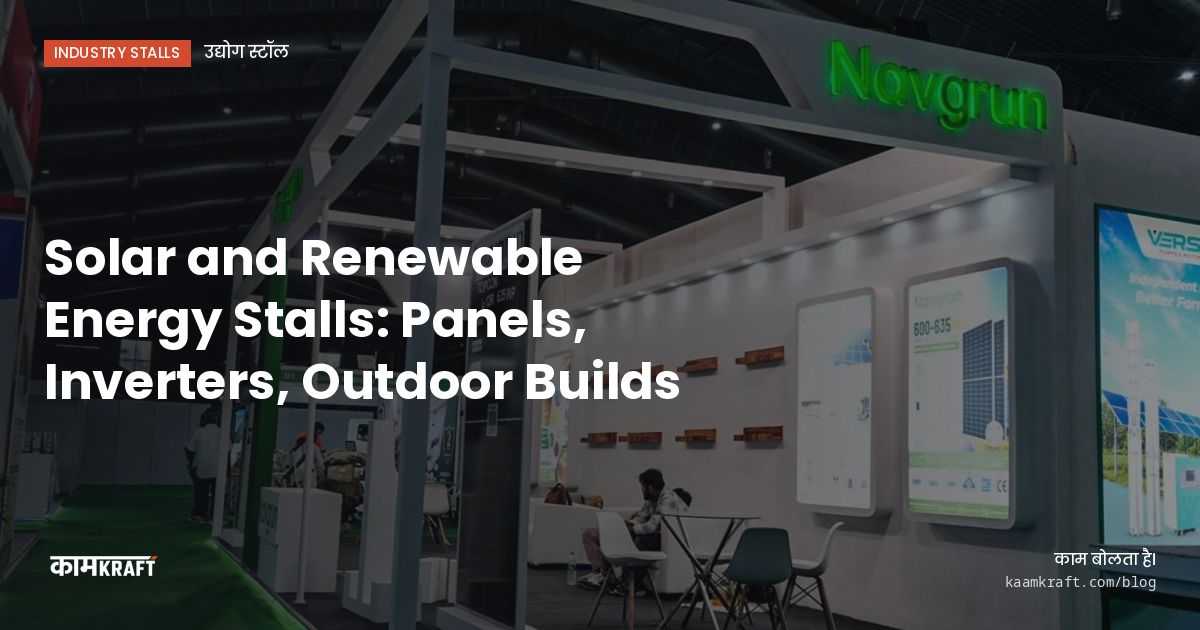
Solar and renewable energy products are big, flat and look alike from a distance. A panel is a dark rectangle, an inverter is a box on a wall, and a battery is a bigger box. The stalls that do well in this sector stop trying to show everything and instead show how the system works: where the power comes from, where it goes, and what the buyer saves or gains.
That means planning the stall around a small number of real products mounted the way they are installed, a clear explanation of the system, and a place to have the technical conversation that installers, developers and buyers come for.
Showing panels without filling the stall with rectangles
Panels are heavy, fragile at the edges and large. Stacking them against a wall wastes space and tells buyers nothing. Better options:
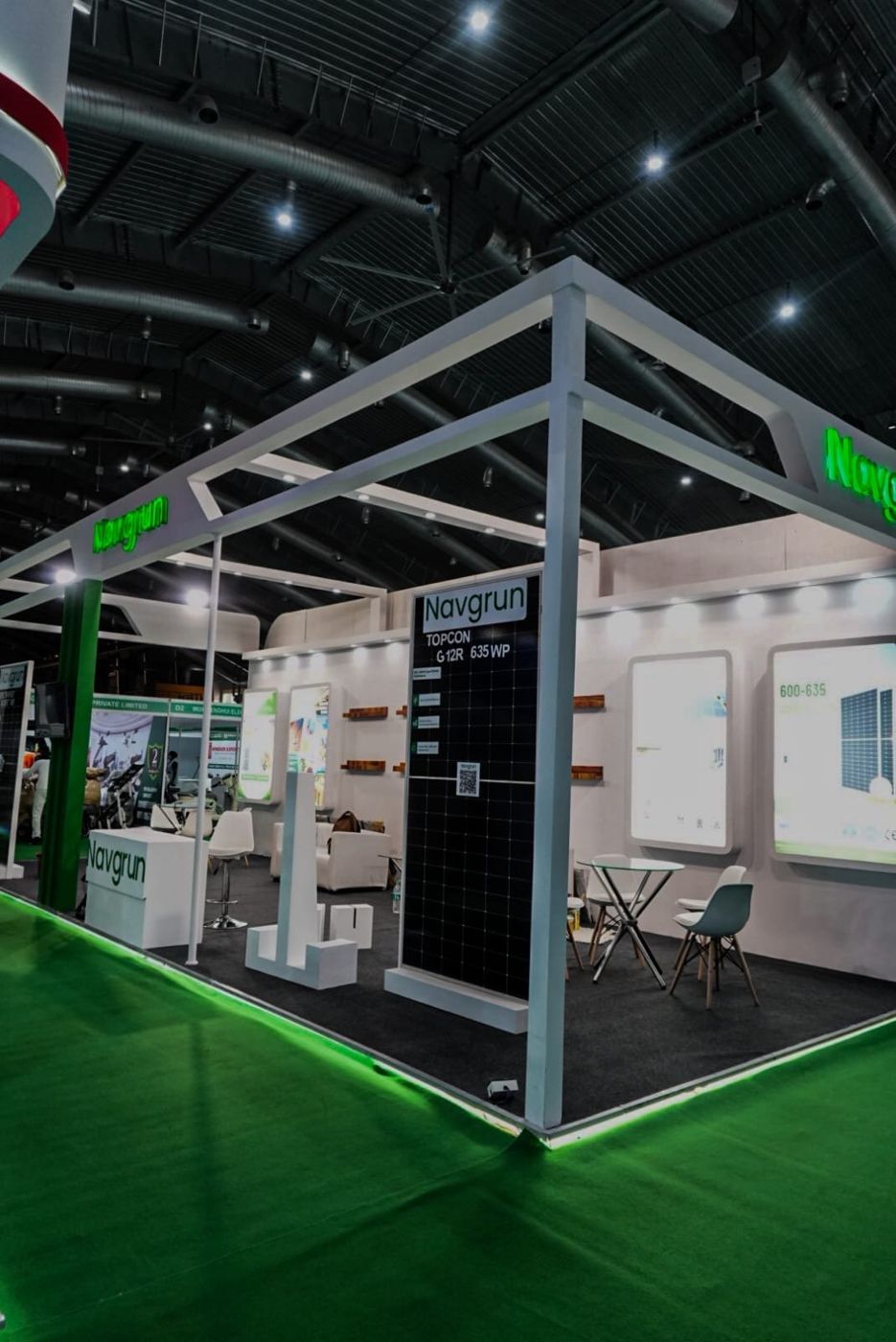
- Mount one or two panels on a real mounting structure, at the tilt they would have on a roof or ground-mount. Installers want to see the clamps, rails and fixings.
- Show a cut or exploded sample, if you have one, so buyers can see cell type and layers up close.
- Use panels as part of the architecture: a canopy or a feature wall built from your own product says more than a graphic of a panel.
- Keep spec details on a small panel beside the product, not on giant graphics no one reads.
Any panel mounted overhead or at height must be fixed properly to a structure designed for its weight. Organisers often have rules on overhead structures and may ask for drawings, so check the exhibitor manual for what needs approval and when it must be submitted.
Inverters, batteries and controllers
These products are where buyers ask the hardest questions, so they need space to stand around them. Mount inverters on a wall at the height installers would use, with real cable trays and isolators so the installation looks right. Batteries and storage cabinets can sit on a plinth with a clear zone around them.
Live or simulated?
A working demo, with a panel feeding an inverter and a screen showing output, is powerful but has practical limits. Indoor hall lighting will not run a panel meaningfully, and halls usually have strict rules on what can be energised on a stall and who can connect it. Most exhibitors run a monitoring dashboard on a screen using recorded or live data from a real site instead. Check the electrical rules in the organiser's manual before you plan anything live.
Telling the system story
Renewable energy buyers are usually comparing systems, not single parts. Lay out the stall so it follows the flow of energy, left to right or front to back: generation, conversion, storage, use. A visitor walking through should understand your offer even if no one has spoken to them yet.
- Generation: panels or a model of a turbine or rooftop.
- Conversion: inverters, controllers, protection gear.
- Storage: batteries or cabinets.
- Monitoring: a screen with a dashboard, app or remote management view.
- Proof: photos of installed sites, a map of where you have installations, or a short video walk-through.
Keep the sales and technical discussion area at the end of this flow, with a table, a screen for drawings and space for a site plan or roof layout to be spread out.
Building an outdoor solar display
Some energy shows and many agri or rural expos put exhibitors outdoors, and outdoors is where solar products really make sense. An outdoor stall is a different build from an indoor one. It has to deal with sun, wind, rain and uneven ground.
- Wind: tall walls and panel frames act like sails. Structures need ballast or anchoring, and the design should keep large flat surfaces low or braced.
- Rain: plan covered areas for electronics, screens and staff, with drainage away from the platform.
- Sun: a canopy or shade zone matters for visitors and staff on a long day. A solar canopy can do both jobs.
- Ground: open grounds are rarely level. A raised platform evens out the base and keeps cables off wet ground.
- Fencing: if you show working equipment or heavy items, a fenced or railed front keeps the public at a safe distance.
Confirm with the organiser whether ground anchoring is allowed, what the rules are on structure height outdoors, and whether there is a wind or weather policy. Venues like Bengaluru Palace Grounds run both hangar and open-ground shows, and the rules for each can differ.
Handling and transport
Panels crack if they are flexed or dropped on a corner. Batteries are heavy and may have handling rules of their own. We plan the stall so the heavy items arrive at a point when the platform is ready to take them, with a clear path in. Ask your logistics team or manufacturer about any restrictions on moving battery products, and tell us early so we can schedule the delivery into the build plan. Our team builds and test-assembles everything in the factory so mounting points are confirmed before the truck leaves.
Mistakes to avoid
- A wall of identical panels with no way to tell your product from the stall next door.
- Inverters placed on the floor where nobody can see the connections.
- Promising a live demo, then finding out the hall rules do not allow it.
- Outdoor structures designed like indoor ones, without ballast or rain cover.
- No table for the technical conversation, which is why most serious visitors came.
If you exhibit at energy, electrical or infrastructure shows such as ELECRAMA 2027, the same principles apply indoors: a clear system story, real mounting details, and space for engineers to talk.
Planning a solar or energy stall?
Tell us the show, your stall size, whether it is indoors or outdoors, and which products you want to show. We will design a layout that tells your system story and builds safely. Start with Plan your project, or WhatsApp or call +91 70190 58391.