
Reusable and Sustainable Stalls: Designing Once for Many Shows
How to design a reusable exhibition stall that works across many shows: modular sizes, durable finishes, swappable graphics, packing, storage and refresh.
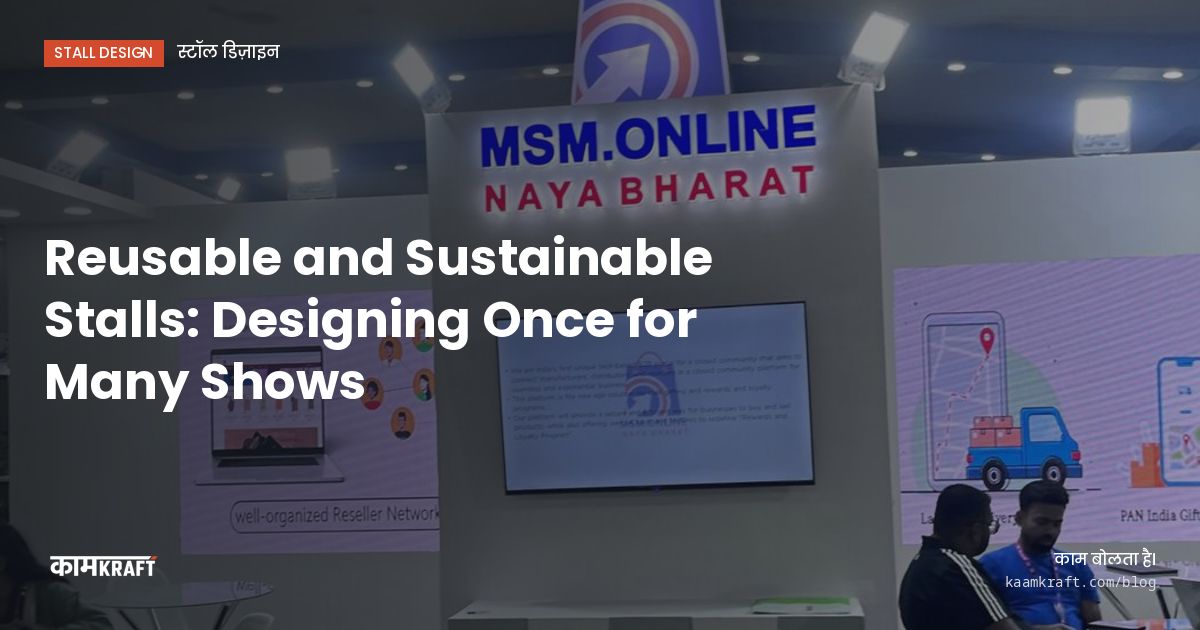
A reusable stall is designed from the start to be taken apart, packed, stored and rebuilt, often in different sizes. That means modular wall and counter units, joints that bolt rather than nail, durable finishes, graphics that can be swapped without rebuilding, and a plan for where the stall lives between shows. Done well, it cuts waste and makes each following show quicker to plan.
It is not the right answer for every exhibitor. If you do one show a year and want a completely new look each time, a reusable stall may sit in storage longer than it is worth. If you exhibit several times a year, or at the same show every year, designing once for many shows usually makes sense.
When reuse makes sense
- You exhibit at several shows a year, or at the same annual show repeatedly.
- Your stall sizes are fairly similar from show to show, or can be planned as a family of sizes.
- Your brand look is stable, and changes are mostly in messages and products.
- You want to reduce the amount of material that is built for a few days and then thrown away.
- You would rather spend design time on content and experience than on rebuilding walls.
Reuse is harder when every show has very different stall shapes, when organiser rules change height or open sides a lot, or when the design depends on one-off features that will not fit anywhere else. Talk this through with your fabricator before the first build.
Design choices that make a stall reusable
Modular sizes
Break the stall into wall panels, counters, display units and fascia sections of standard sizes that combine to fit common stall dimensions. A large island can then be reduced to a corner or inline stall by using fewer modules. Plan the largest likely configuration first, then check the smaller ones work from the same parts.
Joints and fixings
A stall built to be used once is often glued and nailed together on site. A reusable stall uses bolted joints, connectors and frames that can be assembled and taken apart many times without damage. This takes more planning in the factory but saves time at every build-up afterwards.
Durable finishes
Choose finishes that survive handling: laminates and good quality paint systems on edges that get knocked, protective trims on corners, and counter tops that resist scratches. Pure white gloss on a lower wall will need repainting after every show. A textured or slightly darker finish lasts longer.
Swappable graphics
Keep messages, product images and campaign graphics on panels that can be replaced on their own: fabric in frames, vinyl on removable boards or printed inserts. Then the structure stays, and only the graphics are reprinted for each show.
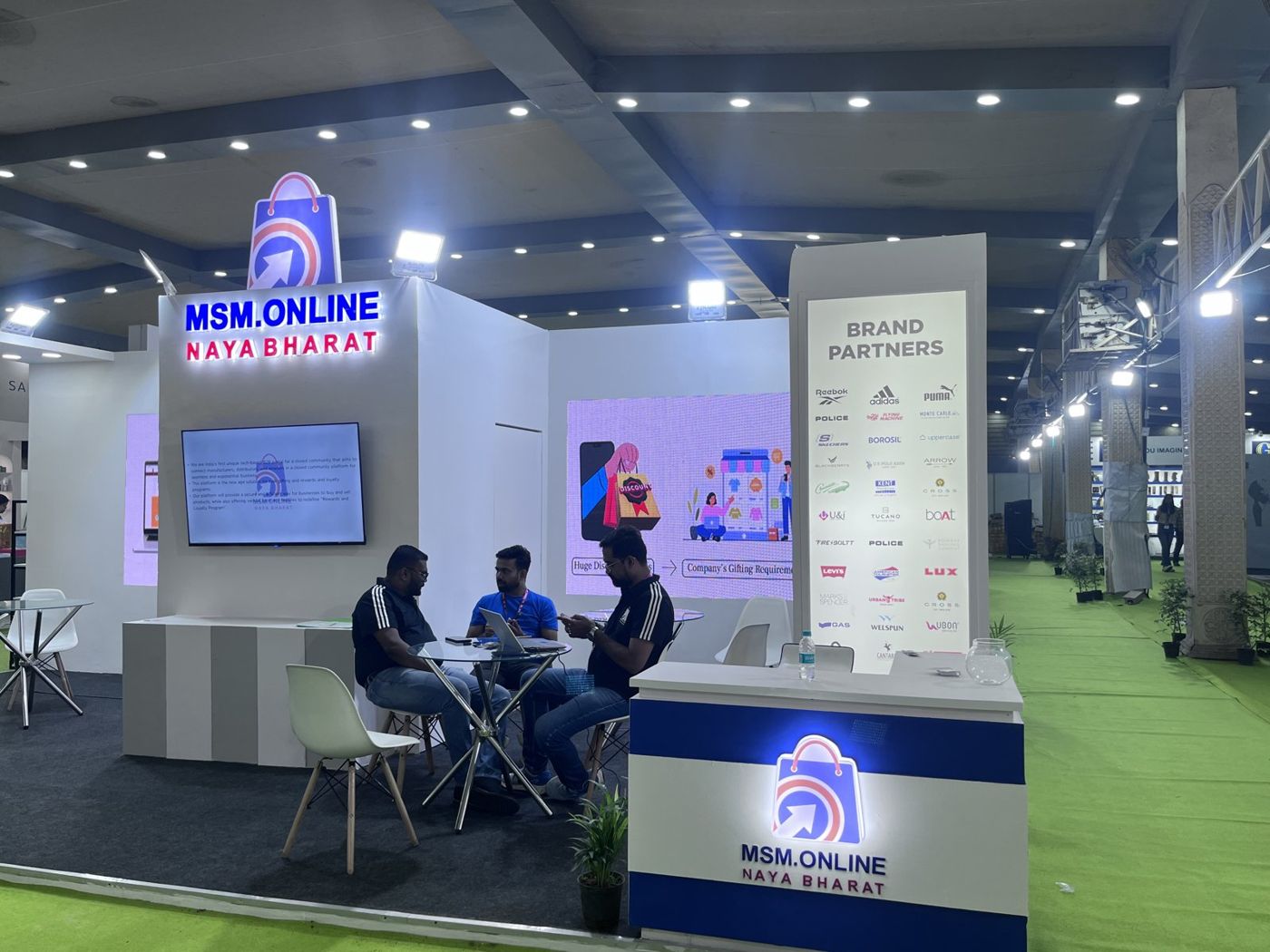
Packing, transport and storage
A reusable stall is only as good as its packing. Parts that travel loose get scratched, chipped and lost. Plan crates, padding and labelling as part of the design, so every panel has a place and every crate has a list.
- Label every part with a code that matches the drawings.
- Pack panels upright with padding between faces, never stacked flat with the finish touching.
- Keep fixings, connectors and small parts in labelled boxes, one per module.
- Store in a dry, covered space away from damp, which warps boards and stains fabric.
- Photograph the stall after dismantling to record any damage before it goes into storage.
- Inspect and repair before the next show, not on the day of build-up.
We offer storage and reuse for stalls we build, so parts come back to our Bengaluru factory after the show, get checked and repaired, and are ready for the next event. Before each reuse we dry-assemble the stall again with new graphics, so problems show up in the factory rather than at the venue.
Sustainability beyond reuse
Reuse is the biggest lever, but a few other choices help reduce waste.
- Design to standard board sizes so less material is cut away and wasted.
- Use fabric graphics where they suit the design, since they pack small and can sometimes be reprinted on the same frame.
- Avoid one-off decorative items that cannot be used again.
- Choose efficient LED lighting, which also runs cooler on the stall.
- Plan dismantling so materials that cannot be reused are separated rather than mixed into general waste.
- Avoid printing dates or show names on structural parts, so they are not tied to one event.
Be careful with sustainability claims in your own marketing. Describe what you actually did, for example reusing the same stall structure across several shows, rather than broad labels you cannot back up.
Refreshing a stall so it does not look old
Visitors at an annual show may notice if you bring exactly the same stall every year. A refresh keeps the structure and changes what people see: new graphics, a different colour on the feature wall, a rearranged layout, new display units or new lighting on the hero product. These changes cost far less effort than a new build and still give the stall a new look.
Plan the refresh around the show's audience. A stall for a show at BIEC Bengaluru might keep the same modules as one in Chennai, with different products and messages for each region.
Planning a stall?
Send us your show calendar for the year and the stall sizes you expect, and we will design a stall that can be built once and reused across them. Start with Plan your project, or WhatsApp or call +91 70190 58391.