
Modular System Stalls vs Custom Built Stalls: Which to Choose
Modular system stall or custom build? How they differ in look, set-up time, reuse, flexibility and cost drivers, plus the hybrid many exhibitors use.
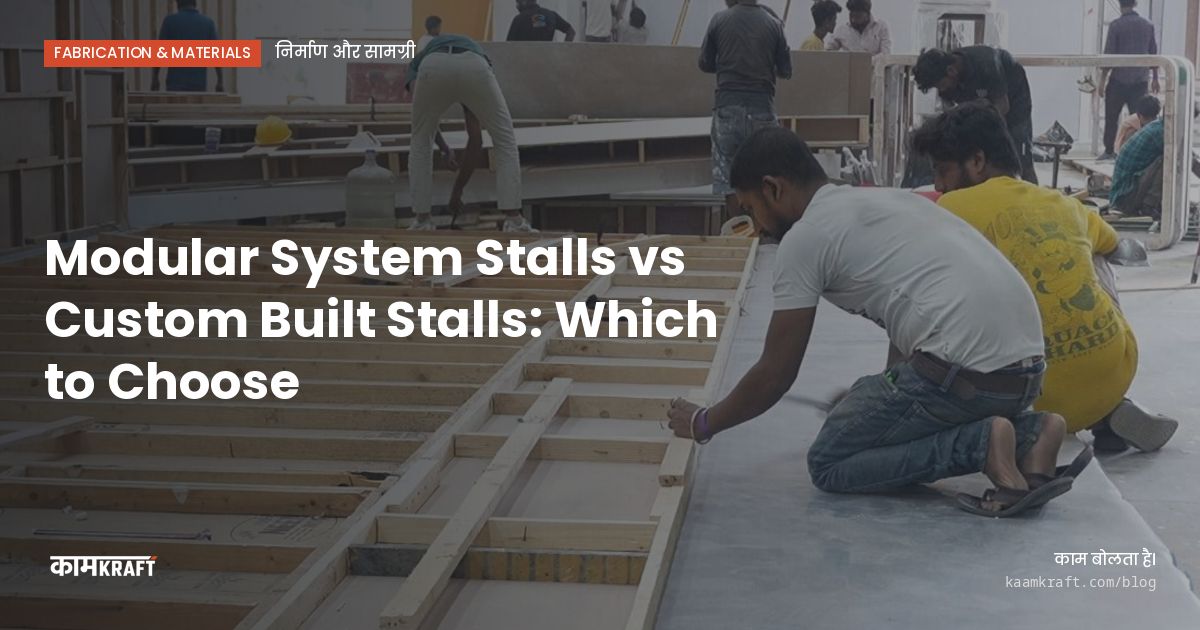
Choose a modular system if you exhibit often, book different space sizes and value quick set-up over a one-off look. Choose a custom build when the stall has to make a strong statement at a key show, carry heavy products or take shapes a system cannot make. Many exhibitors end up with a hybrid: a custom core with modular parts around it.
The decision is less about which is better and more about how many shows you do, how varied your spaces are and how much the stall itself needs to sell your brand. Here is how the two compare in practice.
What each one actually is
A modular system stall is built from standard parts, usually aluminium profiles or frame kits, with panels, fabric graphics or boards fitted into them. The parts are designed to be reconfigured, so the same kit can make a 3x3, a 6x3 or a corner stall.
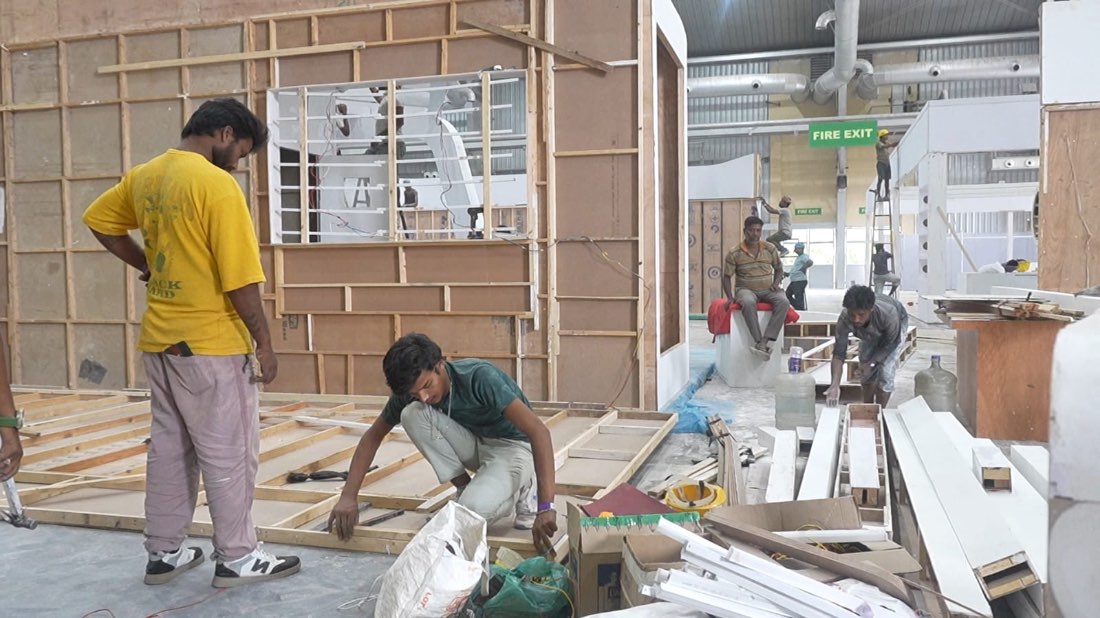
A custom built stall is designed for a particular brand and space, then fabricated mostly from timber, board and other materials to drawings made for that design. Curves, deep fascias, built-in showcases and unusual heights are all possible, because nothing has to fit a standard part.
Where modular wins
- Frequent exhibitors: the same kit works across many shows, with only graphics changing
- Varying space sizes: parts can be added or removed to fit a bigger or smaller space
- Speed: systems usually go up and come down faster, which helps on short build-up windows
- Travel: lighter parts pack smaller and survive handling better
- Consistency: the stall looks the same in every city, which helps visitors recognise you
The limits are real. A system has its own grid and joint lines, and if the design fights that grid, the stall looks forced. Heavy products need separate plinths, since system walls are not usually meant to carry weight. And an all-system stall can look similar to others in the hall built from the same kit.
Where custom wins
Custom builds suit flagship shows, where the stall is the main brand moment of the year. They allow curved walls, layered fascias, recessed lighting, built-in display cases, raised platforms and meeting rooms with proper doors.
They also suit heavy or awkward products. A machine plinth, a vehicle ramp or a demo counter with built-in services is easier to make as a custom piece than to force into a system.
The trade-offs are time and handling. Custom stalls need more factory time, more careful packing and more crew time at the venue. If they are not designed for reuse, much of the stall may not survive dismantling in a usable state.
A custom build also depends more on the fabricator. Finish quality, joint detailing and how well the stall travels all come down to the workshop and the crew. Ask to see the factory, and ask how the stall will be trial-assembled before it ships.
What drives the cost of each
Neither option is automatically cheaper. A modular kit costs more the first time if you buy it, and less per show as you reuse it. A custom stall carries the full design and build effort each time, unless it is designed from the start to be reused. The things that move the overall cost are the same for both:
- How many shows the stall will do over its life
- How much of the stall changes between shows
- Distance from the factory and how many vehicles it needs
- Crew size and the number of build-up days
- Storage between shows
When we compare options for a client, we look at the whole year of shows, not one show in isolation. A choice that looks expensive for one event can be the cheaper one across four.
The hybrid approach
A common middle path is a custom core with modular parts. For example, a custom feature wall, counter and fascia that carry the brand, with modular walls, storage and graphic frames around them. The custom parts give character; the modular parts give flexibility when the space size changes from show to show.
Another path is a custom stall designed for reuse from day one: standard panel widths, bolted joints instead of glued ones and replaceable graphic faces. It behaves like a system without looking like one. This is the thinking behind our reusable stall builds.
How to decide
- Count your shows for the next year and how many of them are big ones.
- List the space sizes you usually book. If they vary a lot, modular parts help.
- Note the products that are heavy, large or need power, water or compressed air.
- Decide which show is your flagship and whether it deserves its own build.
- Ask for both options priced for the same show, so you compare like for like.
- Ask what happens to the stall after the show: storage, reuse or disposal.
If you mostly exhibit in South India, a single reusable custom stall can often cover several shows, for example Bengaluru Tech Summit 2026 at BIEC in November and a show in Chennai or Hyderabad in December. Our exhibition stalls page explains how we build both, and our FAQ covers common questions on reuse and storage.
Planning a stall?
Tell us your show calendar and usual space sizes, and we will tell you plainly whether modular, custom or a mix makes sense. Start with Plan your project or WhatsApp or call +91 70190 58391.