
Medical Device and Healthcare Stalls: Demo Zones and Clean Finishes
How to design a medical device stall: clinical-style demo zones, clean wipeable finishes, power for equipment, graphics that pass review and private meetings.
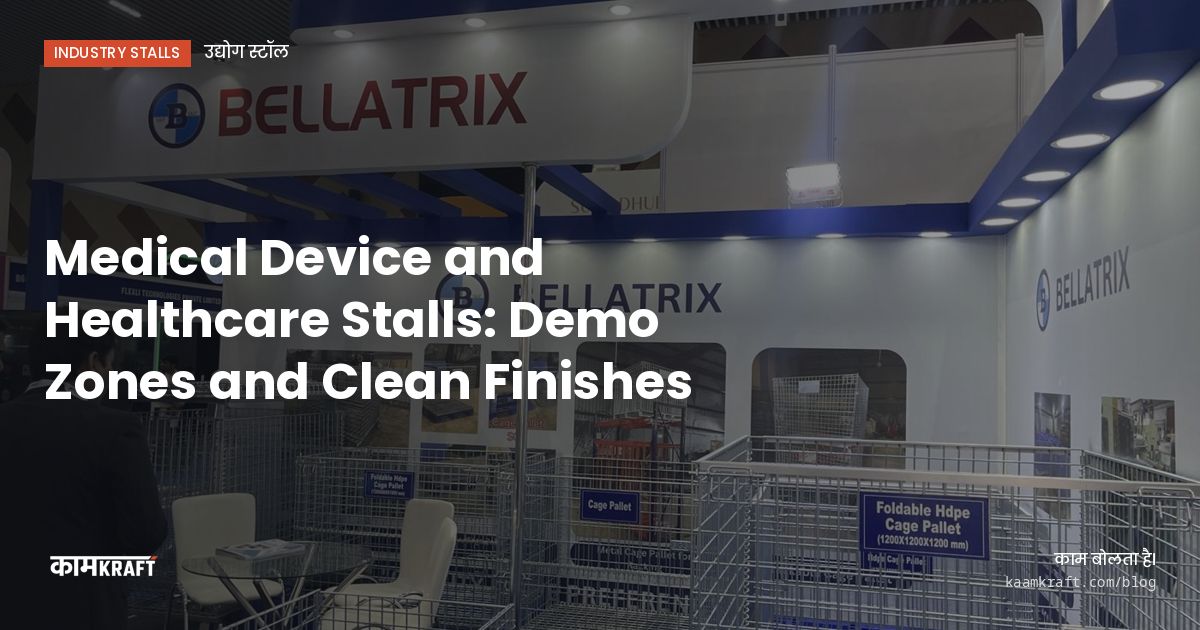
Doctors, hospital buyers and biomedical engineers visit a medical device stall to see equipment working in a setting that feels like their own. So the stall should do two things: give each device a demo zone that resembles where it will be used, and look and feel clean, because in healthcare a scuffed counter or a messy cable says more than any graphic.
Behind that, the usual stall planning still applies: power for equipment, storage, meeting space and graphics that your regulatory team has approved. Here is how to plan each part.
Demo zones that feel clinical
A device shown on a plain plinth is just a box. The same device beside a patient bed, a procedure chair or a lab bench makes sense immediately. Build a small, simple set around each key product that suggests the real environment without trying to recreate a hospital.
- A bed, couch or chair for patient-side devices, with a manikin if needed
- A lab bench with a sample rack for diagnostic analysers
- A trolley or pendant mock-up for theatre and critical care equipment
- A wall-mounted screen mirroring the device display, so a group can watch
- Clear floor space around the zone for the presenter and a small audience
- Sanitiser and wipes within reach for anyone who touches the device
Turn each demo zone so the device and its screen face the main viewing spot. If you run timed demonstrations, add a small sign with the schedule, and a few stools for visitors who want to watch the whole session.
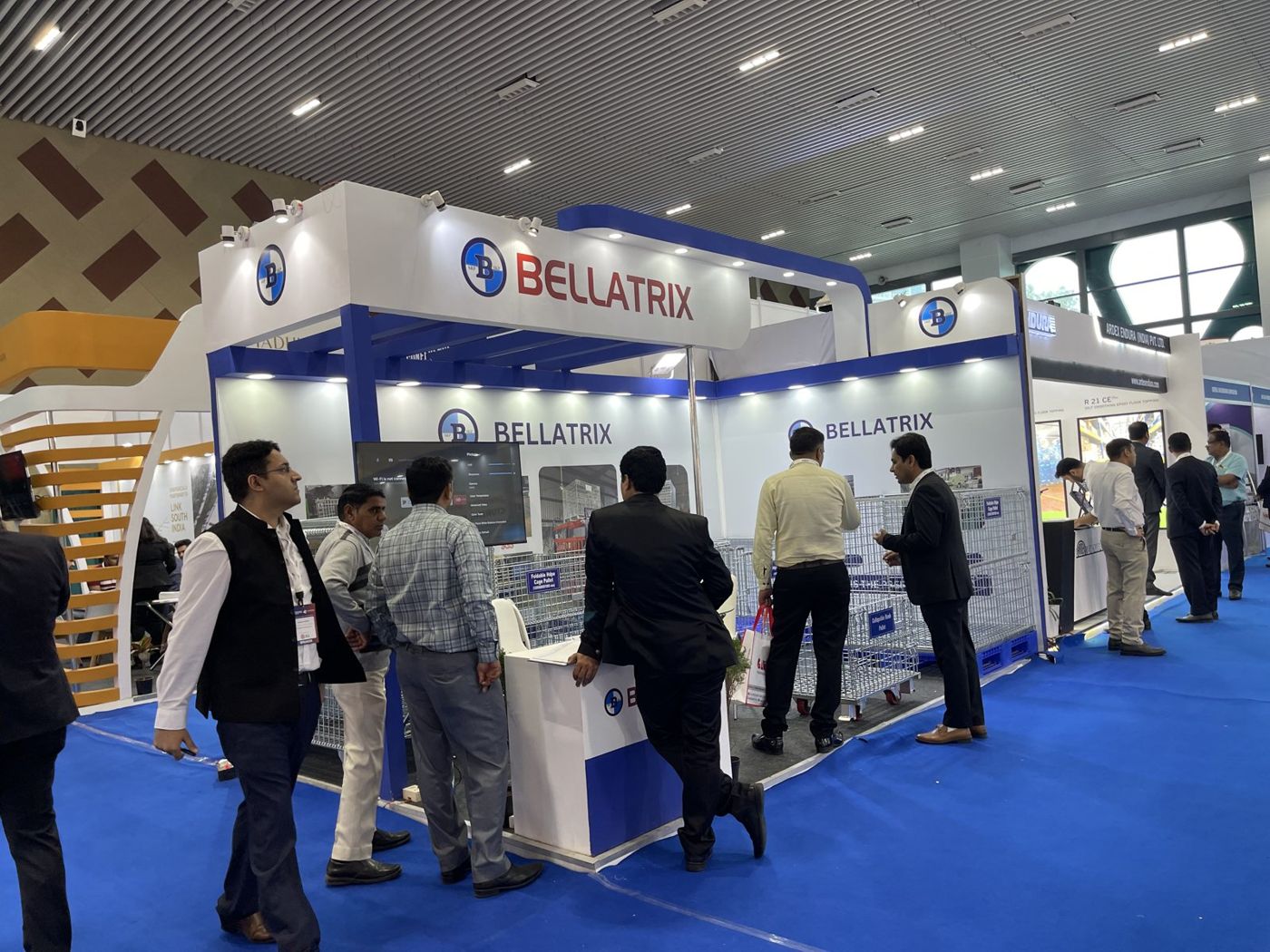
Clean finishes and what they mean
Healthcare buyers expect a stall that looks hygienic. That comes down to materials, colour and detailing.
Materials
Choose surfaces that wipe clean and hold up to repeated cleaning: laminate, solid surface, painted MDF with a durable finish, and acrylic. Avoid raw timber or open-weave fabric at touch points. Matt or satin finishes hide fingerprints better than high gloss, which shows every smudge under stall lighting.
Colour and light
White and light neutrals are common in healthcare for a reason: they read as clean and calm. Use your brand colour on the fascia, a feature panel or the counter, and keep the demo areas neutral so the equipment stands out. Light evenly with a neutral white, and avoid coloured LED effects near clinical demos.
Details
Rounded corners on counters and plinths, concealed cables, flush edges and no visible fixings make a stall look precise. Hide every power cable inside furniture or under the platform. Messy cabling around a medical device undermines the message straight away.
Power, weight and set-up for equipment
Some medical equipment is heavy, large or sensitive. Collect the dimensions, weight and power needs of each device before design starts, and check how it will be brought onto the stall. Large imaging or theatre equipment may need the same planning as industrial machinery: a reinforced or flat floor area and an open side during build-up.
- List each device with its size, weight and power requirement.
- Ask your service team whether the device needs a technician to install or calibrate it on site.
- Check the organiser's manual for power provision, floor load and any rules on equipment that emits radiation, noise or uses gases.
- Plan stable power for each demo zone, with separate circuits where needed.
- Schedule device arrival after the dusty work in the build is done.
Graphics and claims
Medical device graphics usually need regulatory review inside your company. Keep wall graphics simple: product category, the clinical problem it addresses, and where it is used. Ask your regulatory team which approvals, indications and claims can be shown, and in what wording. Detailed specifications and clinical data are better on screens and in printed material your team hands out.
Allow time for review in your plan. Graphics are usually the last thing to be finalised, and a late change in claims can hold up printing.
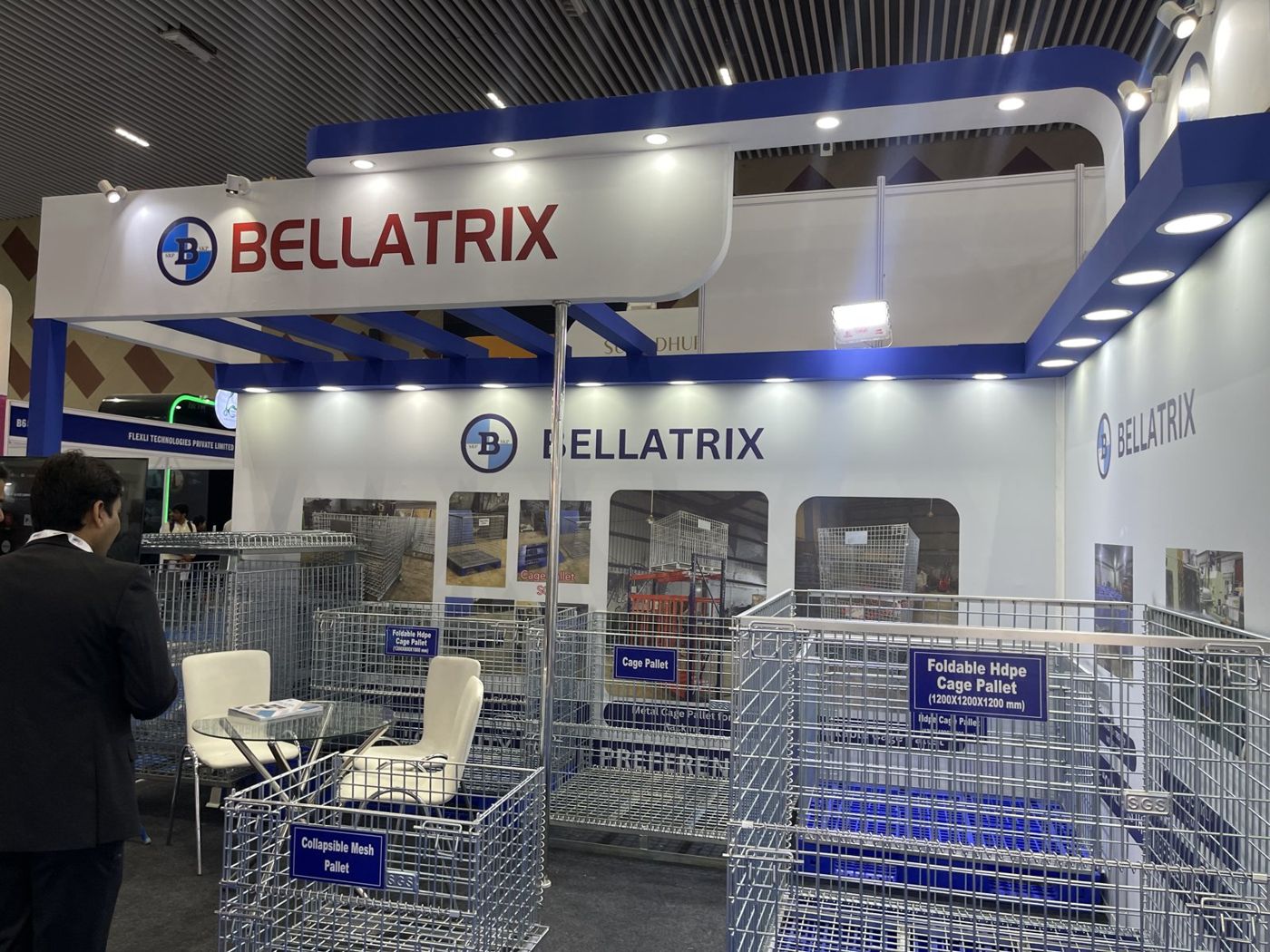
Meetings with doctors and buyers
Hospital purchase teams and distributors often want to talk privately about pricing, service contracts and tenders. A small meeting room or a semi-closed area at the back of the stall works well. Give it a table, a screen and a lockable cabinet for documents. Doctors may only have a few minutes between sessions, so a few stools at a counter near the demo zones are useful for quick conversations.
For diagnostics companies, India Diagnostic Expo 2026 runs from 18–20 Dec 2026 at HITEX Hyderabad. We build healthcare stalls for shows across South India, including Chennai and Hyderabad. Our lead times are 3–4 weeks for Karnataka, 4–6 weeks for the rest of South India and 6–8 weeks elsewhere.
Mistakes to avoid on healthcare stalls
- Bringing every device and leaving no room to demonstrate any of them properly
- Glossy white surfaces that show every fingerprint and reflect spotlights
- Visible cables and power strips around clinical demo zones
- Device screens too small for a group to see, with no mirrored display
- Graphics sent for regulatory review too late to print on time
- No storage for consumables, manikins, cleaning supplies and spare parts
- Heavy equipment arriving after walls are up, with no way to bring it in
Clean up the stall every morning before doors open. Wipe counters, check cable covers and reset each demo zone. A healthcare stall that looks as fresh on the last day as on the first tells visitors something about how your company works.
Planning a healthcare stall?
Send us the show, stall size and the devices you plan to demonstrate. Plan your project with us, or WhatsApp or call +91 70190 58391.