
MDF, Plywood or Aluminium: Choosing Exhibition Stall Materials
How MDF, plywood and aluminium compare for exhibition stalls: finish, weight, strength, moisture, reuse and travel, and where each belongs on a stall.
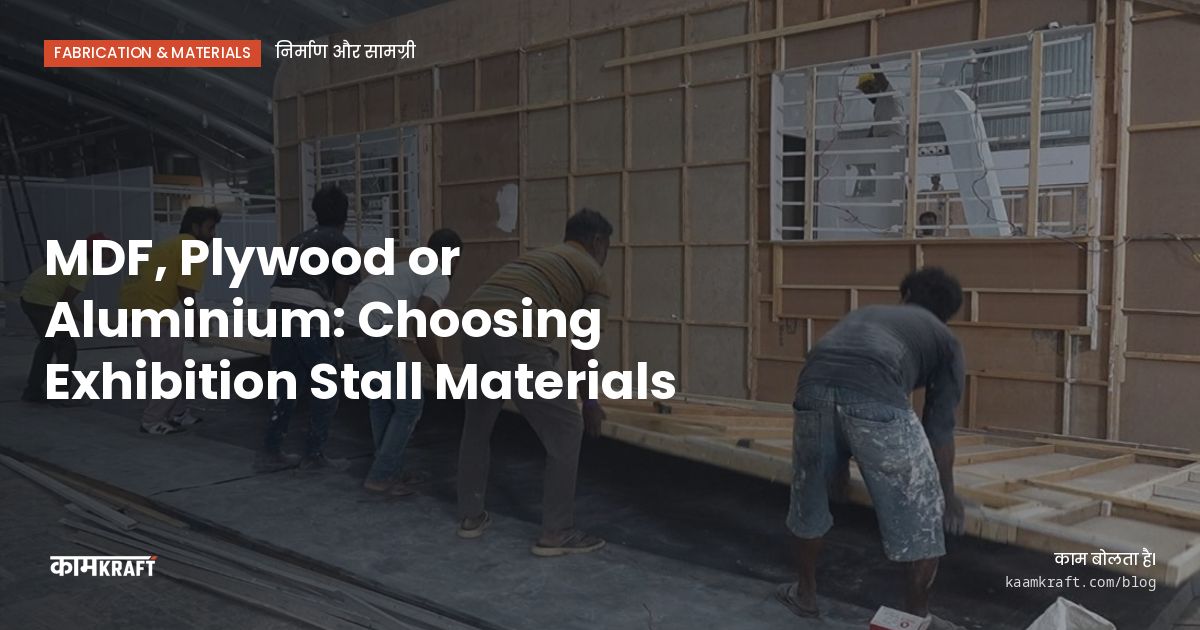
Most good stalls use all three. Plywood carries the structure and anything that takes weight or screws, MDF gives the smooth faces that paint and print well, and aluminium appears where you need light, slim, repeatable parts such as frames, profiles and modular systems. The real question is not which material is best, but which one belongs on which part of your stall.
The right mix depends on four things: the finish you want, how far the stall travels, whether you will reuse it, and what the organiser's exhibitor manual says about materials. Here is how we think about each one on the factory floor.
Plywood: the structural workhorse
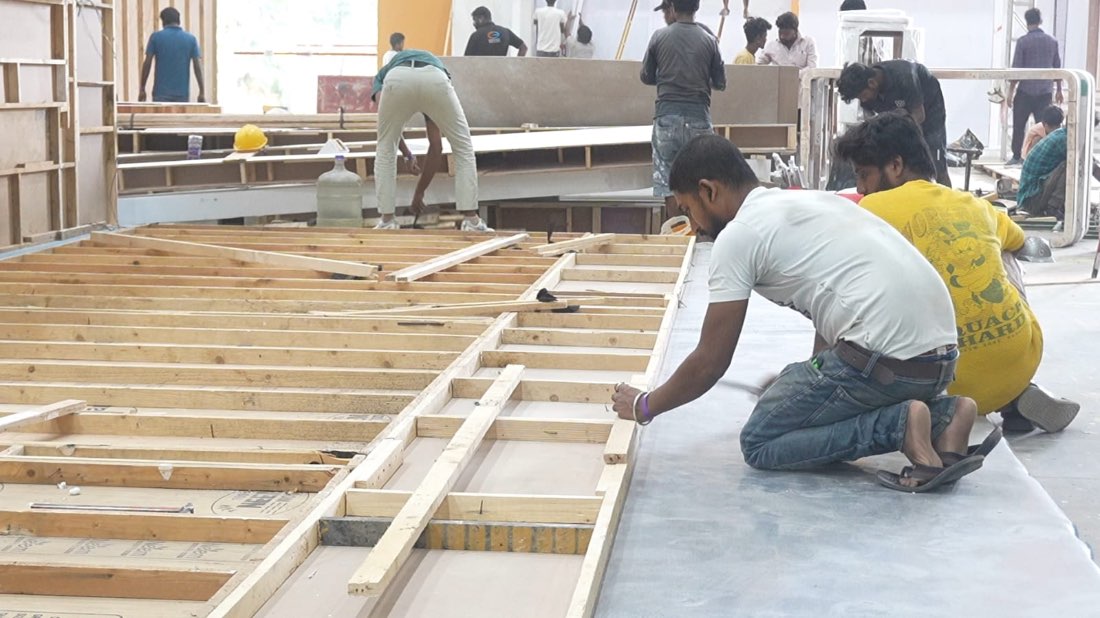
Plywood is made of cross-laid veneers, so it holds screws well, resists bending and takes knocks during loading. That makes it the default for platforms, counter carcasses, shelves that carry samples, and wall skins on panels that will be handled many times.
Its weakness is the surface. Even good plywood shows grain and slight unevenness under paint, especially under strong stall lighting. For a gloss painted wall it needs more filling and sanding, or a laminate or vinyl on top. Grades vary a lot, so ask your fabricator which grade is used for structure and which for faces.
Where plywood earns its place
- Raised platforms and floor bases that carry people and products
- Counters, cabinets and storage units with doors and hinges
- Shelves and plinths for heavy products
- Wall panels on stalls you plan to reuse across several shows
MDF: the smooth face
MDF is a dense, uniform board with no grain. It machines cleanly, so routed logos, curved edges and grooves come out crisp, and it takes paint beautifully. Curved fascias and feature walls often use MDF or flexible boards for exactly this reason.
The trade-offs are weight and moisture. MDF is heavy for its strength, its edges chip if handled roughly, and it swells if it gets wet and has not been sealed. Screws driven into its edge hold poorly. So we use it as a skin over a frame or as a face on plywood, and rarely as the structure itself.
For a stall travelling a long distance, the extra weight and the risk of edge damage matter. For a short run to a venue within Karnataka, they matter much less.
Aluminium: light, slim and repeatable
Aluminium shows up on stalls in two ways. The first is extruded profile systems: modular frames that slot together with fabric or panel infills. The second is custom-cut sections for slim frames, display stands and edge trims on timber builds.
Its strengths are weight, speed and reuse. Aluminium frames go up quickly, travel light and can serve many shows with only the graphics changing. Its limits are design freedom and feel: profiles impose their own grid and corner details, and a stall built entirely from them can look like a kit rather than a bespoke build unless the design works with that grid.
Aluminium is also useful wherever a thin, strong edge is needed, such as a slim fascia frame or a cantilevered shelf bracket, because timber would need to be much thicker to do the same job.
How travel, reuse and the venue change the choice
Distance changes the maths. A heavy MDF-faced stall is fine for a show near the factory. For a stall going from Bengaluru to Delhi or Mumbai, weight adds to transport and handling, and each extra load and unload is another chance for edge damage. Lighter skins, protected edges and good crating become more important.
Reuse changes it too. If you plan two or more shows a year, a plywood or aluminium structure with replaceable faces usually outlasts a pure MDF build. Our approach to reusable stalls builds the frame once and refreshes the surfaces.
Then there is the venue. Many organisers set rules on materials, fire-retardant treatment and what can be painted on site. These vary by show, so read the material and fire safety sections of the exhibitor manual and share them with your fabricator before materials are ordered, not after.
Questions to ask your fabricator
- Which parts are plywood, which are MDF and which are aluminium, and why?
- What grade and thickness of board is used for the structure?
- How are MDF edges sealed and protected in transit?
- Will the frame survive another show, and what would need replacing?
- Do the materials meet the requirements in this show's exhibitor manual?
- Can I see a sample panel with the final finish at the factory before you build?
Common mistakes
The most common one is using a single material for everything to keep things simple. An all-MDF stall is heavy and fragile; an all-plywood stall can look rough under lights; an all-aluminium stall can look generic next to custom builds. A mix chosen part by part almost always works better.
The second is deciding the finish after the material. If you want a high-gloss lacquer wall, that drives the board choice. Tell your designer the finish you want first, and let the material follow. Our exhibition stall service starts with that conversation.
Next step
Send us your show, space and design ideas, and we will suggest a material mix that suits the finish, the travel distance and your reuse plan. Start at Plan your project or WhatsApp or call +91 70190 58391. Answers to other common questions are in our FAQ.