
LED Walls on Exhibition Stalls: When to Use Them and When Not To
When an LED wall helps an exhibition stall and when it wastes budget: sizing, pixel pitch, content that works on a show floor, power and organiser checks.
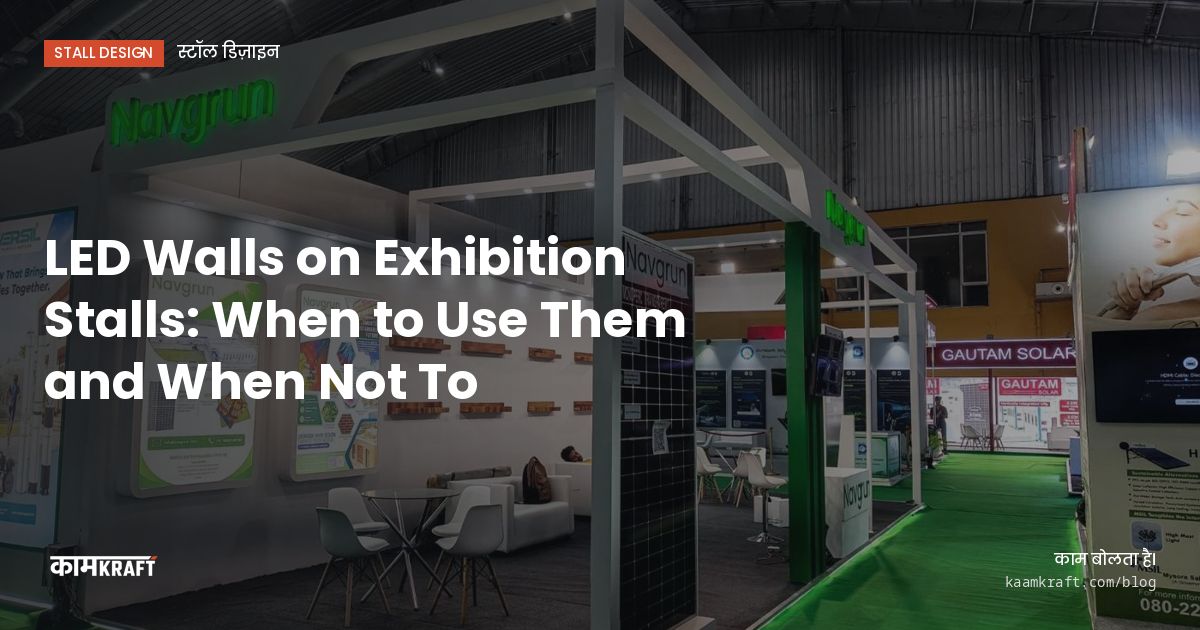
Use an LED wall on a stall when moving content does a job static graphics cannot: showing a product working, a process inside a machine, a software interface, or content that changes through the day. Skip it when the wall would only loop a corporate film, when your stall is small, or when the money would do more as a better build, better lighting or a stronger product display.
An LED wall is bright and eye-catching, but it costs to rent, power and run well. It works when it is planned as part of the stall, with content made for it. It fails when it is added late as a big screen to fill a wall.
Use it or skip it
When an LED wall earns its place
- Products too large, slow or complex to demo live, such as machinery, vehicles or infrastructure.
- Software, apps and platforms, where the interface is the product.
- Launches and scheduled presentations on the stall.
- Large island or peninsula stalls that need a focal point visible across the hall.
- Content that changes, such as live data, social feeds or a schedule of talks.
When to skip it
- A 3x3 or small inline stall, where a large bright screen overwhelms the space and the people standing close to it.
- No content plan. A three-minute brand film on loop is ignored after the first view.
- A tight power allowance that the wall would use up, leaving too little for lighting.
- A short build-up window, with no time to set up and test.
On smaller stalls, a well-placed monitor built into a wall or counter often does the same job with far less cost and effort.
Size, viewing distance and pixel pitch
LED walls are made of panels, and the spacing between pixels is called pixel pitch. A finer pitch looks sharper up close and costs more; a coarser pitch looks fine from further away. On a stall, visitors may stand just a few metres from the wall, so ask your supplier which pitch suits your closest viewing distance, and see a sample panel in person if you can.
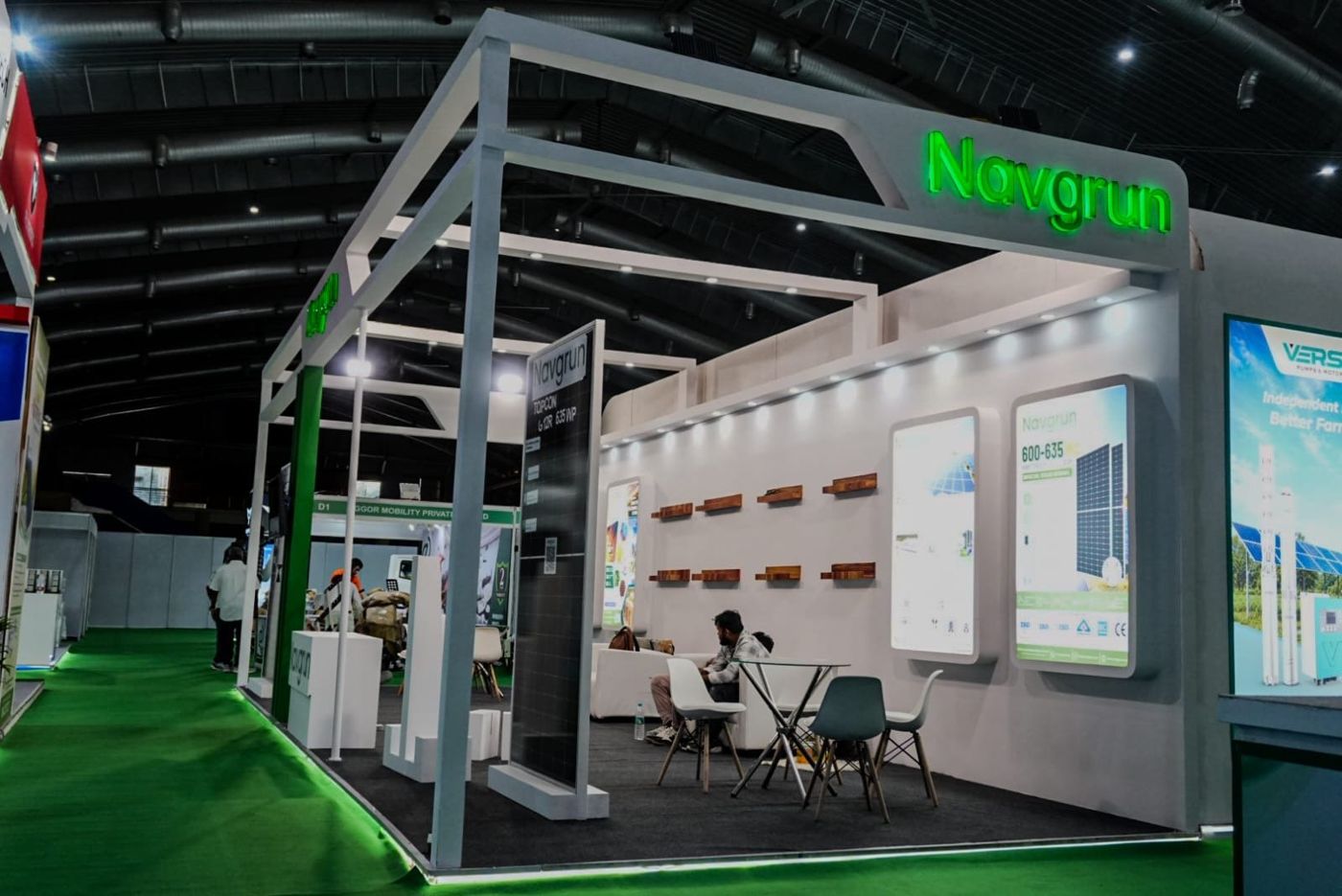
Size the wall to the stall, not the other way round. A wall that fills the entire back wall leaves nowhere for the logo and makes the stall feel like a cinema. A screen framed by built surfaces, with the brand on the frame, usually looks better and reads more clearly.
Content made for the stall
- Short loops. Visitors watch for seconds, not minutes. Keep loops under a minute and make the message clear in the first few seconds.
- No reliance on sound. Halls are loud, and sound from your stall may disturb neighbours or break organiser rules. Use captions and visuals.
- Big type. Anything written on screen must read from the aisle.
- Correct resolution and shape. LED walls have unusual pixel dimensions, so get the exact resolution from the supplier and make content to fit.
- Sensible brightness. Full brightness indoors can dazzle. Ask the technician to tune it on site.
Power, structure and organiser checks
LED walls draw significant power and need a solid mounting frame or ground stack. Before you commit, check in the exhibitor manual and with the organiser:
- Your stall's power allowance and how to order extra load.
- When power is available during build-up, so the wall can be set up and tested.
- Rules on sound levels from stalls.
- Height limits that apply to the wall and its structure.
- Any rule on screens facing a neighbouring stall.
We build the frame for the LED wall into the stall structure at our factory, so cables, ventilation and service access are planned rather than improvised at the venue.
Running the wall during the show
An LED wall is not set and forget. Someone has to switch it on each morning, check the content is playing, and deal with a dead panel or a frozen player. Agree before the show who does this: the LED supplier's technician, your fabricator's crew or one of your own staff.
- Keep the content on two devices, with a spare copy on a pen drive at the stall.
- Ask for spare panels and a quick swap procedure if the wall is rented.
- Label the power and signal cables so anyone can find them behind the wall.
- Plan when the wall goes dark, such as during build-up checks or at the end of each day, so it is not left running into the night.
- If you schedule presentations, have a simple way to switch from the loop to the presentation and back.
A dark or flickering screen draws more attention than a plain wall, so these small steps protect the investment.
Standing out at tech shows
At shows like Bengaluru Tech Summit 2026 or Mobile India Expo 2027, screens are likely to be everywhere, so a screen alone will not make you stand out. What stands out is content built for the stall and a build that frames the screen well. A screen showing your product working in a real setting, with a single caption, will hold more visitors than a generic brand film on a bigger wall. For stage events where an LED wall is the backdrop, see our corporate events work.
Planning a stall?
Tell us what you want the screen to do, and we will tell you whether an LED wall, a monitor or no screen suits your stall. See more of our exhibition stalls. Start through Plan your project or call or WhatsApp us on +91 70190 58391.