
KTPO Whitefield: Planning a Stall for Shows in East Bengaluru
How to plan a stall at KTPO Whitefield: matching the design to the show, what to confirm with the organiser, Whitefield build-up logistics and staffing.
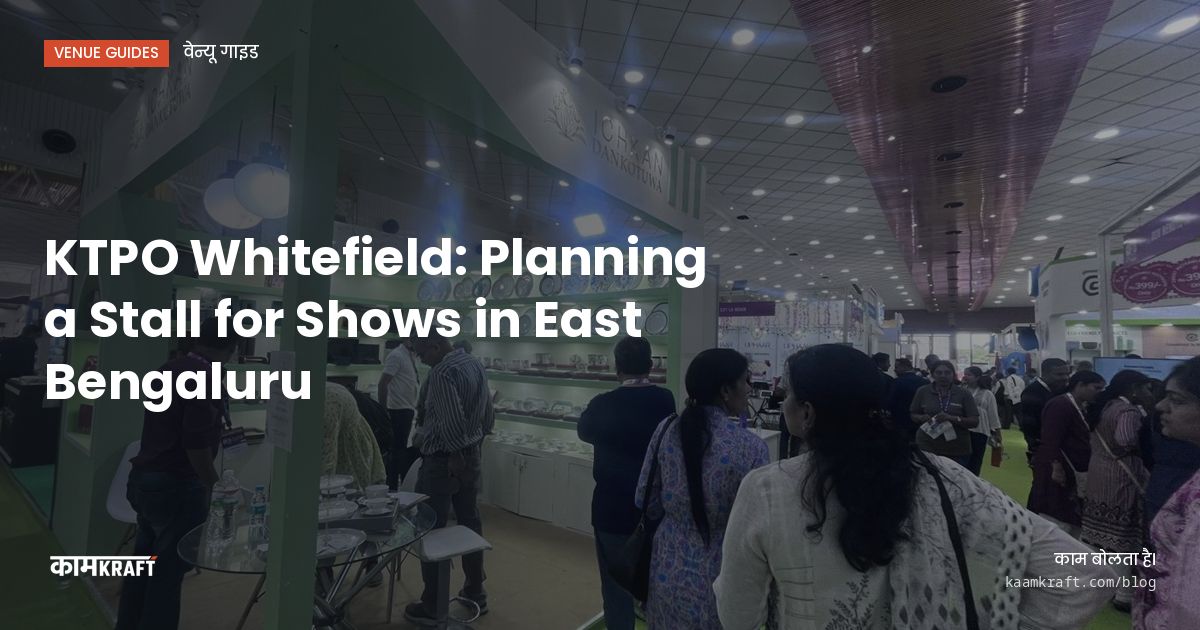
KTPO in Whitefield hosts a steady run of shows in East Bengaluru, from technology and industrial expos to consumer and lifestyle fairs. Planning a stall there is mostly about three things: fitting the design to the show and the organiser's rules, getting through Whitefield traffic on build-up day, and designing for visitors who often come straight from the offices and factories nearby.
This guide covers what to confirm with the organiser, how to size your design, and the logistics we plan for when we truck a stall across the city from our factory.
Know what kind of show you are in
KTPO hosts very different events across the year, and the same venue can feel like a B2B trade show one month and a weekend consumer fair the next. Design your stall for the show, not for the venue.
- Trade and industrial shows: visitors come with specific needs. Give them product detail, a place to talk and an easy way to leave their contact.
- Tech and startup events: visitors move fast. Screens, short demos and a clear one-line description of what you do matter most.
- Consumer and lifestyle fairs: visitors browse. Open frontage, products within reach, a billing or order counter and room for families to stop.
Ask the organiser for the visitor profile from previous editions and the list of other exhibitors. That tells you more about what your stall needs than any floor plan.
What to confirm with the organiser
We never assume venue specs. Each show at KTPO sets its own rules within what the venue allows, so get these confirmed from the exhibitor manual or the organiser before design starts.
- The hall your space is in, and the permitted build height there.
- Whether your booking is shell scheme or bare space, and exactly what the shell includes if it is.
- Open sides, nearby pillars, exits and anything fixed on or near your plot.
- Power: connection types, how to order, the load to declare and the deadline.
- Whether hanging structures or banners are allowed, and who installs them.
- Build-up and dismantle timings, vehicle entry and contractor registration.
- Material and fire safety rules, especially for fabric, carpet and decorative elements.
Write the answers into one sheet and share it with your fabricator on day one. Many of the late changes we see come from a rule someone found after the design was already approved.
Size the design to the show, not the ambition
Many shows at KTPO are regional, with plenty of exhibitors on compact spaces. A big build squeezed onto a small plot feels cramped, and a tall structure that blocks the neighbours may not get approved. Work out what the stall has to do first, then design.
- Decide the one action you want visitors to take: book a demo, try a product, place an order or register interest.
- Give that action the best position on the stall, usually the front corner on the busiest aisle.
- Add storage you can close. A small lockable store keeps stock, bags and brochures out of sight.
- Keep graphics to a few large, readable messages rather than many small panels.
- Light the products, not just the walls. General hall lighting rarely does products justice.
If you exhibit at several local shows a year, a modular design that can grow or shrink with the space is worth considering. The same walls can make a 3x3 at one show and a corner stall at the next, and the stall can be stored and reused between them.
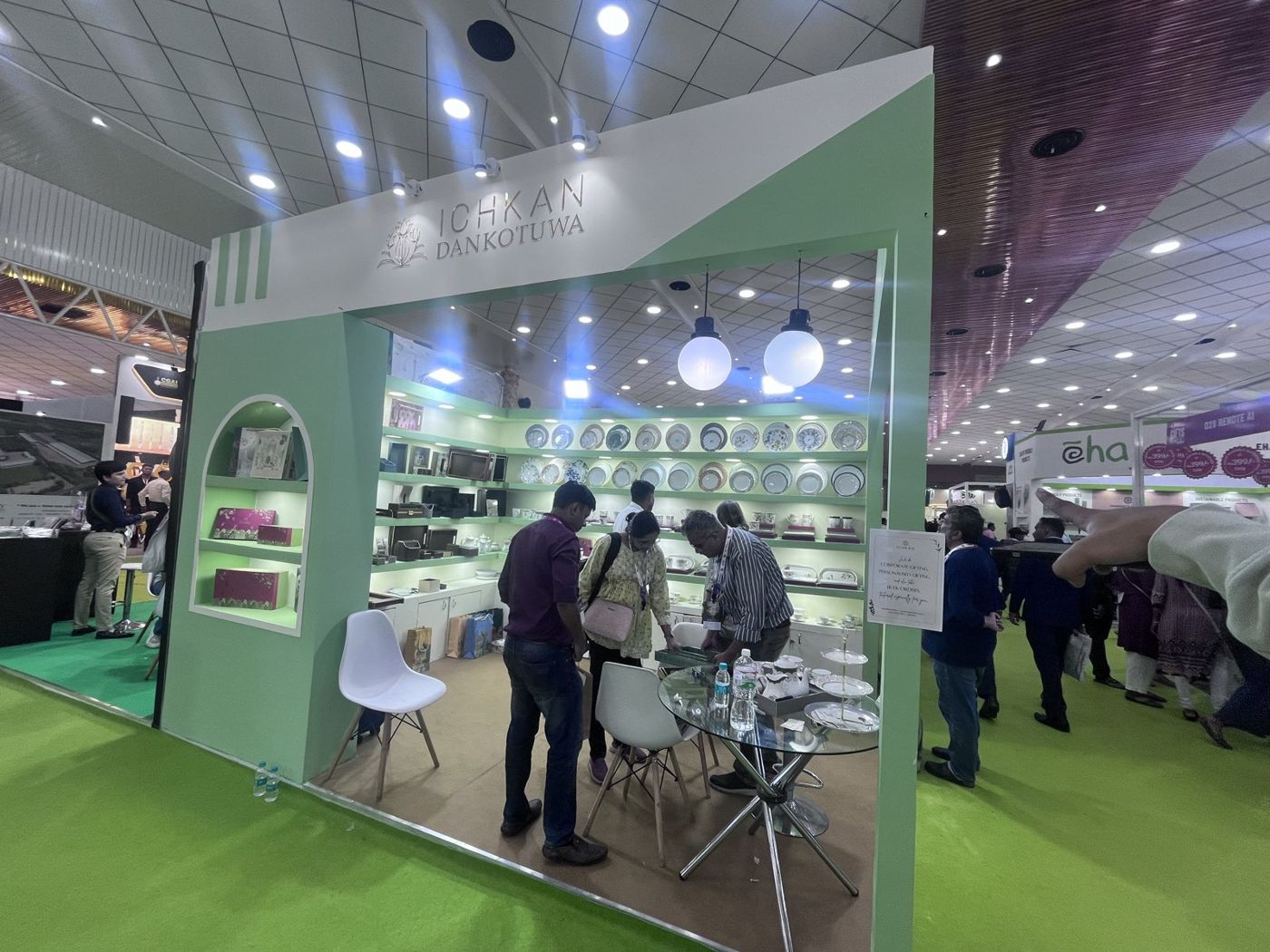
Getting across the city on build-up day
Whitefield traffic is a real planning factor. Our trucks leave the factory at times that avoid the worst of the office rush, and we load in build order so the crew can start the moment the vehicle reaches the unloading point.
- Confirm the truck entry gate and timings. If entry is restricted to certain hours, the truck has to be at the gate on time, not on its way.
- Get vehicle passes and crew passes sorted before the day, not at the gate.
- Load in build order: platform, frames, walls, then graphics, furniture and electricals.
- Keep a small vehicle on call for anything forgotten. It is far quicker than a second truck.
- Plan your own staff's arrival on day one with traffic in mind. Doors open on time whether you are there or not.
For Karnataka shows we ask for a brief 3–4 weeks before the show. That gives time for 3D design, organiser approval, fabrication and dry-assembly at our factory, so the stall has been tested before it ever reaches Whitefield.
Running the show days
Footfall at local shows is rarely even through the day. At consumer fairs it often builds at lunch, in the evenings and on weekends; at trade shows it may peak in the mornings. Ask the organiser how the last edition went and plan staffing around the peaks rather than spreading people evenly.
- Put your most experienced people on the stall during peak hours.
- Keep a simple count of enquiries by hour so you can see what worked.
- Refresh the front display midway through the show if something is not drawing people in.
- Our crew stays on call through the show for fixes to lights, panels or graphics.
Planning a stall at KTPO?
Tell us the show, your space and what you want the stall to do, and we will send a 3D design and a clear build plan. Start with Plan your project, look at our exhibition stalls in Bengaluru and the KTPO venue page, or WhatsApp or call +91 70190 58391.