
How to Brief a Stall Designer So the First Design Is Close
What to put in an exhibition stall design brief so the first concept is close: stall details, goals, products, brand files, must-haves, budget and approvals.
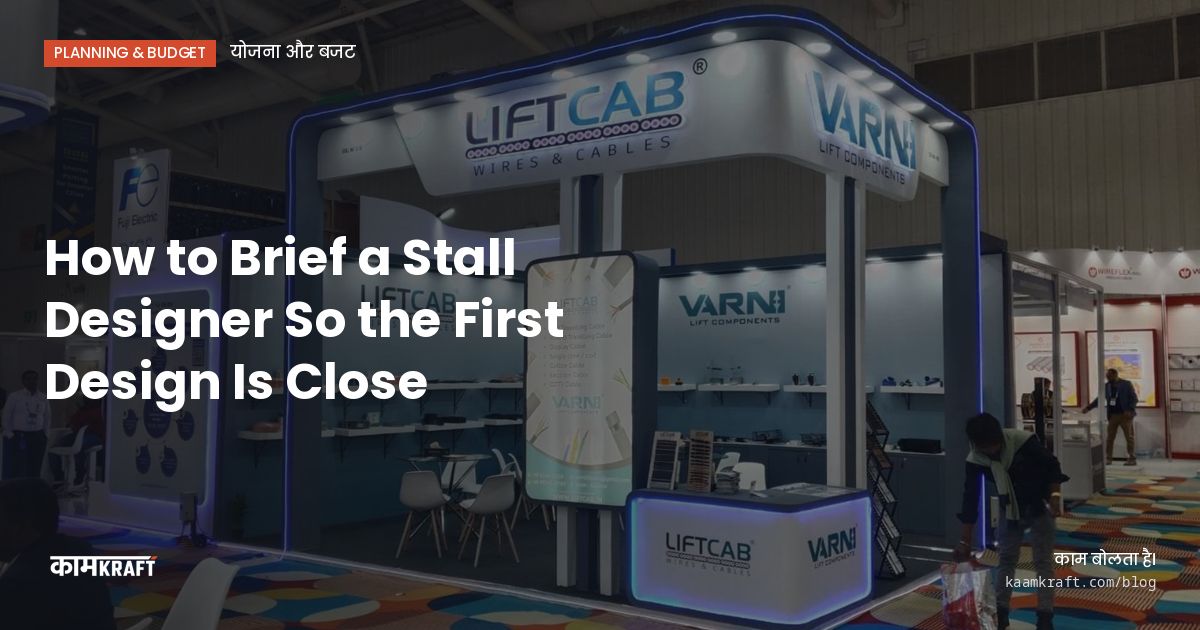
A good stall brief gives the designer the facts they cannot guess and the decisions only you can make. The facts are the show, stall size, stall number, open sides and organiser rules. The decisions are your goal for the show, the products to display, what the stall must include, your brand files, your budget range and who approves the design. With all of that in one document, the first concept is usually close enough to refine rather than restart.
Most second and third rounds of design happen because something important was not said at the start: a product that must be shown, a meeting room the sales head expected, or a brand rule nobody mentioned. The checklist below is built to catch those.
The facts: show and stall details
- Show name, venue, hall and dates.
- Stall number, size in metres and the number of open sides.
- A copy of the floor plan with your stall marked, so the designer sees aisles, entrances and neighbours.
- The exhibitor manual, or at least the pages on stall height, setbacks, approvals and power.
- Bare space or shell scheme, and if shell scheme, what the organiser provides.
- Any pillars, low beams or service points inside your stall area.
If you are not sure what the organiser allows, say so in the brief. A designer who knows the rules are unconfirmed will design within safe limits and flag what needs checking. Our show pages and venue guides list what we know about common events and halls, but your show's manual is the final word.
The goal: what the stall has to achieve
The same stall size can be designed very differently depending on the goal. Tell the designer which of these matters most, in order.
- Collect new leads from walk-in visitors.
- Hold pre-booked meetings with existing customers or dealers.
- Launch or demonstrate a new product.
- Build brand presence at a show where competitors are visible.
- Recruit dealers, distributors or partners.
A lead-focused stall needs an open front and a quick conversation point. A meetings-focused stall needs seating and some privacy. A launch needs a reveal moment and a clear hero product. Knowing the priority tells the designer what to give the most space.
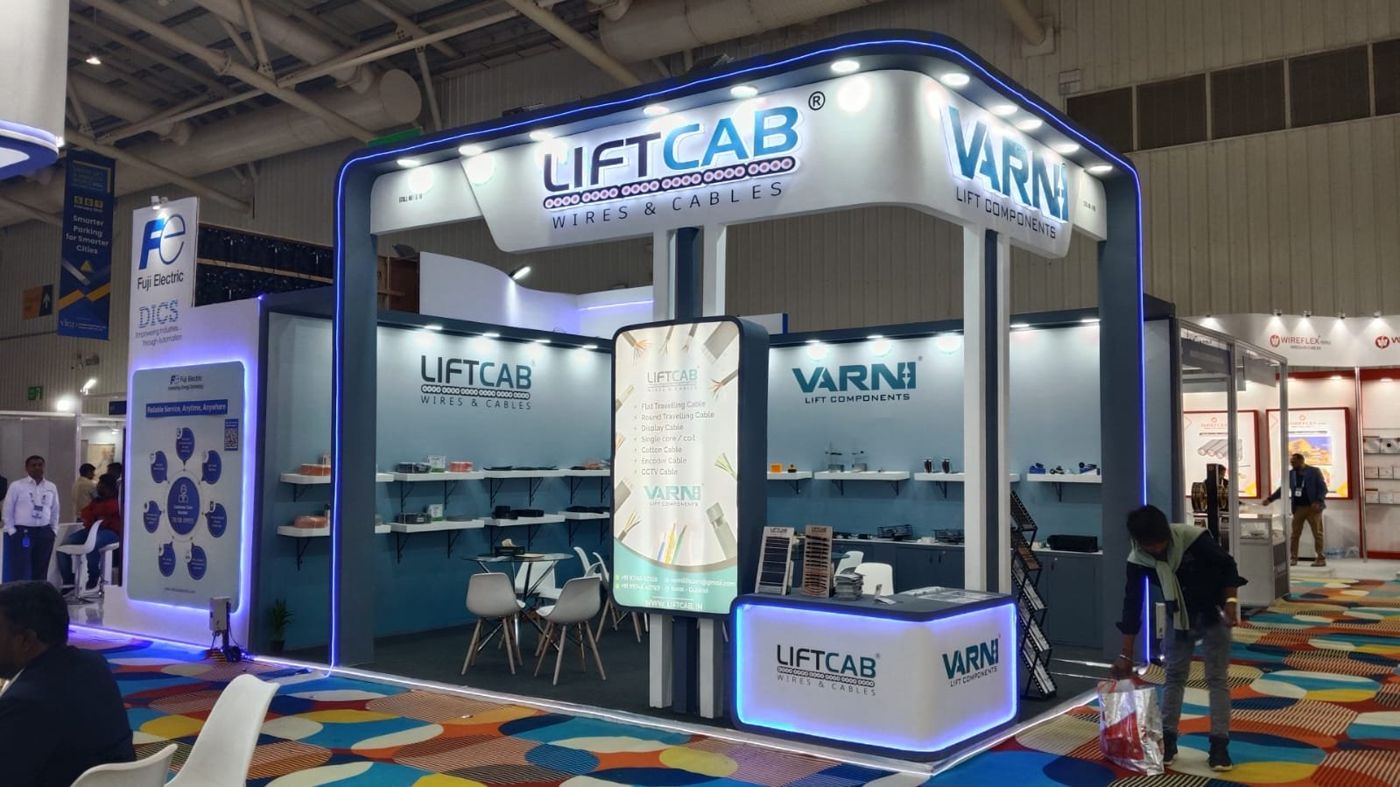
Products, people and must-haves
Products
List every product you plan to bring, with dimensions, weight and whether it runs, needs power or should be touched. Mark one as the hero. Photos help a lot, especially for large or unusual items.
People
Say how many staff will be on the stall at the busiest time and how many meetings you expect at once. This decides counter length, seating and the size of any meeting room.
Must-haves and nice-to-haves
Separate the two clearly. Must-haves might include a lockable store, a meeting room for six, an LED screen or a demo counter. Nice-to-haves might be a coffee point, a photo wall or a raised platform. When budget or space is tight, the designer knows what to keep.
Brand files and taste
Send the brand guideline, logo files in vector format, approved colour references and any campaign artwork for the show. Then show what you like. Photos of past stalls, yours or anyone else's, explain taste faster than words. Say what you liked about each: the lighting, the materials, the openness. Also say what you do not want. A note like no high walls or no glossy finishes saves a whole round.
If you have a previous stall in storage, mention it. Parts that can be reused change how the new design is approached.
Budget and approvals
Share a budget range, even a rough one. Without it, the designer guesses, and the first concept may be either too plain or far too ambitious. A range lets the designer decide where to spend on finishes, lighting and features, and where to keep things simple.
Name everyone who must approve the design, and get them to the first review. The most expensive delay in stall design is a senior person seeing the concept late and changing direction. Agree one consolidated set of comments per round, rather than separate emails from different people.
Timing
Give the designer the date you need the final design and the date of build-up. Our lead times from brief to show are 3 to 4 weeks for Karnataka, 4 to 6 weeks for the rest of South India, and 6 to 8 weeks elsewhere, because every stall is built in our Bengaluru factory and trucked to the venue. Sending a complete brief on day one is the simplest way to protect that time.
A one-page brief outline
- Show, venue, dates, stall number, size and open sides.
- Goal for the show, in priority order.
- Products with sizes and weights, hero marked.
- Staff numbers and meetings expected.
- Must-haves and nice-to-haves.
- Brand files, references you like and things to avoid.
- Budget range and approvers.
- Deadline for final design and build-up date.
Brief mistakes that cause extra rounds
- Sending the stall size but not the open sides, so the layout faces the wrong aisle.
- Leaving out a large product, then asking for it after the layout is set.
- Describing taste in words like modern or premium without any reference photos.
- Forgetting storage, so the design has no room for stock, bags and brochures.
- Changing the goal between rounds, from leads to meetings or the reverse.
Each of these is easy to fix in the brief and slow to fix once a 3D design exists. Ten extra minutes on the brief often saves a week of revisions.
Next step
Use this outline when you fill in Plan your project, and attach the floor plan, manual and brand files. If you would rather talk it through, WhatsApp or call us on +91 70190 58391.