
Food and Beverage Stalls: Sampling, Hygiene and Cold Storage
How to plan a food or beverage stall: sampling counter layout, washable finishes, back-of-stall storage, fridges and power for cold chain through the show.
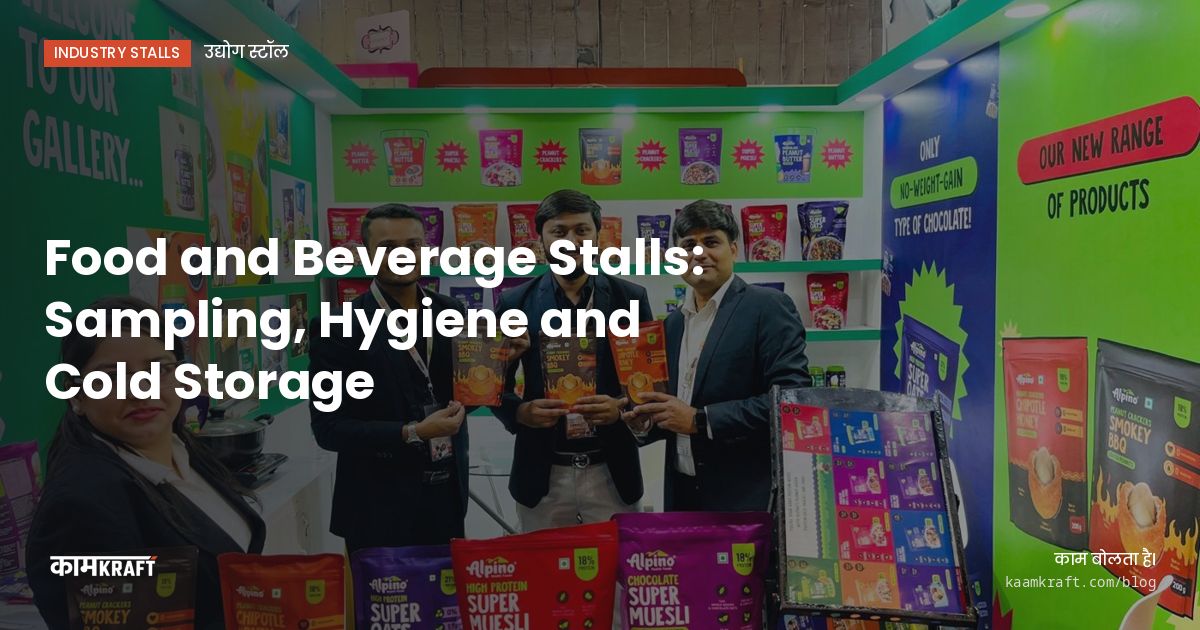
A food or beverage stall is a small kitchen and a small shop sharing a few square metres. Visitors judge you on taste first, so the sampling counter is the heart of the stall. Behind it you need clean prep space, storage that keeps stock at the right temperature, a way to wash and dispose, and enough room for staff to work without bumping into each other.
Most problems on food stalls come from planning the front and forgetting the back. A good design starts with the sampling routine: what you serve, how it is prepared, how it is kept cold or hot, and where the waste goes. Then the brand display is built around it.
Start with the sampling routine
Write down exactly what will be served and how. Is it pre-packed and handed out, poured from a bottle, or portioned on the spot? Does anything need heating, blending or frying? Each step needs a surface, a power point or an appliance, and space for the person doing it.
- What is served, in what portion, and in what cup, spoon or plate
- Which items need chilling, freezing or heating, and for how long
- Appliances needed: fridges, freezers, induction plates, ovens, blenders, coffee machines
- How many staff work behind the counter at peak times
- How often stock is refilled from storage during the day
- Where used cups, wrappers and leftover food go
Cooking and open flames are often restricted inside exhibition halls, and food handling may need specific permissions. Check the organiser's exhibitor manual for rules on cooking, gas cylinders, food sampling and any licences you need. Do this before you design the counter, because the answer can change which appliances you bring.
Designing the sampling counter
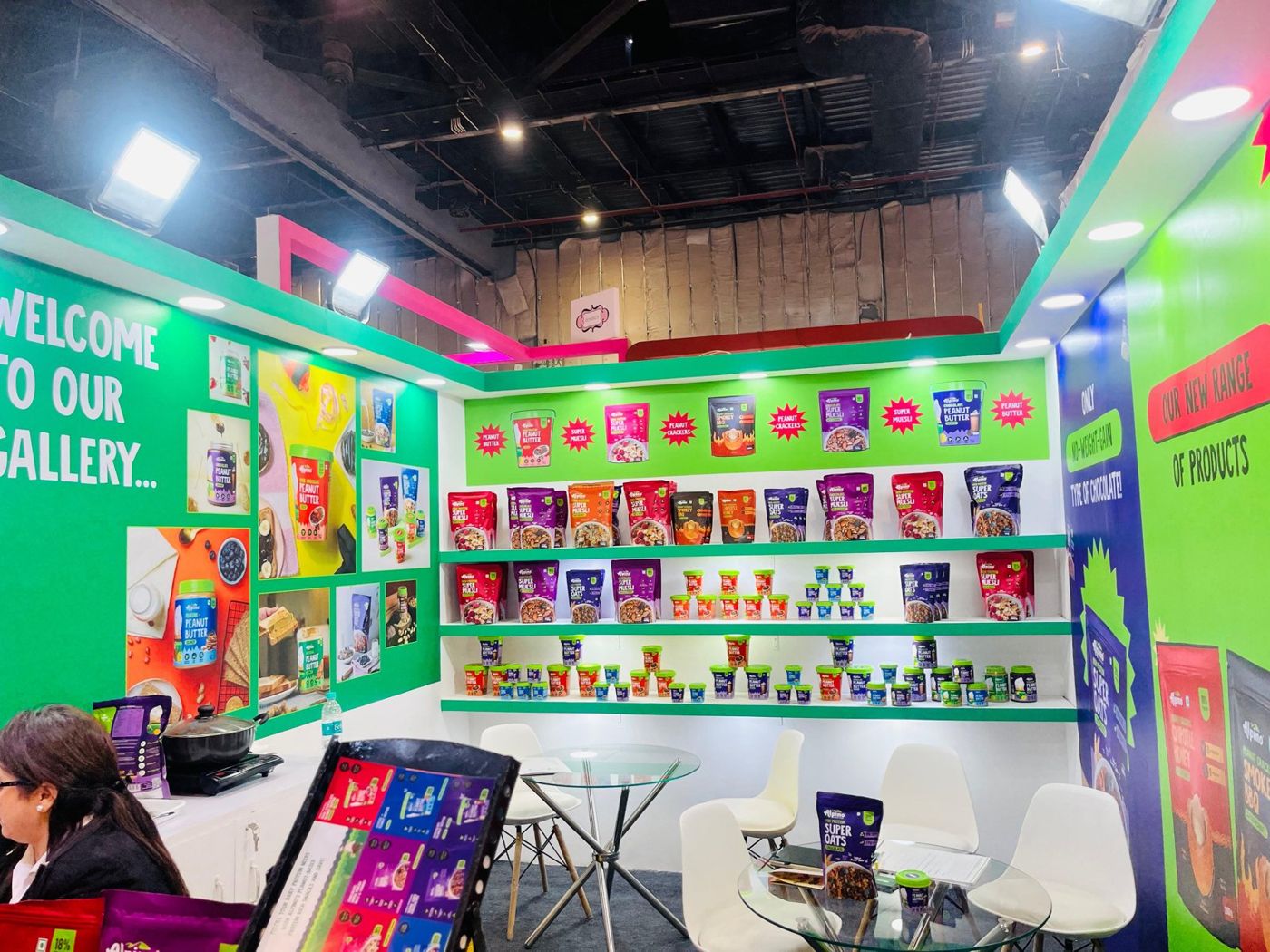
The counter should sit at the aisle edge or just inside it, so visitors can step up without blocking the walkway. Give it a serving side at a comfortable height for visitors and a working side for staff with a slightly deeper top. A small raised shelf or sneeze guard keeps samples covered while still on view.
Think about queues. If the product is popular, people will gather. Leave space in front of the counter, and if possible, run sampling along a longer edge rather than one small point so more people can be served at once. A separate counter for trade enquiries keeps distributors and buyers from waiting behind casual tasters.
Hygiene: finishes, washing and waste
Food areas need surfaces that wipe clean and do not absorb spills. Laminate or solid surface counter tops, sealed edges and a wipeable floor finish behind the counter work far better than carpet or raw timber. Keep fabric graphics and paper display items away from where liquids are poured.
Ask whether the venue allows a water connection and drainage to your stall, and what it involves. If it does not, plan a hand-wash station with clean and waste water containers, and a regular run to refill and empty them. Provide sanitiser at the counter for both staff and visitors.
- Separate bins for wet waste, dry waste and recyclables, hidden but easy to reach
- Lidded bins so smells do not spread on day three of the show
- Covered storage for clean cups, napkins and utensils
- A clear line between the clean prep area and the dirty return area
- Gloves, hair covers and aprons for anyone handling open food
Storage and cold chain at the stall
Food stalls need more storage than most. You hold stock for the day, packaging, cleaning supplies, staff bags and often a few cartons of product for trade samples. Plan a store room or a lockable area at the back of the stall, with shelving rather than one open floor where boxes pile up.
Fridges, freezers and power
Refrigeration is where cold chain usually breaks. Fridges and freezers need continuous power, and stall power may be switched off once the hall closes for the night. Ask the organiser whether 24-hour power is available, what it costs to book, and how it is connected. Without it, you will need to plan for products that can survive overnight, or arrange removal and return of stock each day.
List every appliance with its power rating and send it to your builder and the organiser. Coffee machines, ovens and freezers can add up quickly, and an overloaded circuit trips during peak sampling. Leave ventilation space around fridges so they do not overheat inside closed cabinets.
Getting stock in and out
Check when the organiser allows deliveries during show days and whether trolleys can reach your stall. A service door at the back of the stall, close to the store, saves carrying boxes through the visitor area. Keep a log of what comes in and goes out so you know when to reorder.
Displaying the product range
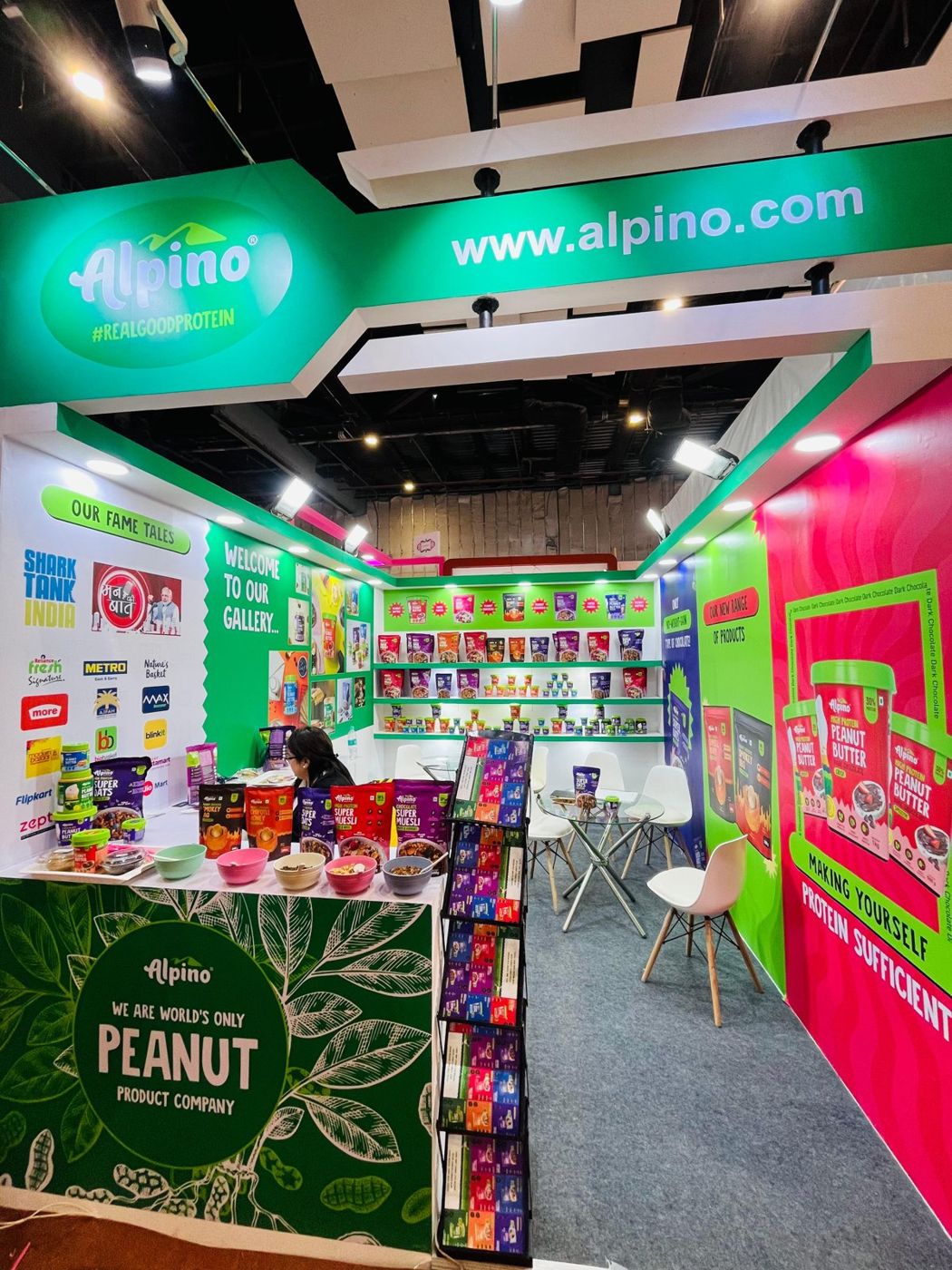
Beyond sampling, buyers want to see the full range. Lit shelves or a curved display with packs at eye level work well, with one or two hero products on plinths. Keep packs real, not empty dummies that look tired after a day. For export buyers, show pack sizes, shelf life and storage conditions on a small panel or a printed sheet.
Food shows in South India often run in large halls. If you are exhibiting at BIEC, Chennai Trade Centre or a consumer expo at Palace Grounds, read the venue section of the manual for food handling and power rules before you finalise the design. Our Bengaluru stall builds need 3–4 weeks of lead time; allow 4–6 weeks for the rest of South India and 6–8 weeks elsewhere.
Planning a food or beverage stall?
Send us your stall size, the show, what you plan to sample and the appliances you will use. Plan your project with us, or WhatsApp or call +91 70190 58391, and we will design the counter and back-of-stall around your routine.