
FMCG and Consumer Brand Stalls: Shelves, Sampling and Footfall
How FMCG and consumer brands can plan exhibition stalls: retail-style shelves, sampling counters, restocking, crowd flow and space for trade buyers.
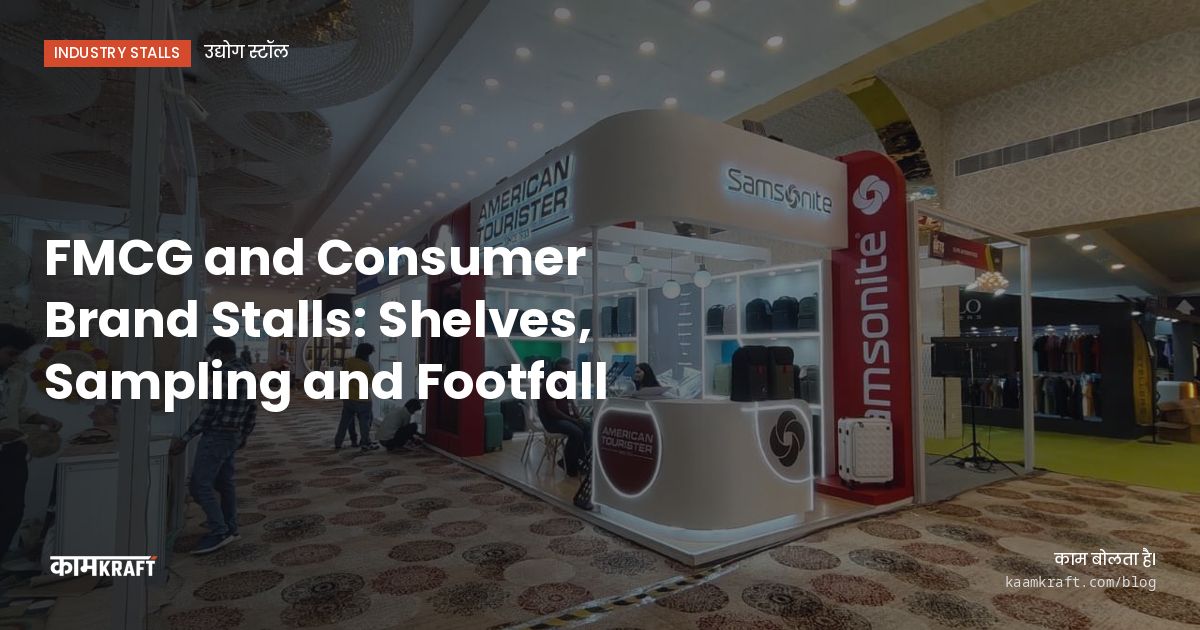
FMCG and consumer brands usually exhibit for one of two audiences: shoppers at consumer fairs, or distributors, retailers and buyers at trade shows. The stall needs to work for both, or be clearly planned for one. Shoppers want to see, touch and taste. Trade buyers want to see the range, the packaging on a shelf, and to sit down and talk margins and supply.
The common thread is that the stall has to handle volume. More visitors, more samples, more stock moving in and out, and more chances for clutter. Plan the shelves, the sampling and the backstage space together, and the stall stays tidy and busy for the whole show.
Shelves that look like the store
Trade buyers judge how your product will look on their shelves. A shelf wall that mirrors real retail, with facings, price strips and the right shelf depth, helps them picture it. For shoppers, the same wall works as a quick visual of the range.
- Group products by category or need, the way a shopper would find them in a store.
- Put hero and new products at eye level and best-sellers within easy reach.
- Use shelf lighting so packaging colours pop, especially on darker or glossy packs.
- Leave room to change products during the show without rebuilding the shelf.
- Fix shelves to the wall structure so they take the weight of full stock, not just a few display packs.
Sampling counters that do not create chaos
Sampling pulls a crowd quickly. The trick is to make it fast and contained, so it does not block the aisle or your other zones.
Sampling counter checklist
- Place the counter at the edge of the stall, facing the aisle, with space in front for a short queue inside your stall line.
- Give staff enough counter depth to prepare samples on their side, out of the visitor's reach.
- Build in storage under the counter for cups, napkins, spoons and the next batch of product.
- Plan bins on both sides of the counter, emptied regularly. Overflowing bins ruin a stall fast.
- If you serve food or drinks, check the organiser's rules on food handling, water and any appliances you want to use.
Some products need cold storage or a hot appliance. Both add power load and may need approval, so list them early. The organiser's exhibitor manual will explain what is allowed and how to apply. Our exhibition stall design and build team plans these loads and approvals as part of the 3D design.
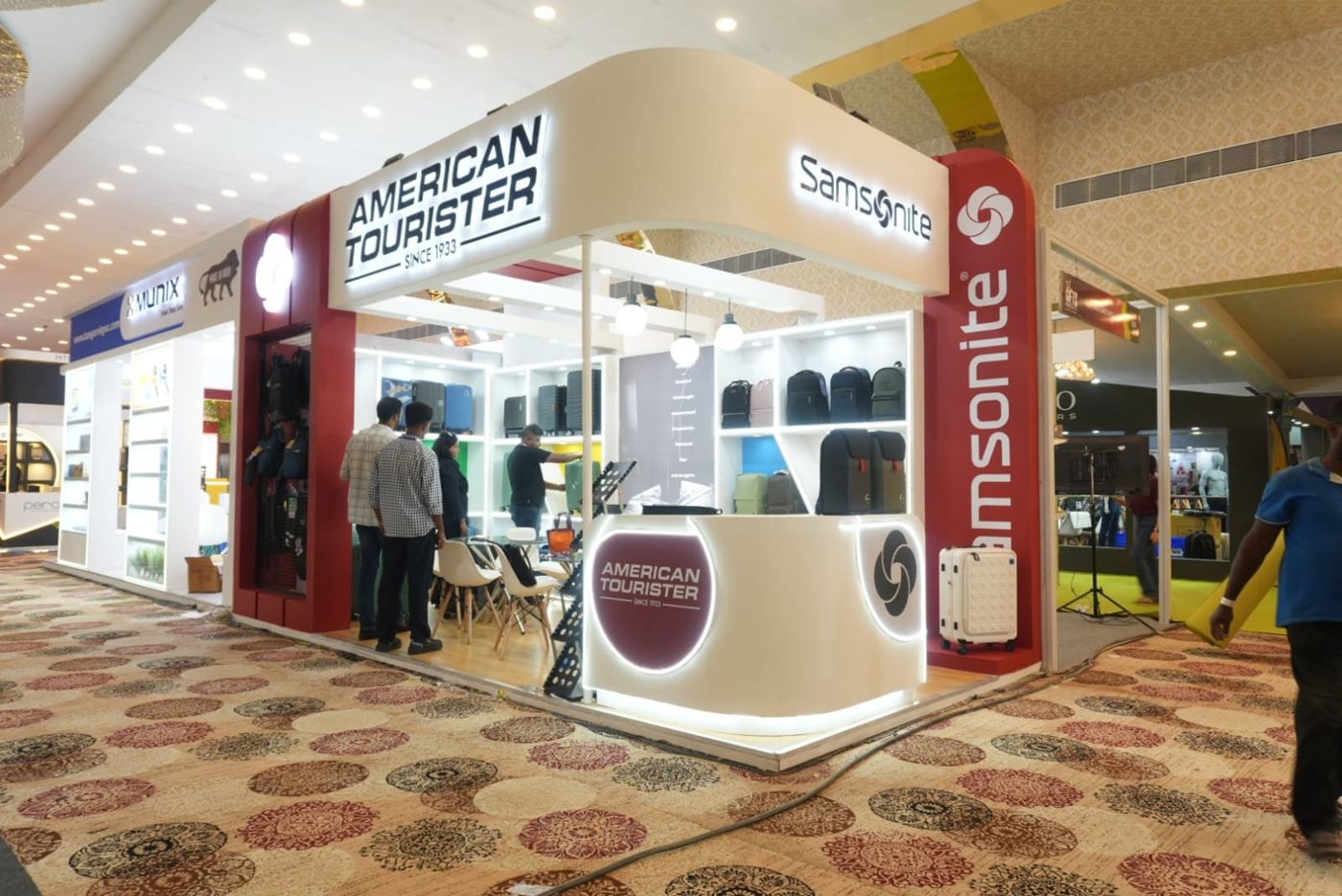
Getting noticed in a crowded hall
Consumer halls are loud and full of colour. Your stall has a few seconds as people walk past. Height and simplicity usually beat clutter.
- Use a tall element, a pillar, tower or header, to carry the logo above the crowd. Check the organiser's height limits first.
- Show the product big. An oversized pack, bottle or jar as a feature is instantly readable.
- Keep wall graphics to one strong message and the product, not a list of claims.
- Light the stall a little brighter than the aisle, so it looks open and active.
- Plan an activity or reason to stop: a sampling moment, a game, a quick offer.
Backstage: stock, staff and restocking
An FMCG stall uses up stock fast. Sampling packs, giveaways and display stock all need a home. Without a proper store, cartons end up stacked behind the counter in view of everyone.
Plan a store room with shelving, sized for at least one day of stock, and a clear plan for restocking. Check the organiser's rules on when goods can be brought into the hall during show days, because many venues allow it only before opening hours. A small staff area with water and a place to sit also helps on a long consumer fair.
A quiet corner for trade buyers
Even at consumer fairs, distributors and retailers visit. Give them a seated area away from the sampling crowd, with a table, product samples and price lists. At trade shows, this becomes the main zone. A meeting room or semi-closed area with a screen lets you take buyers through range plans, schemes and supply details.
Planning across many shows
Consumer brands often exhibit at several fairs and trade shows a year. A modular stall with standard shelving, counters and pillars can be stored and reused, with graphics changed for each show or campaign. This keeps the brand consistent and makes each new show faster to plan. See how reusing a stall works with our factory storage.
Lead time matters more for consumer brands than most, because packaging, sampling stock and stall graphics all have to line up. For Karnataka shows, brief us 3 to 4 weeks ahead. For fairs elsewhere in South India, such as those covered on our Chennai exhibition stalls page, allow 4 to 6 weeks, and 6 to 8 weeks for the rest of India.
Mistakes we see on FMCG stalls
- Sampling counters in the middle of the stall, so the queue blocks everything else.
- No store room, leaving cartons and bins in full view.
- Shelves built for a few display packs that sag under real stock.
- Too many messages on the walls, none of them readable from the aisle.
- No space for trade buyers, who leave without a proper conversation.
Planning a consumer brand stall?
Tell us the show, the stall size, whether it is consumer or trade, and what you want to sample or display. We will design a stall that handles the crowd and keeps your brand looking sharp. Start with Plan your project, or WhatsApp or call +91 70190 58391.