
Power Load and Electrical Planning for an Exhibition Stall
How to work out the power load for your stall, order it on time, and lay out lights, screens and demo machines so nothing trips during show hours.
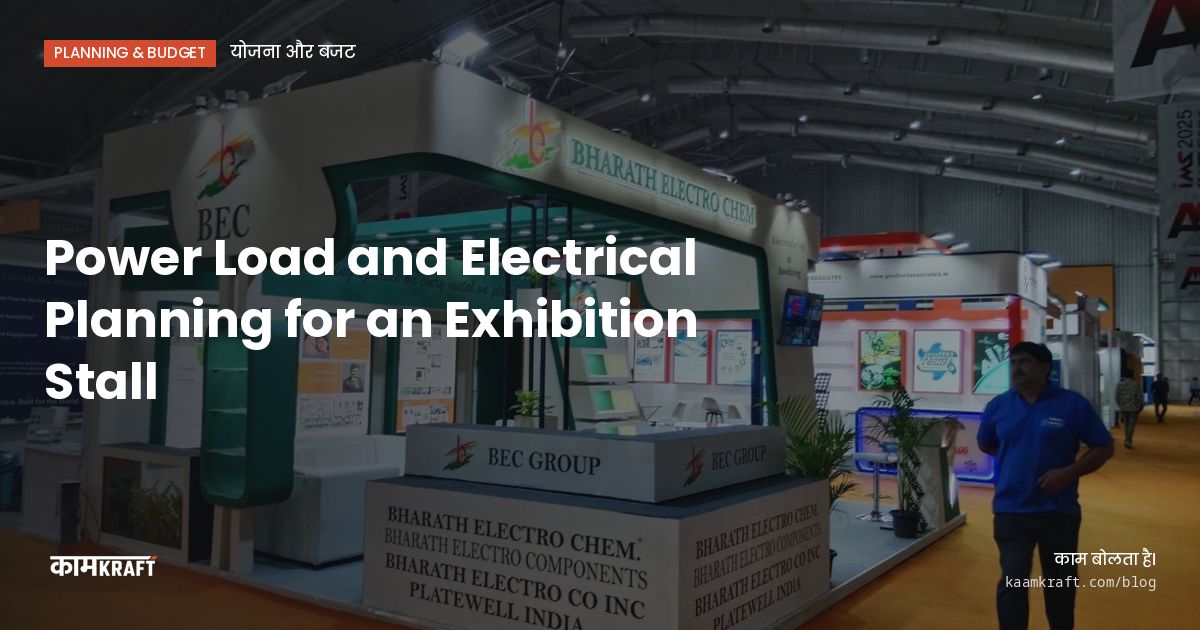
Power planning for a stall comes down to three jobs. Add up everything that will draw power, order a connection that covers it with a sensible margin before the organiser's deadline, and distribute it safely across the stall on separate circuits. Get the first job wrong and breakers trip during peak hours. Get the second wrong and you pay late charges or run short.
The organiser or venue usually supplies the connection to your stall. Everything after that point, from the distribution board to the last LED strip, is your stall contractor's job. Here is how we approach it.
List everything that draws power
Start with a full list, not a guess. Walk through the 3D design and note every item, then ask your own team what they plan to bring on the day.
- Lighting: spotlights, LED strips, backlit lightboxes, logo signs and shelf lights.
- Screens: televisions, LED walls, touch kiosks and the media players behind them.
- Demo equipment: machines, test rigs, compressors, heaters or anything with a motor.
- Hospitality: coffee machines, kettles, water dispensers and fridges.
- Office items: laptops, printers, badge scanners and phone charging points.
- Comfort: fans or portable cooling in a closed meeting room, if the venue allows them.
Machines with motors often draw much more power at the moment they start than while running. Ask the manufacturer for both the running load and the starting load, and whether the machine needs three-phase supply. This matters most at shows with heavy live demos, such as India Essen Welding & Cutting 2026.
Working out the load
- Write down the rated wattage of every item from its label or specification sheet.
- Group items into always-on loads, like lights, and occasional loads, like demos and kettles.
- Add up the total, and check the start-up figures for any motors.
- Add a margin for items your team brings on the day. Your electrician will advise how much.
- Check whether any equipment needs three-phase supply or a dedicated connection.
- Check whether anything must stay on overnight, such as fridges or servers.
The result goes on the organiser's power order form. Confirm in the exhibitor manual what connection sizes are offered, how they are charged, and the deadline. Ordering after the deadline is often possible but usually costs more.
Distribution on the stall
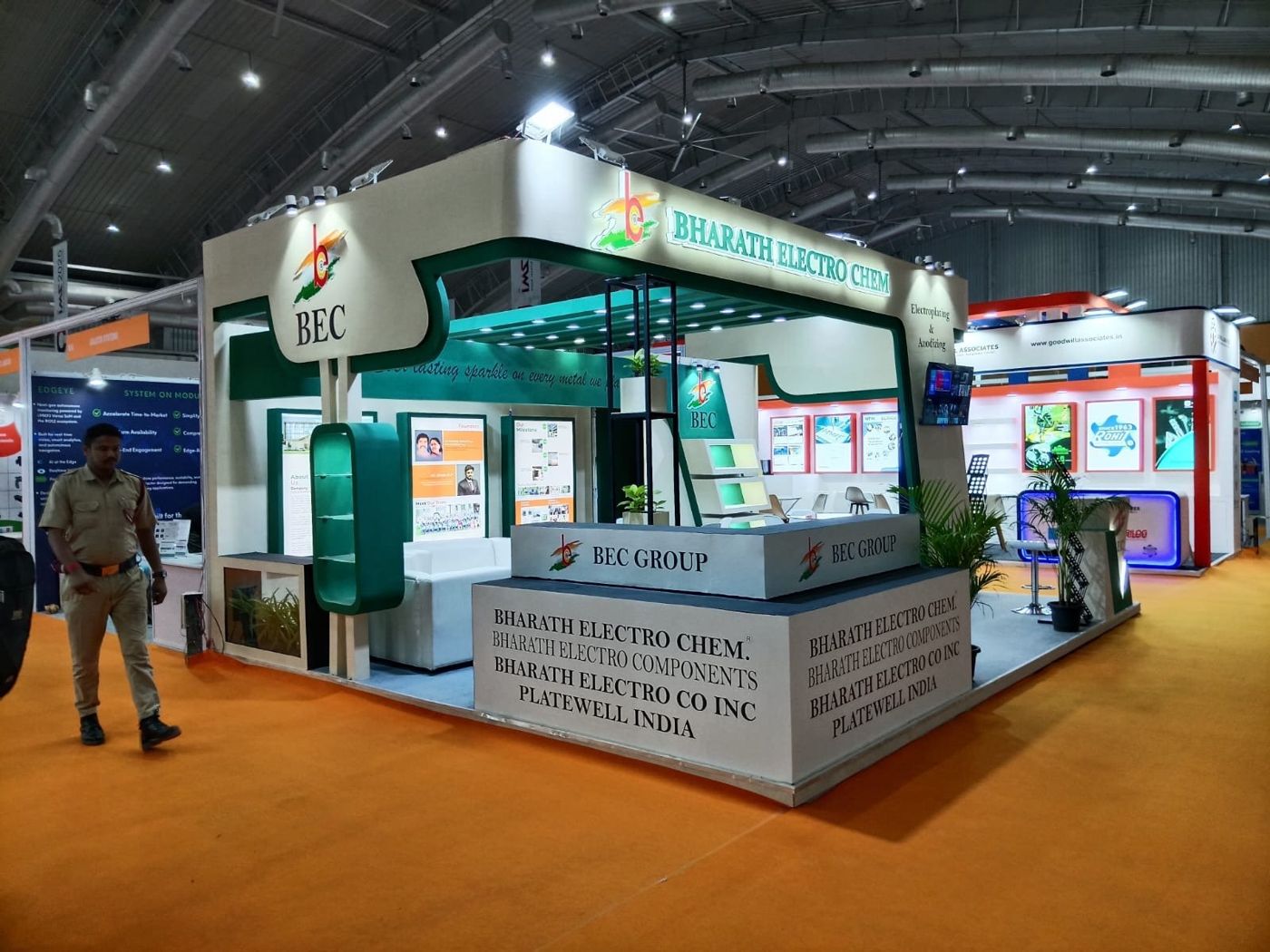
Once the load is known, the layout inside the stall decides how safe and reliable it is. We plan this in the drawings, not on site, so the factory can build cable channels and cut-outs into walls and platforms.
- A distribution board that is hidden from visitors but reachable by staff in seconds.
- Separate circuits for lighting, screens, demos and hospitality, so one fault does not black out the stall.
- Cables routed inside walls and under the platform, never across walkways.
- Properly rated cables, sockets and breakers, with no chains of multi-plugs.
- Earthing for metal structures and demo machines.
- Lights mounted away from fabric and graphics, and LED fittings where possible because they run cooler.
Organisers and venues commonly inspect stall electrics before switching on supply. A clean board, labelled circuits and tidy cabling make that inspection quick.
Timing: when power is actually available
Power is not always live from the first hour of build-up. Many shows switch on supply in stages, and the exhibitor manual should say when. Plan to test lights and screens as soon as supply arrives, and keep a temporary work light for the crew until then.
Supply is also often switched off overnight during the show. If you have fridges with samples or equipment that cannot lose power, check whether the show offers a separate continuous supply and order it. Venue practice varies, so read the manual for your hall, whether it is India Expo Mart in Greater Noida or a smaller regional venue.
Lighting choices that change the load
Lighting is usually the largest always-on load on a stall, and it is also the part you control most. LED spotlights and strips draw far less than older halogen fittings for the same light on the product, and they put out less heat, which matters in a closed meeting room or a crowded hall. Backlit fabric lightboxes look bright but can add up when they cover several walls, so count each one.
Screens are the other big always-on item. A large LED wall needs its own load figure from the supplier, and it also needs space behind or beside it for the processor and cabling. If the screens run all day, treat them as constant load, not occasional.
Questions to ask your stall contractor
- Who prepares the load calculation and fills in the organiser's power form?
- Will a licensed electrician do the wiring and stay on call through the show?
- Is the distribution board, cabling and lighting included in the quote?
- What spares will be on site for lights, breakers and connectors?
Mistakes to avoid
- Ordering power from a rough guess before the design is final.
- Forgetting the coffee machine and kettle, which can draw a surprising amount.
- Running a demo machine on the same circuit as the stall lighting.
- Assuming the venue's supply will be on for testing on the first build-up day.
- Letting your team plug extra equipment into whatever socket is free.
A good stall partner handles the calculation, fills in the load details and sends a technician to stay through the show. That is how we work on every exhibition stall we build.
Next step
Send us your product list and demo plans and we will work out the load with your design. Plan your project, or WhatsApp or call +91 70190 58391.