
Fire Safety and Materials on Exhibition Stalls: What Gets Checked
What organisers usually check for fire safety on a stall: treated materials, wiring, exits, covered ceilings and live demos, plus a checklist before build-up.
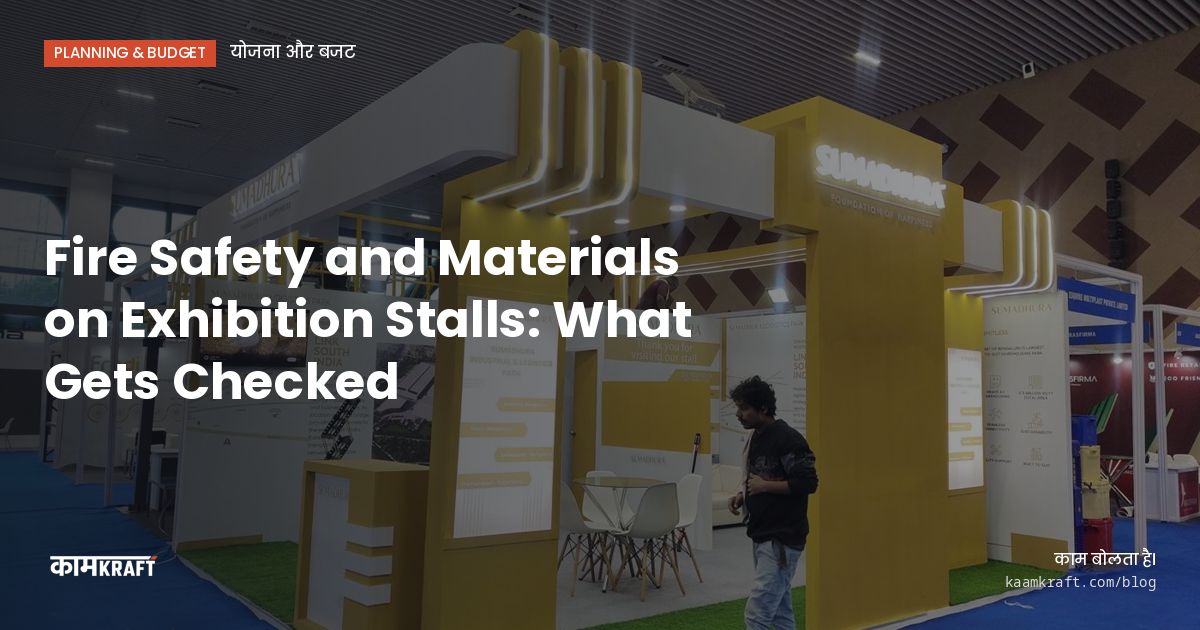
Fire safety checks on exhibition stalls usually cover four things: the materials the stall is built from, the electrical work, whether people can get out of every enclosed space quickly, and anything risky you plan to demonstrate. The exact rules come from the organiser's exhibitor manual and the venue's fire safety requirements, and they differ from show to show.
The safest approach is to treat the manual as the minimum and design for it from the first sketch. A stall that is built right in the factory passes a site inspection in minutes. One that is not can be held back from opening while things are fixed or removed.
Materials: what is usually looked at
Stalls are mostly built from timber, plywood, MDF, laminates, fabric and carpet, and all of these can burn. Organisers commonly ask for timber and board to be treated with fire-retardant paint or chemicals, and for fabrics and carpets to be flame-retardant. Some ask for certificates or supplier declarations. Check what your show asks for and in what form.
- Timber frames and boards: whether fire-retardant treatment is required and whether proof must be shown on site.
- Fabric: stretch fabric graphics, drapes and backlit fabric panels, which may need flame-retardant material.
- Carpet and flooring: whether the organiser specifies a type or treatment.
- Foam, thermocol and loose packing material: often restricted or banned inside the hall, so check before using them for display props.
- Paints, adhesives and solvents: usually not allowed to be stored on the stall in quantity.
Ask your fabricator directly which materials they use, how they are treated, and what paperwork they can provide. In our factory we apply treatments and finishes before panels are packed, so the crew is not painting on the show floor.
Electrical work as a fire risk
Most stall fires start from electrics, not open flames. Inspectors look for properly rated cables, closed joints, a distribution board with breakers, and no chains of multi-plugs. They also look at where lights sit. A spotlight pressed against a fabric graphic or tucked inside a closed timber box can overheat.
- Use LED fittings where you can, since they run much cooler than older lamps.
- Keep fittings clear of fabric, paper and foam.
- Route cables inside walls or under the platform in channels, not loose under carpet.
- Give screens and media players room to breathe instead of sealing them inside a cabinet.
- Leave the distribution board reachable, so power can be cut quickly.
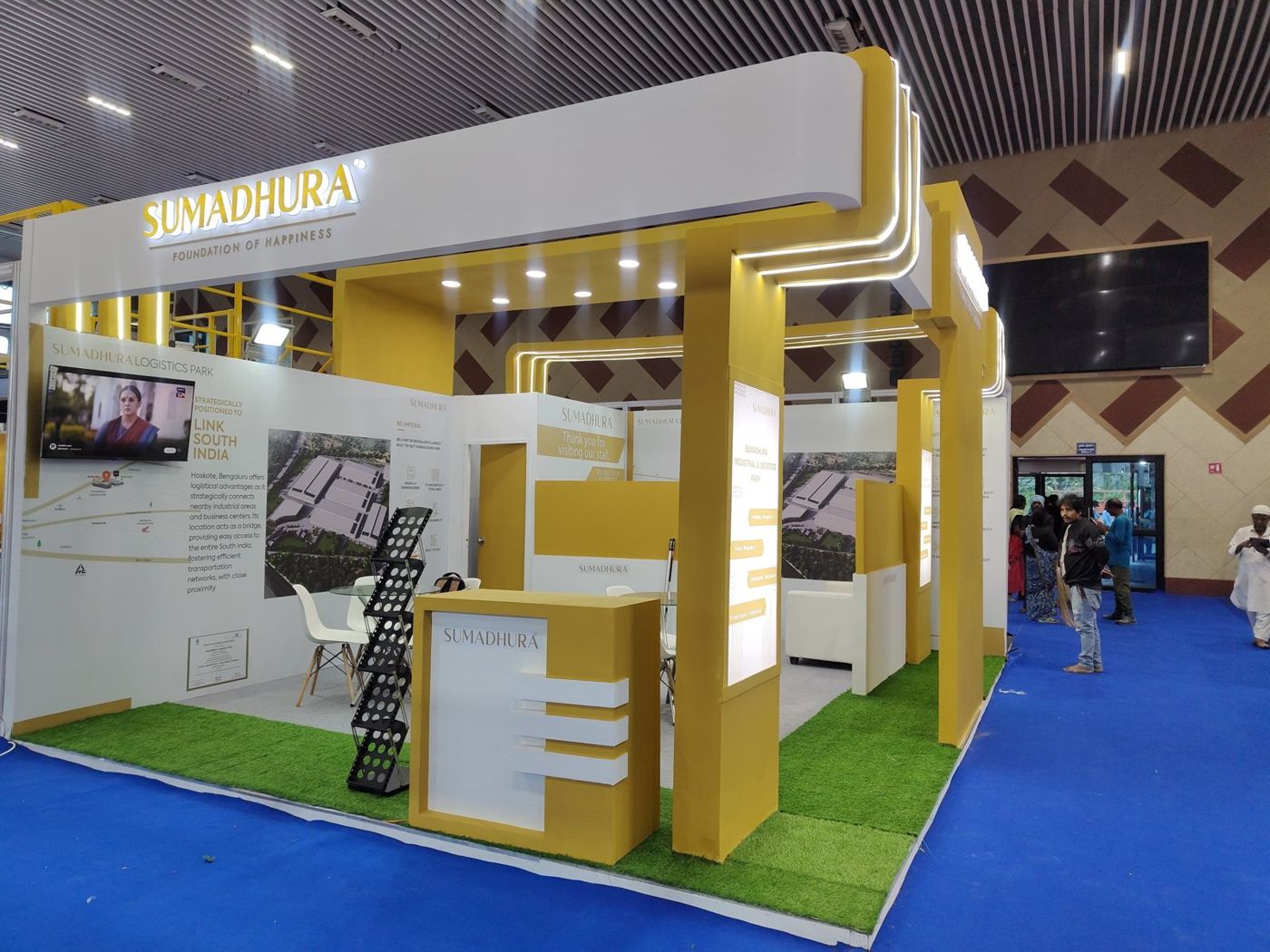
Layout: exits, ceilings and storage rooms
Layout matters as much as materials. A closed meeting room or storage room should have a door that opens easily and a clear path out. Aisles must stay clear, so stall elements, product stands and queues should not spill into them.
Covered ceilings deserve special care. Some venues restrict or limit roofs over stalls because they can block sprinklers, smoke detection or the view of hall lighting. If your design has a closed ceiling, an upper deck or a large overhead fabric, check the manual early and ask the organiser what is acceptable. Venues such as HITEX Hyderabad and others each have their own requirements, so do not carry assumptions from one hall to the next.
Storage rooms
The small store at the back of the stall fills up with cartons, brochures and packing material. Keep it tidy, keep the light fittings clear of boxes, and move empty cartons out of the hall rather than stacking them behind the back wall.
Live demos and hazardous exhibits
Demos with heat, flame, sparks, gas cylinders or chemicals normally need specific permission from the organiser and sometimes the venue. Shows built around this kind of equipment, such as India Essen Welding & Cutting 2026 and METEC India 2026, both held from 30 November to 2 December 2026 at the Bombay Exhibition Centre, will have their own procedures. Read them in the manual and plan the stall around them.
- Screens or barriers between the demo and visitors, made from suitable non-combustible materials.
- A clear zone around the demo with nothing flammable nearby.
- Extinguishers of the right type at the stall, if the organiser asks exhibitors to provide them.
- Trained operators for every demo session, and a plan for who switches off what in an emergency.
Questions to ask your fabricator
You do not need to be an expert in materials to check that your stall partner takes this seriously. A few direct questions, asked before you sign, tell you a lot about how the stall will be built and how the inspection will go.
- Which boards, timber and fabrics will be used, and how is each one treated?
- Is treatment done in the factory or on site, and can you show proof if the organiser asks?
- Who does the electrical work, and will that person be at the stall during the inspection?
- How will packing material and offcuts be removed from the hall during build-up?
- Have you built stalls with demos like ours before, and what extra steps did the organiser ask for?
Clear, specific answers are a good sign. Vague ones usually mean the problem will surface on the show floor, when there is least time to fix it.
A checklist before build-up
- Read the fire safety and construction sections of the exhibitor manual and list every requirement.
- Confirm with your fabricator how each material is treated and what proof is available.
- Check the design for covered ceilings, enclosed rooms and exits, and raise anything unclear with the organiser.
- Get written permission for any demo with heat, flame, sparks, gas or chemicals.
- Plan where packing material and empty cartons will go once the stall is unpacked.
- Keep approvals, certificates and the approved drawings in a folder on site.
These checks are part of how we build every exhibition stall, so clients do not have to manage them alone.
Planning a stall?
Tell us the show, your stall size and any demos you plan to run, and we will design with the safety rules in mind from the start. Plan your project, or WhatsApp or call +91 70190 58391.