
Exhibiting in Mumbai with a Stall Built in Bengaluru
How a stall built in Bengaluru gets to a Mumbai show: lead times, dry assembly, transport, venue access at Goregaon and BKC, and back-to-back show planning.
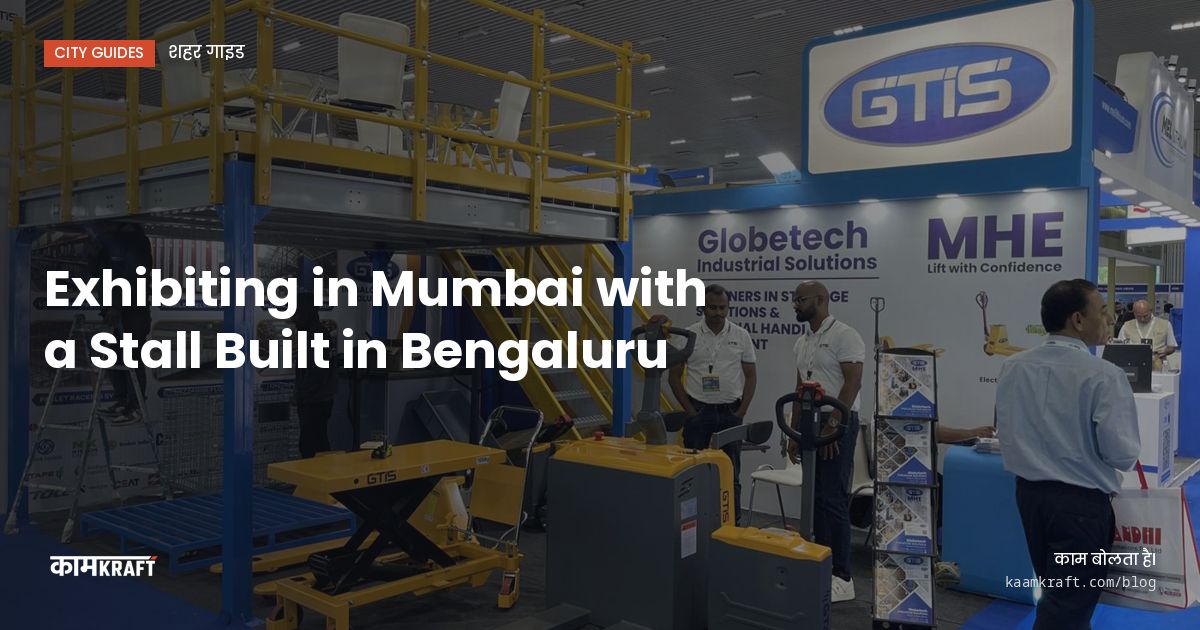
Yes, a stall built in Bengaluru can be exhibited in Mumbai without any loss in quality, as long as the timeline is right and the stall is designed to travel. We design it in 3D, build and dry-assemble it in our factory, pack it for the road, truck it to the venue and install it with our own crew. For Mumbai shows we ask for a brief 6 to 8 weeks ahead.
The reason to do this rather than hire a local fabricator usually comes down to consistency and control. You work with one team that builds the stall, travels with it and stays through the show. If you exhibit in South India as well, the same stall or design can be reused across cities.
The main Mumbai venues
Bombay Exhibition Centre, Goregaon
The Bombay Exhibition Centre hosts many of Mumbai's large trade shows. On the 2026 calendar, ACETECH Mumbai 2026 runs from 19 to 22 November, followed by METEC India 2026 and India Essen Welding and Cutting 2026 from 30 November to 2 December. These shows bring big stalls, heavy exhibits and busy build-up days.
Jio World Centre, BKC
The Jio World Centre in Bandra Kurla Complex hosts premium conferences and expos. Stalls here tend to be more refined, and access, timings and material rules need careful checking because the venue is in a dense business district.
How the stall travels
A stall built for a long road journey is designed differently from one built for a local show. Panels are sized for packing and handling, joints are designed for repeated assembly and finishes are protected in transit.
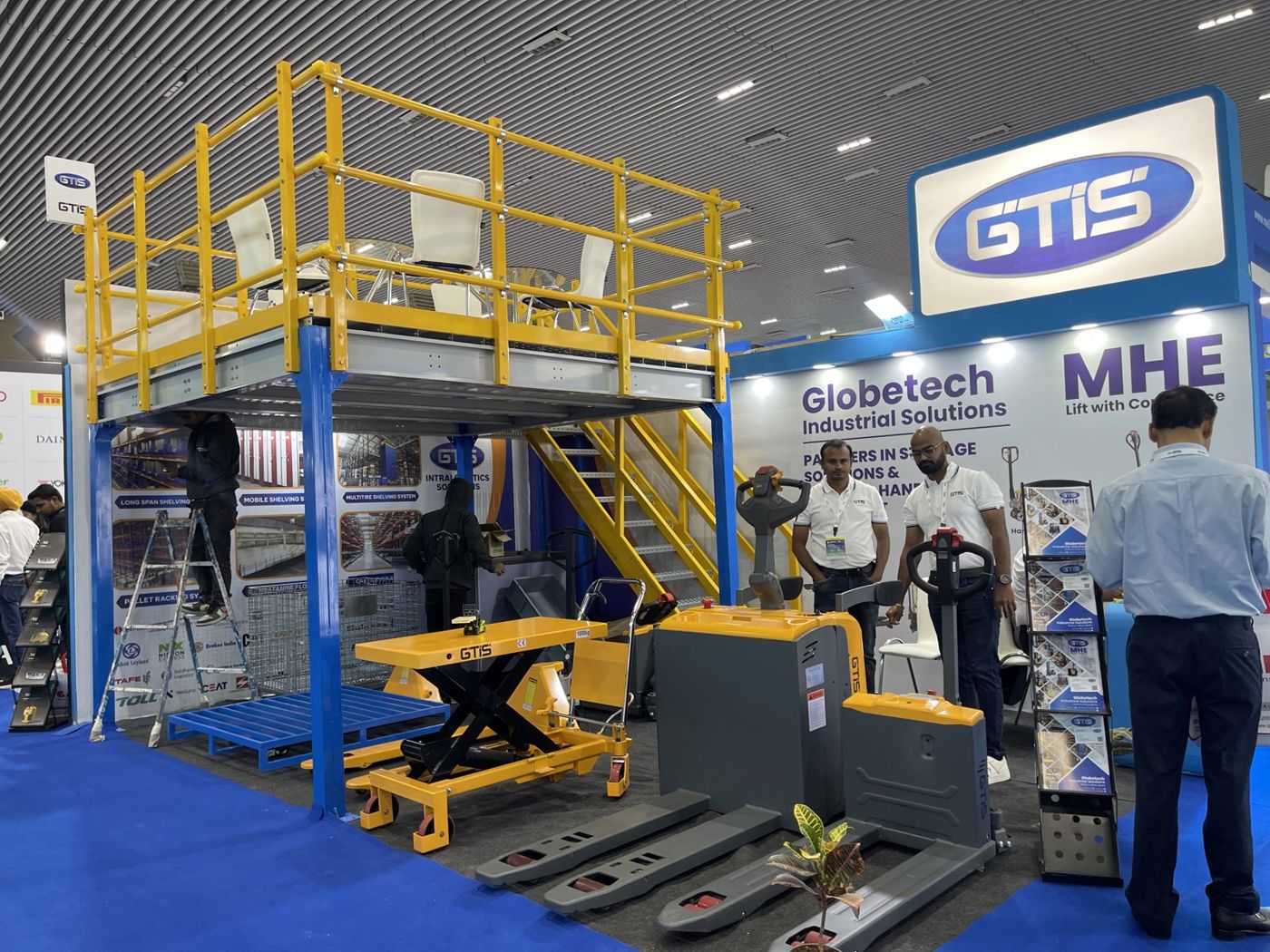
- Design: the 3D design accounts for transport, with panel sizes that fit in the truck and through venue doors.
- Fabrication: frames, panels, counters and platforms are built and finished in Bengaluru.
- Dry assembly: the full stall is put together in the factory, wiring checked and the client invited to review.
- Packing: panels are numbered, wrapped and crated, with graphics and electricals packed separately.
- Transport: the stall is trucked to Mumbai with a buffer for highway delays.
- Installation: our crew assembles the stall on build-up days to the same drawing used in the factory.
Because the stall has already been put together once, the installation is about repeating a known process rather than solving problems on site. That matters at large shows where build-up time is short.
What to confirm with the organiser
Mumbai venues are busy and access is managed closely. Read the exhibitor manual early and check these points, since they affect the transport plan as much as the design.
- Vehicle entry: which gate, which hours and whether time slots must be booked.
- Unloading: where trucks can unload and how far materials move to your stall.
- Build-up and dismantling dates and hours, and any limits on night work.
- Height limits, rigging rules and design approval deadlines.
- Power load, application deadlines and supply point location.
- Material and fire safety requirements.
Back-to-back Mumbai shows
The late November and early December calendar at the Bombay Exhibition Centre is a good example of how one investment can serve several events. If your company exhibits at more than one of these shows, or at a Mumbai show and a South India show in the same season, plan the stall for reuse from the start.
- Design a modular core that can be reconfigured for different plot sizes or open sides.
- Change graphics per show rather than rebuilding the structure.
- Plan storage between shows, either near the venue or back at our factory.
- Check whether the gap between shows allows the stall to return to Bengaluru, or whether local storage is better.
Our approach to reusable stalls covers how we design, store and refresh stalls between events.
Mistakes to avoid
- Briefing too late for an out-of-state build and squeezing fabrication time.
- Designing oversized single panels that cannot be transported or moved through the venue.
- Not booking truck entry slots and losing build-up time waiting at the gate.
- Assuming the same rules apply at Goregaon and BKC.
- Shipping exhibits separately without coordinating their arrival with the stall build.
See our Mumbai location page for what we cover in the city, including dealer meets and launches.
Local fabricator or a travelling stall?
There are fair reasons to hire a Mumbai fabricator for a Mumbai show, and fair reasons not to. It helps to be clear about the trade-off before you decide.
- A local fabricator avoids long-distance transport and may handle last-minute changes faster on site.
- A travelling stall from a team you already work with gives you the same build quality and finish you have seen at other shows.
- If you exhibit in several cities, one team keeps the design, materials and brand consistent across all of them.
- Dry assembly in the factory means problems are found before the truck leaves, not on build-up day.
- A reusable stall that travels between cities can reduce the work of rebuilding for each show.
For a one-off Mumbai show with a simple stall, local can make sense. For a company that exhibits across India, or one that wants a single team accountable from design to dismantling, a stall built and checked in Bengaluru is often the more reliable choice. The key is starting early enough that the distance does not squeeze any step.
Planning a Mumbai stall?
Tell us your show, stall size and dates, and we will send a 3D design with a build and transport plan. Start with Plan your project, or WhatsApp or call +91 70190 58391.