
Keeping Your Brand Consistent from Stall to Stall Across Shows
How to keep your brand consistent across exhibition stalls of different sizes and cities: a stall kit of parts, design rules, graphic templates and records.
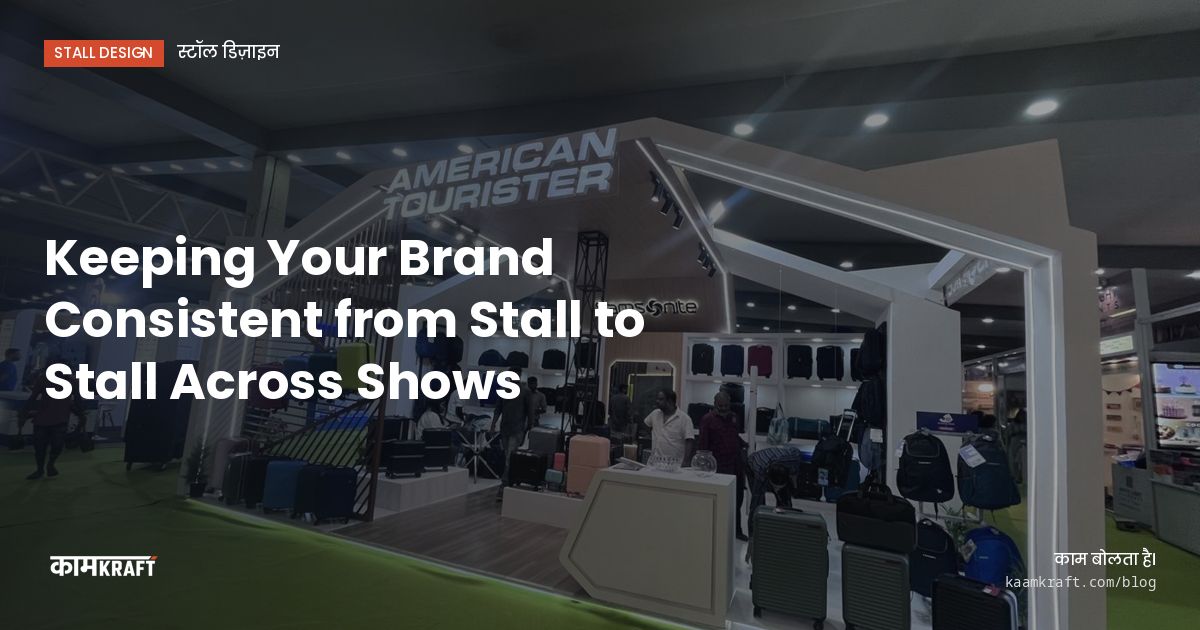
To keep your brand consistent across shows, define a small set of stall rules and parts that stay the same, then let only the size, layout and show-specific messages change. Fix the logo treatment, colour plan, materials, lighting style and a few signature elements. Write them down, keep the files in one place, and work with one team that builds from them each time.
Without this, every show becomes a fresh design brief, a different agency interprets your brand differently, and visitors who saw you in Chennai do not recognise you in Delhi. Consistency is not about building the same stall everywhere. It is about making every stall look like it came from the same company.
What should stay the same
Pick the elements that carry your identity and keep them fixed. A short list is easier to protect than a long one.
- Logo treatment: where it sits, how it is lit, minimum size on the fascia and clear space around it.
- Colour plan: the base, brand and accent colours, with approved paint and print references.
- Materials and finishes: for example matt white walls, a particular wood laminate, black metal trims.
- Lighting style: colour temperature, whether logos are backlit or front-lit, how products are lit.
- Signature elements: a curved wall, a distinctive counter, a lit column or a pattern that appears on every stall.
- Graphic style: typeface, photo style, how much text, where product names and QR codes go.
What can change from show to show
Shows differ in audience, stall size, open sides and organiser rules. Let these change freely so the stall still fits each event.
- Stall size and layout: a 3x3 at a regional show and a large island at a national show.
- Products on display, chosen for each show's visitors.
- Headline messages and campaign graphics.
- Meeting room size and storage, depending on how many staff and meetings you plan.
- Height and fascia details, within what each organiser allows.
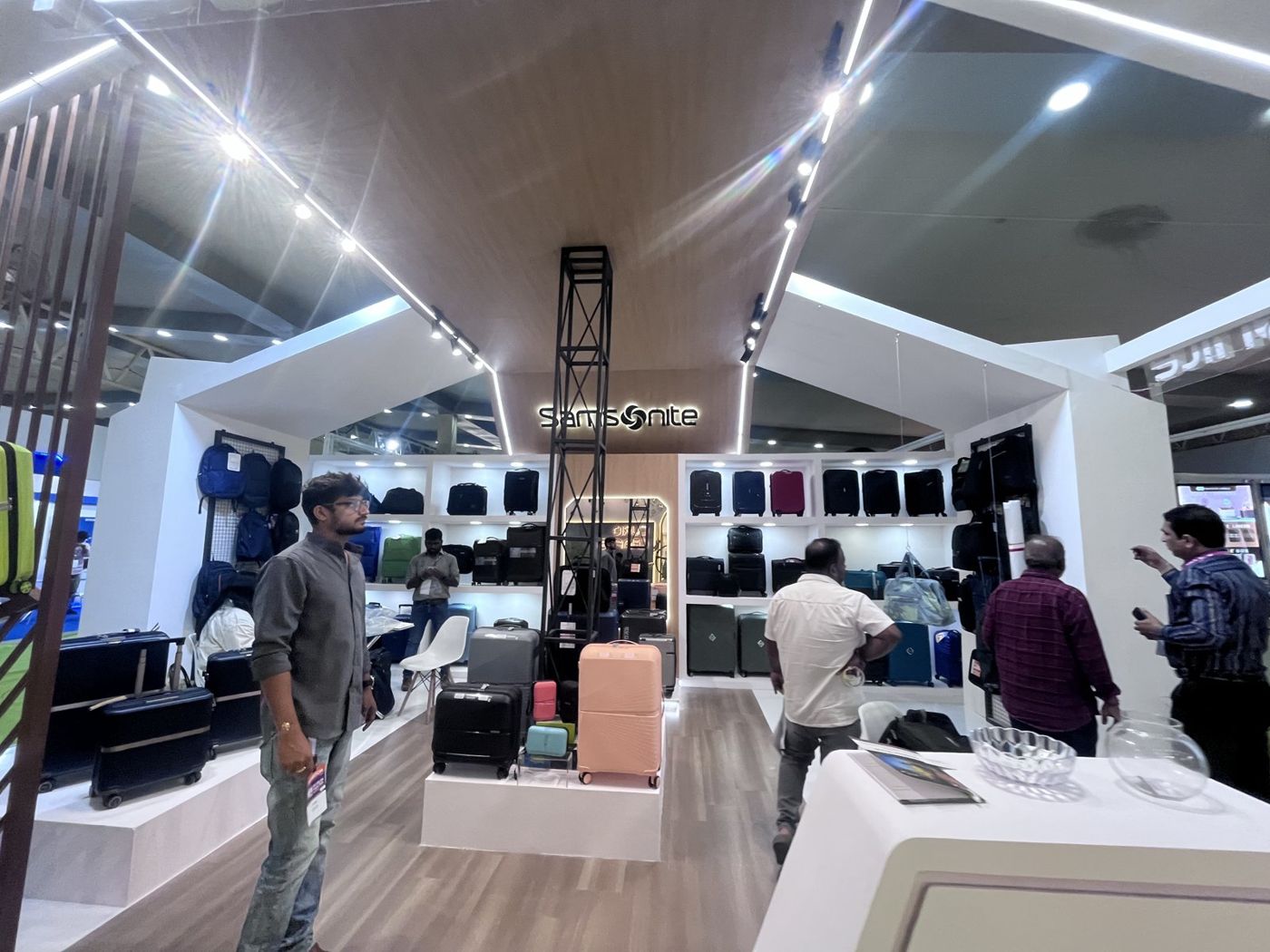
Build a kit of parts
The most practical way to stay consistent is to build a set of standard elements that can be combined into stalls of different sizes. Think of it as a kit: a few wall modules, a counter, a lit logo unit, display plinths and a fascia system. Each show uses some or all of the kit, plus new graphics.
A kit gives you three benefits. The brand looks the same because the same parts appear everywhere. Design time drops because the main decisions are already made. And you can reuse and store the parts between shows, refreshing graphics and finishes rather than building from scratch.
How to plan the kit
- List the shows you expect to do over the next year or two, with likely stall sizes and open sides.
- Design the largest likely stall first, then check that smaller stalls can be made from a subset of its parts.
- Choose module sizes that combine well, so walls and counters fit common stall dimensions.
- Make graphics replaceable, using fabric or vinyl panels that can be reprinted without rebuilding the wall.
- Plan packing, storage and handling so the parts survive repeated transport.
Write a one-page stall guideline
Your brand guideline covers print and digital. Add a short stall page that covers the physical side. It does not need to be long. One or two pages with drawings and references is enough for any designer or fabricator to follow.
Include the fixed elements above, approved colour references for paint and print, photos of a past stall you liked, logo files in vector format, and any rules from your marketing team, such as no stock photos or a maximum number of words on a wall. Keep it with the 3D files and drawings of past stalls.
Name one person on your side as the owner of this page. When a regional team or a dealer wants a stall for a local show, they start from the guideline and send their plan to that person before anything is built. This one step stops most of the drift that happens when stalls are commissioned from different offices.
Keep records after every show
Consistency gets lost when nobody remembers exactly what was built last time. After each show, keep a short record so the next team does not start from zero.
- Final 3D views and drawings as built, including any changes made on site.
- Print files and the materials they were printed on.
- Paint shades and laminate codes used.
- Photos of the finished stall from the aisle, in daylight and under show lighting.
- What worked and what did not: crowd flow, storage, lighting, staff feedback.
- Which parts went into storage and their condition.
One builder, many cities
Using a different local agency in every city is one of the biggest causes of inconsistency. Each one sources different materials, prints on different machines and interprets drawings differently. Working with one fabricator who builds in one place and travels the stall keeps finishes, colours and quality the same.
We build every stall in our Bengaluru factory, dry-assemble it, and truck it to the venue with our own crew. That is how the same stall can appear at BIEC Bengaluru, Chennai Trade Centre and venues further north and look the same each time. Our lead times are 3 to 4 weeks for Karnataka, 4 to 6 weeks for the rest of South India and 6 to 8 weeks elsewhere.
Next step
If you exhibit at several shows a year, send us your show calendar and brand guideline. We will suggest a stall kit that keeps your brand consistent and makes each show easier to plan. Start with Plan your project, or WhatsApp or call +91 70190 58391.