
CODISSIA Coimbatore: Stalls for Engineering and Machinery Shows
Planning a machinery stall at CODISSIA Coimbatore: exhibit lists, floor loads and handling to confirm, build-up order around heavy machines and buyer needs.
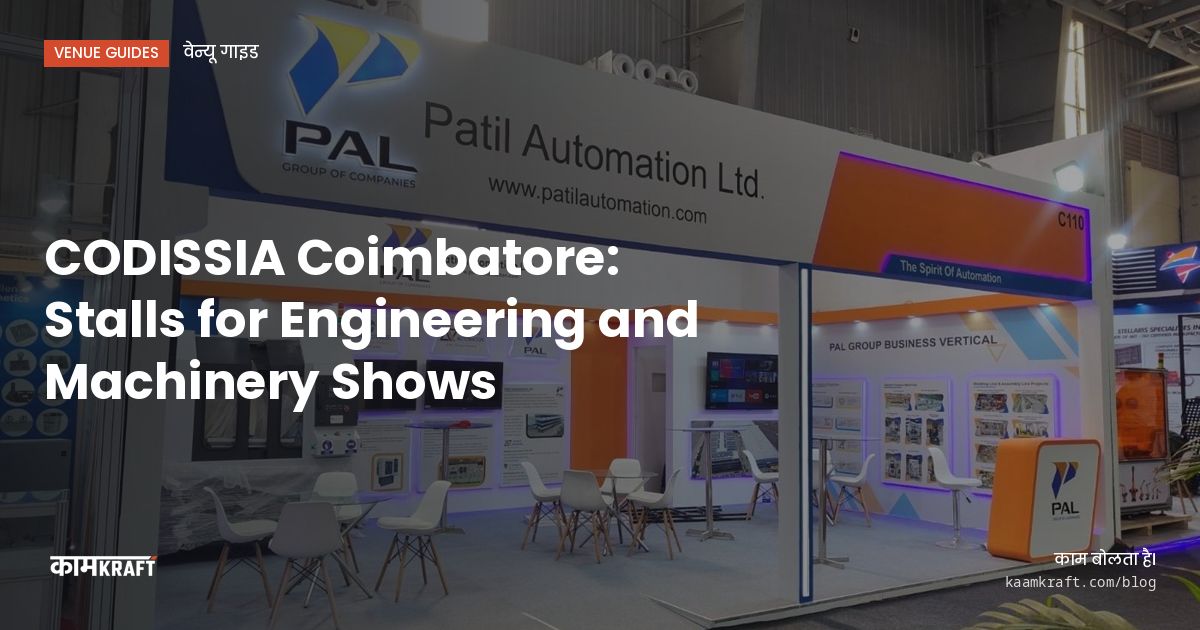
CODISSIA's trade fair complex in Coimbatore hosts engineering, machine tool, pump, motor, textile machinery and agricultural equipment shows. Stalls there are usually built around heavy, running machines, and many visitors are owners and engineers from manufacturing units who know exactly what they are looking at.
That changes the brief. The machine is the hero, the stall is the frame around it, and planning has to start with the exhibit, not the walls. Here is the order we work in.
Start with the machine, not the stall
Before anyone draws a stall, list every exhibit with its footprint, height, weight, services and how it will be moved. That list decides the layout, the platform and the build-up order.
- Footprint and height of each machine, including doors, guards and moving parts at full travel.
- Weight, and whether it needs a forklift, crane or hydraulic trolley to place.
- Power: phase, load and whether it will run continuously during the show.
- Compressed air, water or coolant needs, and how waste or chips will be handled.
- Noise, fumes or heat produced during demos.
- Who from your side supervises placing and commissioning.
Share this list with your fabricator on the first day. A stall designed without it almost always has to be redrawn, and redrawing late costs fabrication time.
What to confirm with the organiser
We never assume floor loads or hall specs at any venue. Each show at CODISSIA sets its own rules, so confirm these in the exhibitor manual or in writing from the organiser.
- Floor load limits at your plot, and whether heavy machines need base plates to spread the load.
- The route and door sizes from the unloading area to your plot.
- Material handling: whether the organiser provides forklifts or cranes, how to book them and when.
- Power: connection types, maximum load, ordering deadline, and whether machine power is separate from stall lighting.
- Availability of compressed air, if your demos need it.
- Build height limit and rules on overhead structures.
- Safety rules for running machinery, guards and demo zones.
Sequence the build-up around heavy exhibits
On a machinery stall, the order of work is everything. Once walls and fascia are up, a large machine may not fit through, and a forklift cannot work inside a finished stall. We plan build-up so heavy exhibits go in first.
- Mark the stall outline and machine positions on the hall floor.
- Place heavy machines using the organiser's or your own handling equipment.
- Lay the platform around the machines, with cut-outs and cable routes planned at the factory.
- Raise walls, fascia and branding.
- Complete electrical work and inspection, then power the machines and run tests.
- Finish with graphics, lighting, cleaning and safety barriers.
Because we dry-assemble every stall at our factory with machine footprints marked on the platform, the cut-outs and cable routes arrive right the first time. Adjusting a platform on site with a machine already sitting in it is slow and messy.
Designing for engineering buyers
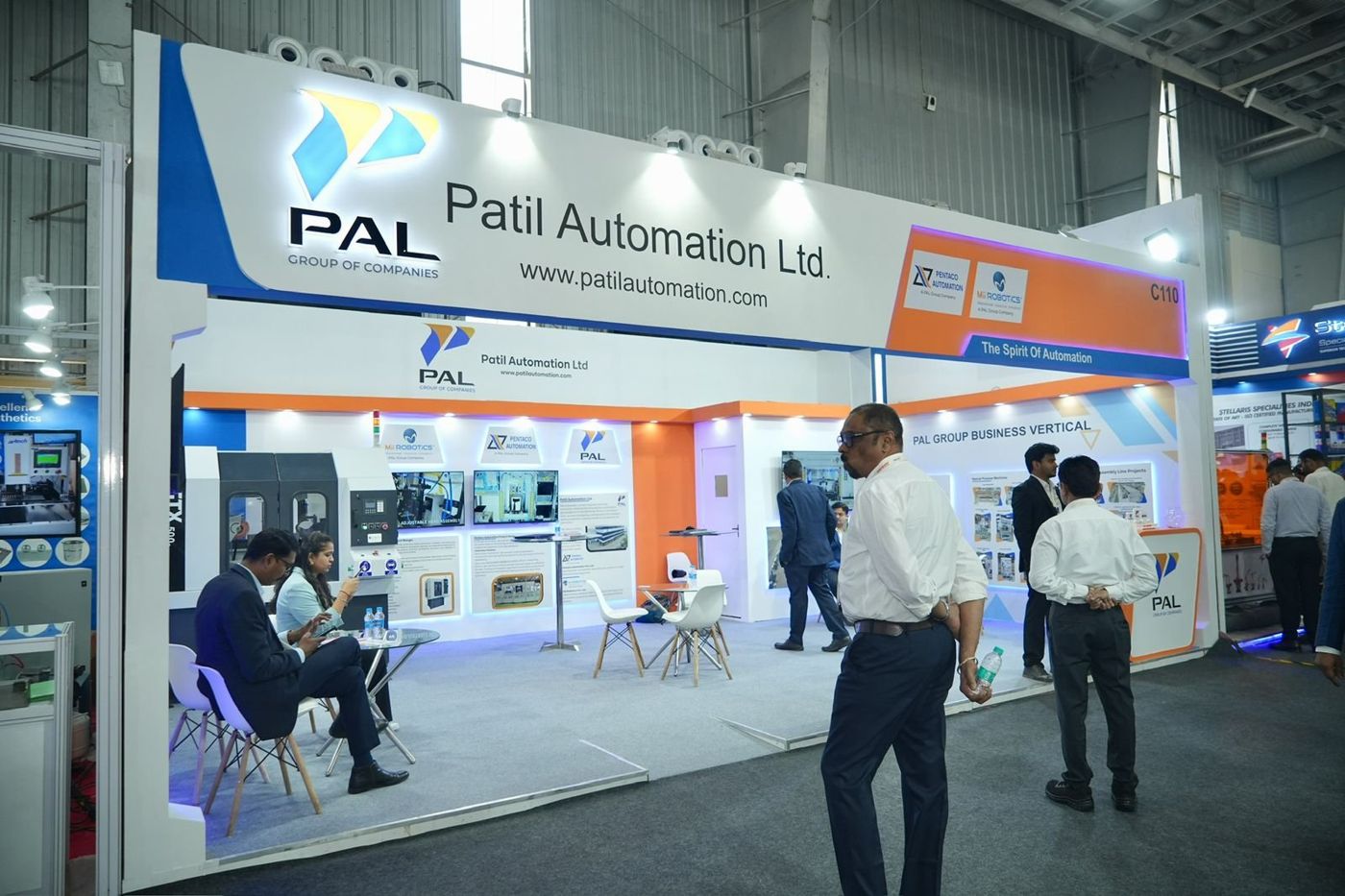
Engineering visitors want to see the machine work, look closely at build quality and talk specifics. The stall should support that, not compete with it.
- Keep sight lines to the machine open from the aisle. Avoid tall walls that hide it.
- Mark a safety zone around running machines, with room for visitors to stand and watch.
- Light the working area well, with neutral light so finishes and parts look true.
- Put a spec board next to each machine: model, key specs, applications and a QR code to the brochure.
- Give the sales team a quieter meeting area away from the noise, with a table big enough for drawings.
- Plan storage for tools, spares and cleaning cloths. Machines need wiping down several times a day.
Flooring deserves thought too. Carpet near machines picks up oil and chips quickly. A hard-wearing vinyl or painted platform around the working area, with carpet only in the meeting zone, stays presentable for the whole show.
Running live demos safely
A running machine draws a crowd, and a crowd near moving parts needs managing. Decide in advance how often demos run, who operates the machine, and where visitors stand. A low barrier with a clear gap to the machine, a marked floor zone and a short safety sign are usually enough. Keep the operator's controls on the side away from the aisle, and plan an emergency stop that is easy to reach. Check the organiser's rules for running machinery before finalising the layout, since some shows ask for demo times or guarding details in advance.
Logistics from Bengaluru to Coimbatore
Coimbatore is in Tamil Nadu, so we ask for a brief 4–6 weeks before the show. Our stall travels by truck from Bengaluru; your machines may come separately from your plant. Agree a single schedule so the stall crew and the machine team arrive in the right order.
- Machines arrive and are placed in the first build-up slot.
- The stall truck arrives soon after, with the crew ready to build around the exhibits.
- Your service engineer is on site for commissioning before the organiser's electrical inspection.
- After the show, machines and stall leave in the agreed order, usually stall first so machines can be lifted out.
If you exhibit at several machinery shows a year, a modular stall stored between shows saves time and material. Read more about how we reuse stalls across shows and cities.
Planning a stall at CODISSIA?
Send us the show, your space and your exhibit list, and we will plan the stall around your machines. Start with Plan your project, see the CODISSIA venue page and our exhibition stalls in Coimbatore, or WhatsApp or call +91 70190 58391.