
Chemicals and Coatings Stalls: Safe Sample Display and Colour Panels
Planning a chemicals, paints or coatings exhibition stall: safe sample display, colour panels under true light, demos and space for technical buyers.
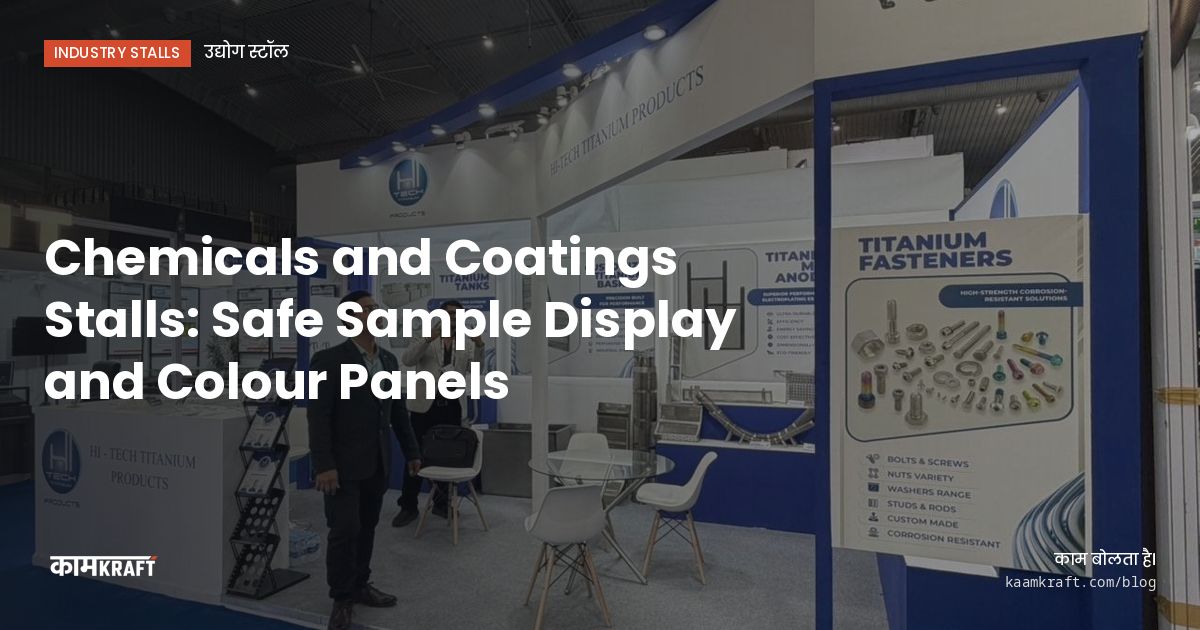
Chemicals and coatings are hard to show. The product sits in a drum or a tin, and what buyers care about is what it does: the finish, the protection, the colour, the performance. A good stall in this sector shows results rather than containers, keeps any real samples safe and sealed, and gives technical buyers a place to talk specifications.
For paints and coatings, the stall itself can become the demo. For industrial chemicals, it is more about clear application stories, sealed samples and well-run technical meetings. In both cases, the first step is to check what the organiser allows on the stall.
Start with what you are allowed to bring
Halls have strict rules on flammable, hazardous and pressurised materials. These rules vary by venue and show, and they can affect everything from sample choice to stall finishes. Before you plan any display, read the safety section of the organiser's exhibitor manual and check:
- Whether you can bring real product samples into the hall, and in what quantity and packaging.
- Rules on flammable liquids, aerosols, solvents and anything classed as hazardous.
- Whether you need to declare materials or submit safety data sheets in advance.
- Rules on live application demos, spraying, mixing or curing on the stall.
- How waste, rags and used containers must be removed.
Your own safety and regulatory team should also sign off on what goes to the show. Their rules for transport and handling may be stricter than the venue's.
Showing results instead of drums
Most visitors do not need to see the chemical itself. They want to see what it achieves. Build displays around outcomes:
- Before and after panels: a treated and untreated surface side by side, at a size people can touch.
- Cut sections: a coated pipe, a protected steel section, a waterproofed wall layer, so buyers see thickness and adhesion.
- Test pieces: samples that have gone through weathering, corrosion or abrasion tests, with a short label on the test.
- Application stories: where the product is used, shown with photos of real sites and the problem it solved.
- Sealed sample jars or tins: product in clear, sealed containers on a lit shelf, if the organiser allows it.
Colour panels and shade displays
For paints, coatings, laminates and pigments, colour is the product. Showing it honestly is the most important part of the stall design.
Lighting for true colour
Exhibition hall lighting can shift colours a lot. Light the colour panels with fittings that have good colour rendering and a neutral white, so buyers see what they will get on site. Avoid coloured LED strips near shade cards, which tint everything around them. If buyers often compare colours under different conditions, a small lightbox with switchable light settings is a useful tool.
Panel size and layout
- Show key colours as large panels or full walls, because small chips do not show how a colour feels on a surface.
- Group shades into families, with clear codes printed at reading height.
- Keep a shade card or fan deck at the counter so buyers can take colours home.
- Show texture and sheen side by side: matt, satin, gloss, textured.
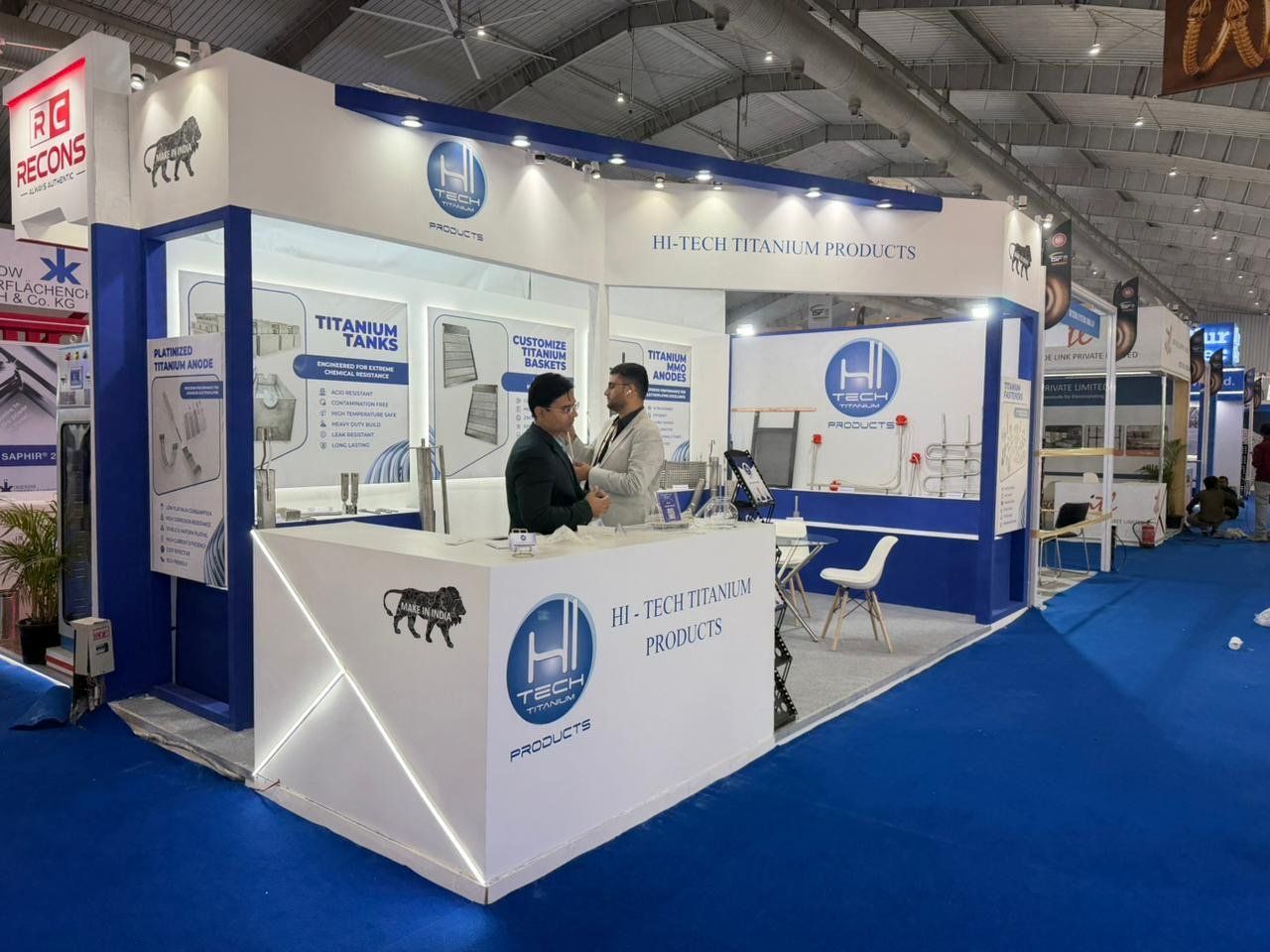
Using the stall as a demo surface
For paint and coating brands, the stall walls, floor and fascia can carry your own products. A feature wall in a new texture, a floor finished with your coating, or a fascia in your signature colour does more than a graphic of the same thing.
Because we build and dry-assemble stalls in our Bengaluru factory, finishes can be applied and checked in controlled conditions before the stall ships. Talk to us about curing times and touch-up kits for the venue, since panels can get scuffed in transport and build-up.
Space for technical conversations
Chemicals and coatings buyers are often engineers, specifiers, contractors and procurement teams. They want data sheets, test results and pricing discussions. Plan:
- A technical counter with a screen for data sheets and project references.
- A meeting area or room for detailed discussions with key accounts.
- Storage for printed data sheets and sample packs, out of view but close at hand.
- Hand-washing or wipe stations if visitors touch test pieces.
If you plan to hand out samples, small sealed sachets, coated test panels or shade cards travel far better than open tins. Confirm with your logistics partner how sample products can be packed and moved, and keep the sample store at the back of the stall, away from lighting and any heat source. A short label on each give-away sample with product name, use and a contact number saves your team repeating the same details all day.
Mistakes to avoid
- Planning a live spray or mixing demo before checking if the venue allows it.
- Rows of drums and tins as the main display, which tell visitors nothing.
- Colour panels lit with cheap or coloured LEDs, so shades look wrong.
- Small shade chips only, with no large panels to show real effect.
- No meeting space, so technical buyers talk across a crowded counter.
Building-materials and interiors shows such as ACETECH Mumbai 2026, from 19 to 22 November 2026 at the Bombay Exhibition Centre, draw many coatings and finishes brands. If you exhibit there, brief us 6 to 8 weeks ahead so the stall can be built in Bengaluru and trucked in on time.
Planning a chemicals or coatings stall?
Tell us the show, your stall size, what you want to display and whether you plan any demos. We will design a stall that shows results clearly and works within venue rules. Start with Plan your project, or WhatsApp or call +91 70190 58391.