
Exhibiting at BIEC Bengaluru: A Stall Planning Checklist
A practical checklist for exhibiting at BIEC Bengaluru: what to confirm in the exhibitor manual, design for long walks, build-up logistics and show days.
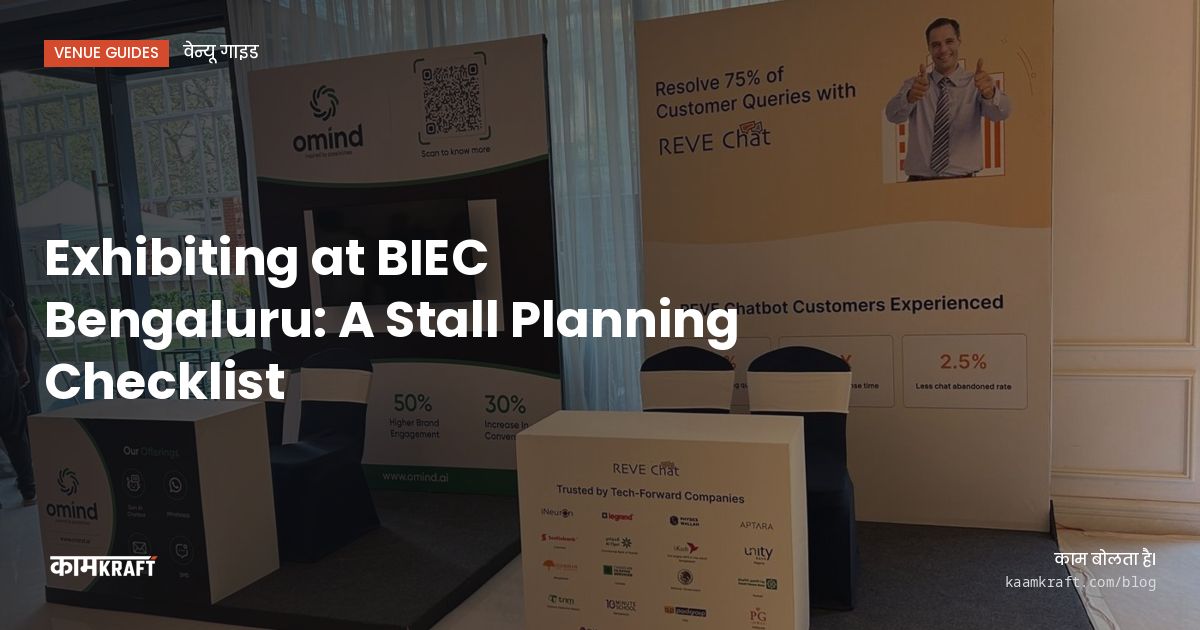
Planning a stall at BIEC comes down to three things: knowing what the organiser allows in your hall, getting your build onto the floor inside the build-up window, and designing for a visitor who has walked a long way before reaching you. Get those right and the rest is execution.
We build in Bengaluru, so BIEC is close to home for our factory. This checklist is the order we work through for every show there, from the day space is booked to the day the last panel is loaded back on the truck.
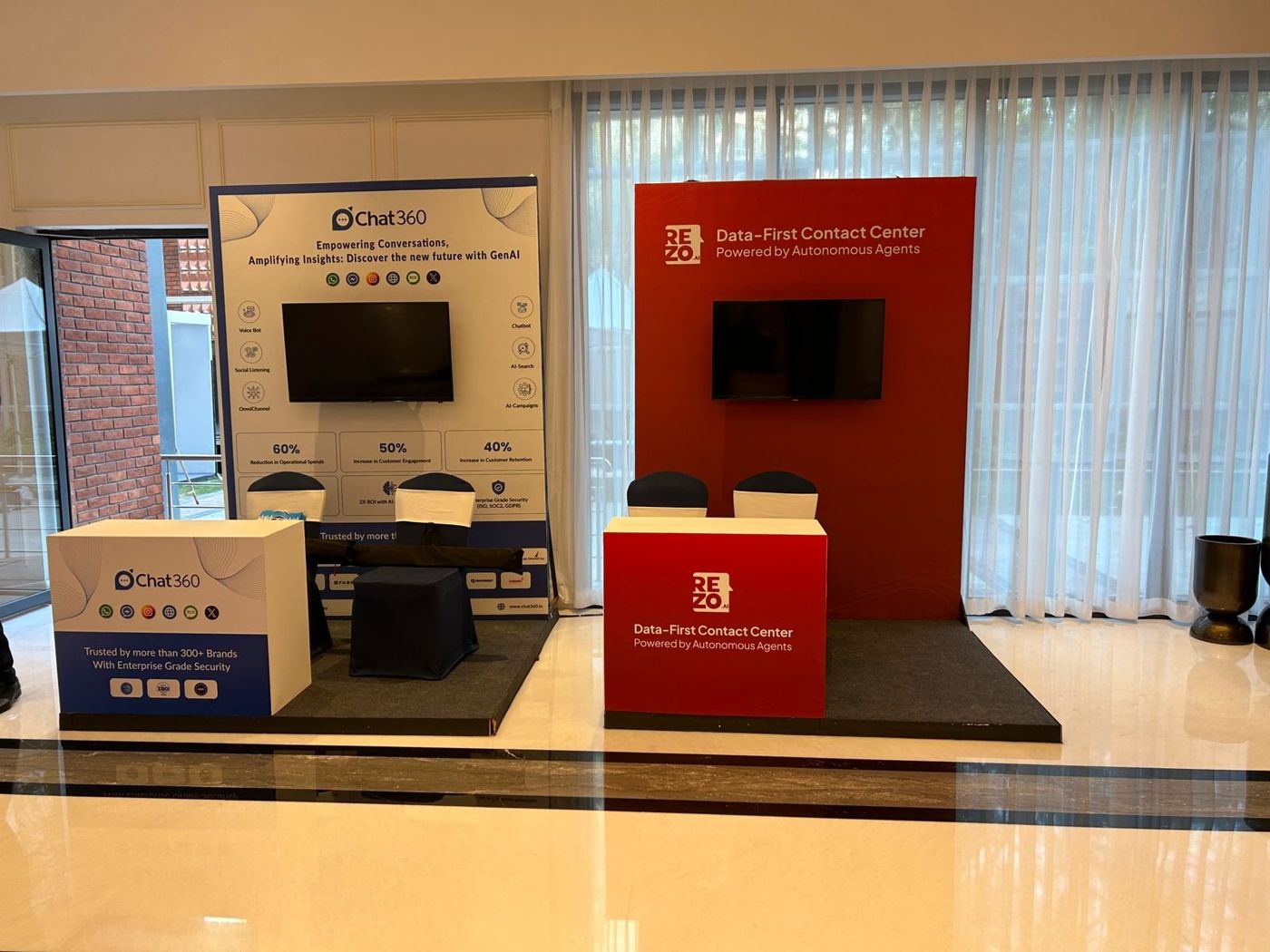
Before you book: questions about your space
The stall you can build depends on the space you book, and not every plot is equal. Ask the organiser these questions before you sign the space contract, and get the answers in writing.
- Which hall is the space in, and is it a bare space or a shell scheme booking?
- How many sides are open? An island or corner changes the design and the cost far more than a few extra square metres.
- What is the permitted build height in that hall, and is a second level or overhead rigging allowed? Do not assume; heights and rigging rules vary by hall and by show.
- Where are the pillars, fire exits, hose points and service ducts relative to your plot? Ask for the hall layout drawing.
- Who are your neighbours, and is your space on a main aisle or a side aisle?
Read the exhibitor manual before design starts
Every organiser publishes an exhibitor manual, and for a BIEC show it is the document that decides what your stall can be. Read it before the designer opens a 3D file, not after the design is approved.
What to check in the manual
- Build height limit, and whether fascias, logo boxes or hanging structures count towards it.
- Rules on walls facing neighbours. Many organisers require a clean, finished back side above a certain height.
- Fire safety requirements for materials, fabric and carpet, and whether certificates are needed.
- Power: how to order the connection, the load you need to declare and the deadline for doing it.
- Design submission deadline and the drawings the organiser needs, usually a plan, elevations and an electrical layout.
- Contractor registration, security deposits and the documents your fabricator must file.
- Build-up and dismantle timings, including whether night work is allowed.
Missing the power order deadline is the most common avoidable problem we see. A stall with no power on day one is just a set of walls, so put that date at the top of your calendar.
Design for how visitors move at BIEC
BIEC is a large venue on Tumakuru Road, and at big shows visitors spend hours walking between halls. By the time they reach you they are tired and selective. Design for that visitor, not for the one in the render.
- Make your name and what you do readable from the aisle, at eye level and above the heads of the crowd.
- Keep the front of the stall open. A counter or table across the full frontage tells people to keep walking.
- Give people a reason to stop: a live demo, a screen with a short loop, a product they can pick up.
- Plan a seating or meeting corner. After a long walk, a chair is a real draw for serious buyers.
- Build in closed storage for brochures, bags, water and giveaways so the front stays clean all day.
For a tech show like Bengaluru Tech Summit 2026, which runs 17–19 November 2026 at BIEC, that usually means screens and demo stations up front and a quieter meeting space behind. For industrial shows it means room for heavy exhibits, safe demo zones and clear sight lines to the machine from the aisle.
Build-up and logistics from the factory
Because our factory is in Bengaluru, a BIEC stall is built, painted and dry-assembled at the factory, then taken apart into labelled sections and trucked to the venue. Dry-assembly means problems are found in our workshop, where every tool is at hand, rather than on the hall floor with the clock running.
Even at a local venue, build-up days are tight. Every stall in the hall is going up at the same time, trucks queue at the gates and handling equipment is shared. This is the order we plan for.
- Confirm the truck entry time, the gate to use and any vehicle passes needed for your hall.
- Load the truck so the platform and wall frames come off first and graphics and furniture last.
- Book forklift or crane time early if you have heavy exhibits, and get them placed before the walls go up.
- Allow time for the organiser's electrical inspection before power is switched on.
- Keep the final evening for cleaning, graphic touch-ups and placing products.
For Karnataka shows we ask for a brief 3–4 weeks ahead. That covers design, organiser approval, fabrication and dry-assembly with a little room for changes. Shorter is sometimes possible, but every lost day comes out of finishing time, and finishing is what visitors see.
On the show days
A good build can still have a poor show if nobody plans the days themselves. Our crew stays on site through the show, so small fixes, such as a loose panel, a failed light or a graphic that needs changing, are handled in minutes rather than hours.
- Arrive early on day one and walk the stall as a visitor would, from every open side.
- Keep a small kit at the stall: tape, cable ties, a cleaning cloth and spare lamps.
- Plan food and breaks for staff. The stall should never be left with one tired person.
- Note the questions visitors ask most and adjust the front display if something is not working.
Dismantling and what happens next
Dismantle rules at BIEC are set by each organiser, and they are strictly enforced. Usually nothing can be removed before the show closes, and the space must be cleared within a fixed time after. Check the manual for both, and for how and when the security deposit is returned.
If you exhibit every year, think about reusing your stall. A stall designed in sections can be stored at our factory and refreshed with new graphics for the next show, which saves both fabrication time and material.
Planning a stall at BIEC?
Send us your space details, the show and what you want visitors to do at your stall, and we will come back with a 3D design and a build plan. Start with Plan your project, see our work on exhibition stalls in Bengaluru and the BIEC venue page, or WhatsApp or call us on +91 70190 58391.