
Planning an Annual Company Offsite at a Hotel in Bengaluru
How to plan an annual company offsite at a Bengaluru hotel: set the goal, choose the rooms, build the two-day flow, stage and sound, and when to brief.
A good annual offsite at a Bengaluru hotel comes down to three decisions made early: what the two days must achieve, which hotel can host every part of the agenda without moving people around too much, and who owns production from the first stage plan to the last cable out. Get those right and the rest is detail.
Most offsites go wrong in small, predictable ways. A ballroom looks fine on the site visit but has a pillar in the sightline. The gala night runs late because the stage changeover was never rehearsed. A breakout room has no screen. This guide walks through the order we plan offsites in, and what to check at each step.
Start with what the offsite has to do
Before you look at a single hotel, write down the outcome. Is this a strategy reset for leadership, a celebration for the whole company, a kickoff for the sales year, or a mix? The answer decides the room plan. A strategy offsite needs quiet breakout rooms and good whiteboards. A celebration needs a big room, a stage and a strong sound system. A sales kickoff needs both, plus an awards segment.
Then count people honestly. Plan for confirmed headcount plus a margin for late additions, and know how many will stay overnight and how many will come in for the day. Overnight numbers drive room blocks. Day numbers drive seating and catering.
Choosing the hotel and the rooms
Bengaluru has a wide spread of business hotels, from city properties close to offices to larger resorts on the outskirts. City hotels make life easy for day guests and leaders who need to step out. Outskirt properties keep people together and away from their laptops, but add travel time that the agenda must allow for. Our notes on corporate event venues in Bengaluru are a useful place to start a shortlist.
On the site visit, look at the rooms with production in mind, not just the décor. Walk the hall from the back row and from the loading bay.
- Ceiling height, and any chandeliers, beams or low sections over the stage end. These decide how tall your screen and set can be.
- Pillars or columns that block sightlines from the back rows.
- Where power is available, and whether the hotel or an outside supplier provides extra power for stage, LED and lighting.
- The load-in route: service lift or ramp, door widths and the distance from the loading bay to the ballroom.
- Set-up time: when you get the room, and whether another event is booked in it the night before.
- Breakout rooms close to the main hall, so groups do not lose fifteen minutes walking.
- A lawn or poolside for the gala evening, and what the hotel allows there after dark.
Ask the banquet team for the hotel's written guidelines on rigging, fixing to walls, sound limits and outdoor event timings. These vary from hotel to hotel, so get them in writing before anything is designed.
Building the two-day flow
Most annual offsites follow a similar rhythm: arrival and check-in, an opening general session, breakouts, a working lunch, more sessions, then an evening event. Day two is lighter, with a closing session and departures. The production question is how many times the main room has to change.
Every changeover, from theatre seating to cluster tables or from conference stage to gala stage, needs crew and time. If the gala is in the same ballroom as the day sessions, the room has to be turned in the gap between the last session and dinner, which is tight. Many teams move the evening to a lawn or a second hall, so the main set stays up and the crew can prepare the gala space in parallel.
The order we follow when planning the two days:
- Lock the agenda in blocks, with start and end times for every session.
- Mark every room change and every stage change on that agenda.
- Give each change a crew time and a rehearsal slot.
- Add buffer before the leadership keynote and before the evening show. These are the two moments that cannot slip.
- Share the run-of-show with the hotel's banquet captain so food service follows the real timings.
Stage, screens and sound for the general session
The general session is where leaders speak to everyone at once, so it deserves the most attention. The stage should be high enough that the back rows see the speaker's face, and wide enough for a panel of four or five chairs. A wide screen behind the stage, projection or an LED wall, carries slides and video. Side screens help in long rooms.
Sound is the part people notice only when it fails. Ask for enough speakers to cover the room evenly, wireless handheld and lapel mics with spares, and a separate feed for video playback. A sound check with the actual speakers, not just the technician, saves embarrassment on the day.
We design and build stage sets in our Bengaluru factory, so backdrops, steps, podiums and branded elements arrive finished and test-fitted. Our corporate events team also runs show-calling on the day, so one person cues lights, sound and video in the right order.
The evening event
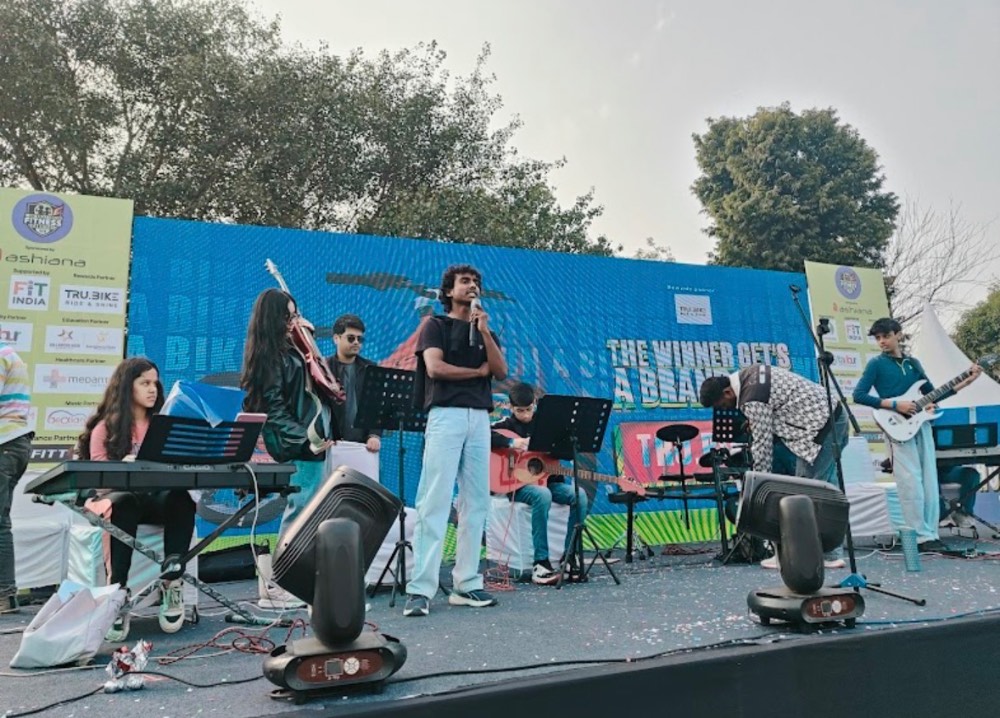
The gala night is what people remember. Decide early whether it is an awards night, a theme party, a performance or simply a good dinner with music. Each needs a different stage. Awards need a clear walk-up route, a lit podium and a screen for names. A band needs a riser, a proper sound console and power for its equipment. A DJ needs far less.
If the evening is outdoors, plan a covered backup. Bengaluru evenings are often pleasant, but rain can arrive with little warning, and a backup space has to be booked, not just discussed. Confirm sound timings for outdoor areas with the hotel, since neighbours and local rules can affect what is allowed.
When to start and what to bring
For an offsite in Bengaluru, brief your production partner at least three to four weeks before the date. That leaves time for a site visit, a 3D view of the stage and room, approvals from your leadership, fabrication of the set and a full rehearsal. Bigger shows with several stages, custom sets or a tight hotel turnaround need more time.
- Dates, the hotel or a shortlist, and expected headcount.
- The agenda, even if it is still rough.
- Brand guidelines and any theme for the year.
- A list of speakers, performers and awards.
- What worked and what did not at last year's offsite.
If teams are flying in from other cities, our page on events in Bengaluru covers what we handle locally, from set delivery to on-site crew.
Planning an offsite?
Share your dates and agenda on Plan your project, or WhatsApp or call us on +91 70190 58391. We will come back with a room plan, a stage design and a clear production schedule.