
Automotive and EV Stalls: Vehicle Display, Turntables and Move-In
Planning an automotive or EV stall: getting the vehicle in, platforms and ramps, turntables, lighting the paint, and displaying batteries and chassis parts.
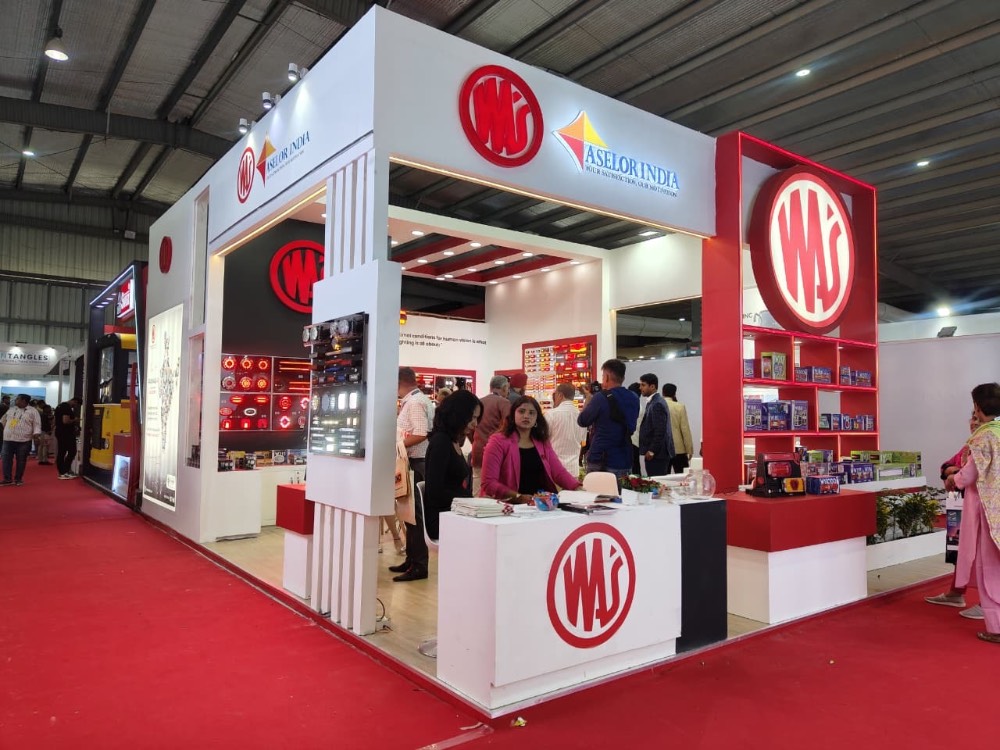
An automotive or EV stall is planned around one question: how does the vehicle get in, and where does it stand? Once that is settled, the rest of the stall, from the platform and turntable to lighting and the sales area, follows. Leave it to the end and you may find the car cannot reach its spot because the walls are already up.
Whether you are showing a car, a two-wheeler, a commercial vehicle or an EV platform, the same principles apply. Plan the move-in first, give the vehicle a stage that suits its weight, light it so the paint and lines look right, and make it easy for visitors to get close without damaging it.
Getting the vehicle onto the stall
Ask your logistics team how the vehicle will arrive: driven in, pushed in, or brought on a trailer and moved with a forklift or dollies. Then read the organiser's exhibitor manual for the rules. Venues and organisers often set conditions on vehicles in halls, such as fuel levels, battery disconnection, entry times and which doors can be used. Confirm all of these before you design.
- Vehicle length, width, height and weight, plus turning space needed to manoeuvre
- Ground clearance, which decides how steep a ramp can be
- Entry route through the hall, including door widths and any tight corners
- Time slot for vehicle entry during build-up
- Rules on fuel, batteries and keeping the vehicle locked during the show
- Floor protection needed along the route and on the stall
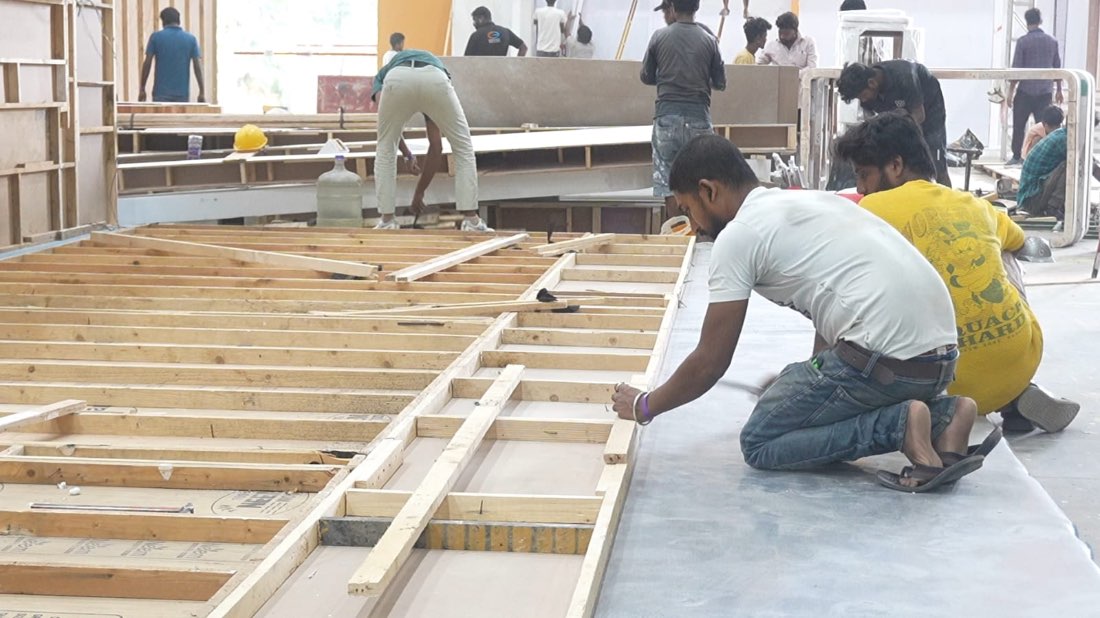
We usually build the platform and leave one side open for the vehicle, place it, then close the stall around it. Walls, overhead elements and graphics go up afterwards. This order is planned in the factory and tested during dry assembly at our Bengaluru factory, so the crew on site knows exactly when the vehicle needs to arrive.
Platforms, ramps and floor finishes
A vehicle on a raised platform looks more important than one on the hall floor. But a standard stall platform is designed for people, not for a car or a truck. If the vehicle sits on a raised stage, the stage must be designed and built for that weight, with a structure that spreads the load. Do not let anyone guess.
Ramps need a gentle slope so low cars do not scrape, and they should be removable or hidden once the vehicle is in place. Floor finishes around the vehicle should take tyre marks and foot traffic. A high-gloss floor looks great on day one and shows every scuff by day three, so pick a finish your team can clean easily.
Turntables: what to ask before you add one
A rotating turntable shows the vehicle from every angle without visitors walking around it. It also adds weight, power needs and a moving part to the stall. Ask these questions before you decide.
- What weight is the turntable rated for, and is that comfortably above the vehicle's weight?
- What is its diameter, and does it suit the wheelbase of the vehicle?
- How high does it sit, and what ramp does that need?
- What power does it need, and how is it controlled and stopped?
- How slow can it turn? Slow rotation looks better and is safer.
- How are the edges finished so nobody trips or catches a foot?
Keep a clear zone around a rotating vehicle and make sure staff can stop it quickly. For a launch moment, the turntable can be paired with a lighting change or a drape reveal. Our dealer meets and launches team plans reveals like this for events, and the same thinking works on a stall.
Lighting the paint and the lines
Vehicles are shiny, curved objects that reflect everything above them. Bright point spotlights create hard reflections and hot spots on the bodywork. Soft, even light from a large overhead source, such as a lit fabric ceiling or diffused panels, shows the shape and paint better. Add accent lights to highlight wheels, headlamps or a badge.
Check the organiser's height limits and rules on overhead structures before planning a large lighting frame. Also look at what is above the stall: the hall's own lighting will show up in the paint too.
EV-specific displays
EV exhibitors often want to show what is under the body: battery packs, motors, controllers and charging hardware. A rolling chassis or a cutaway battery pack on a separate plinth tells the story better than graphics. Use clear covers over sensitive parts, and check with the organiser whether battery packs on display need to be declared or have any conditions attached.
A charger on display can be wall-mounted on a stall panel with a vehicle parked beside it, showing the real connection. Screens explaining range, charging time and service network work best near the vehicle, at a height people can read while standing.
Sales area and reuse
Give the sales team seating close to the vehicle, so conversations can move from looking to talking without walking away. A closed room helps for fleet or dealer discussions. If you exhibit often, a platform and lighting kit built for your vehicle size can be stored and reused, as part of our reusable stall approach.
For shows at Bharat Mandapam or BIEC Bengaluru, check the venue's vehicle entry rules early. Our lead times are 3–4 weeks for Karnataka, 4–6 weeks for the rest of South India and 6–8 weeks elsewhere.
Planning a vehicle stall?
Send us the show, your stall size and the vehicles you plan to display. Plan your project with us, or WhatsApp or call +91 70190 58391.